

½ Crown – Malawi
Malawi
Context
Year: 1964
Issuer: Malawi 
Ruler: Hastings Kamuzu Banda
Currency:
(1964—1971)
Demonetized: Yes
Total mintage: 6,410,000
Material
References
KM: #Click to copy to clipboard4
Numista: #14029
Obverse
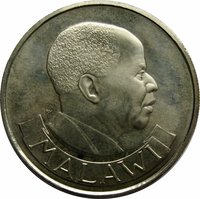
Description:
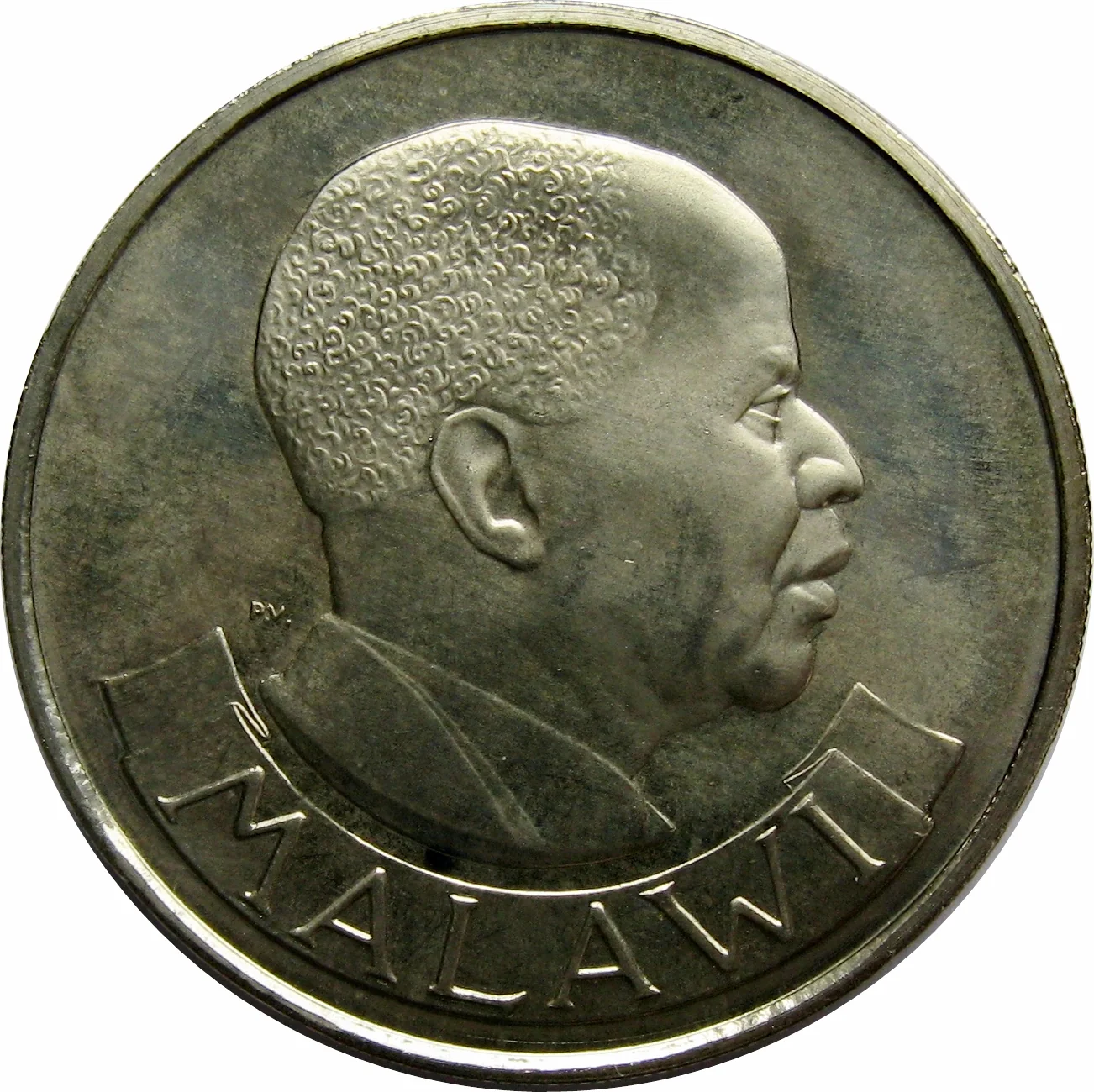
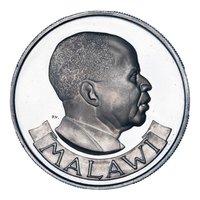
Portrait of Hastings K. Banda facing right, with a banner below bearing the country's name.
Inscription:
P.V.
MALAWI
MALAWI
Script: Latin
Designer: Paul Vincze
Reverse
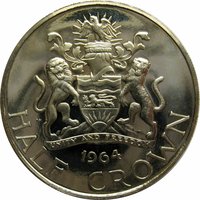
Description:
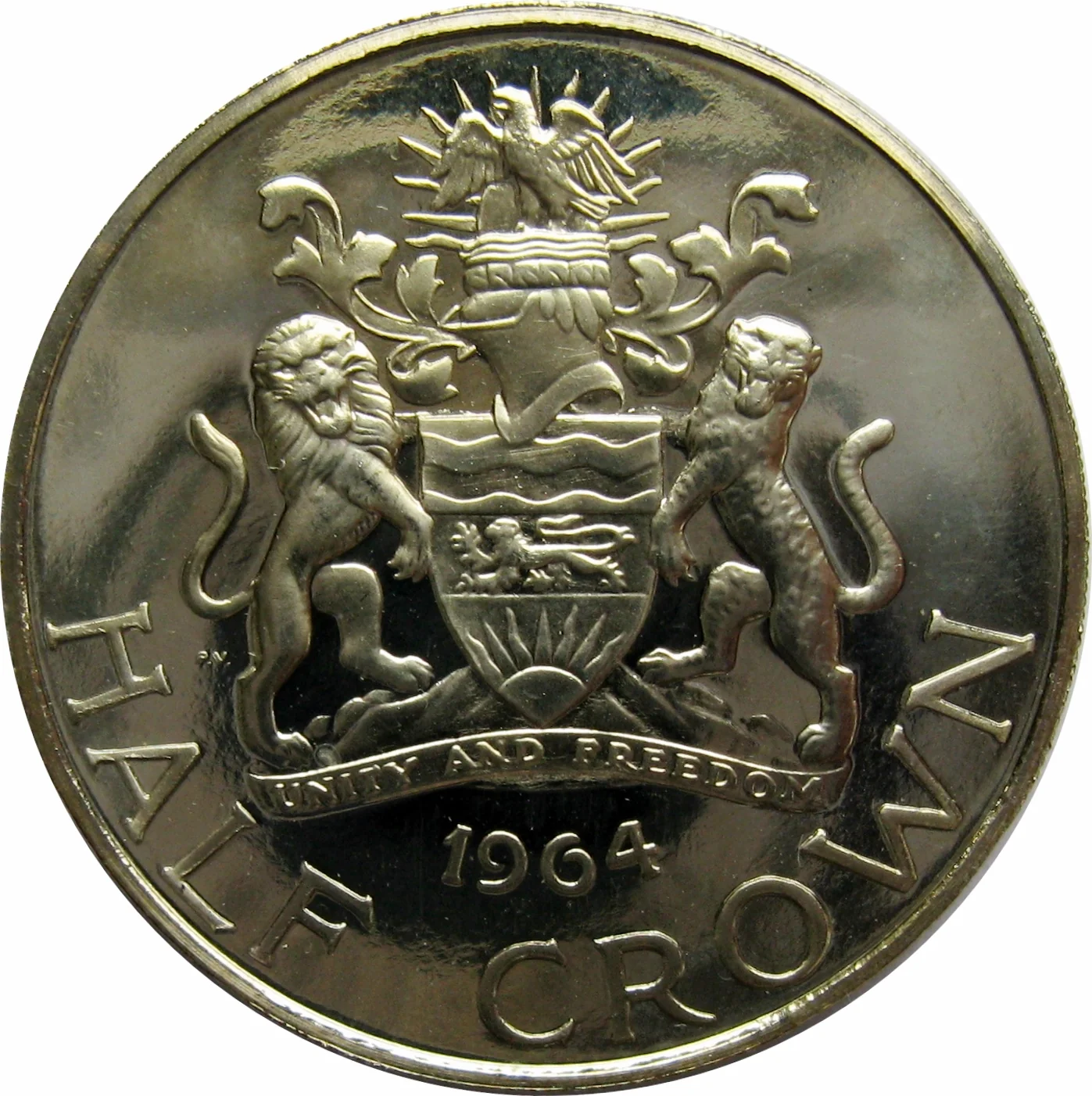
Malawi coat of arms with denomination and date.
Inscription:
UNITY AND FREEDOM
1964
HALF CROWN
1964
HALF CROWN
Script: Latin
Designer: Paul Vincze
Edge
Segmented reeding
Categories
| Symbols> Coat of Arms |
| Person> Politician |
Mints
| Name | Mark |
|---|---|
| Royal Mint (Tower Hill) | — |
Mintings
| Year | Mint Mark | Mintage | Quality | Collection |
|---|---|---|---|---|
| 1964 | — | 6,400,000 | ||
| 1964 | — | 10,000 | Proof |
Historical background
Upon gaining independence from Britain in July 1964, Malawi inherited a currency system deeply integrated within the broader Southern African monetary area. The national currency was the Rhodesia and Nyasaland pound, a legacy of the recently dissolved Federation of Rhodesia and Nyasaland (1953-1963). This arrangement meant Malawi did not have an independent central bank or control over its monetary policy; its currency was issued and managed from Salisbury (now Harare) in Southern Rhodesia.
This situation was politically and economically untenable for the new nation under Prime Minister Hastings Kamuzu Banda. Politically, continuing to use a currency named for and controlled by the former federation, particularly by Southern Rhodesia (which was moving toward a white minority government), was anathema to the spirit of independence. Economically, it meant Malawi's money supply and interest rates were set according to the needs of the more industrialized Southern Rhodesia, not its own predominantly agricultural economy.
Consequently, one of the new government's first and most urgent sovereign acts was to establish a national currency. Plans were swiftly set in motion to create the Reserve Bank of Malawi and introduce the Malawian pound, which would be pegged at par to the British pound sterling. This decisive move, achieved in 1964, was a foundational step in asserting Malawi's economic sovereignty, allowing it to pursue its own monetary policy and symbolically sever a key tie to the colonial and federated past.
This situation was politically and economically untenable for the new nation under Prime Minister Hastings Kamuzu Banda. Politically, continuing to use a currency named for and controlled by the former federation, particularly by Southern Rhodesia (which was moving toward a white minority government), was anathema to the spirit of independence. Economically, it meant Malawi's money supply and interest rates were set according to the needs of the more industrialized Southern Rhodesia, not its own predominantly agricultural economy.
Consequently, one of the new government's first and most urgent sovereign acts was to establish a national currency. Plans were swiftly set in motion to create the Reserve Bank of Malawi and introduce the Malawian pound, which would be pegged at par to the British pound sterling. This decisive move, achieved in 1964, was a foundational step in asserting Malawi's economic sovereignty, allowing it to pursue its own monetary policy and symbolically sever a key tie to the colonial and federated past.
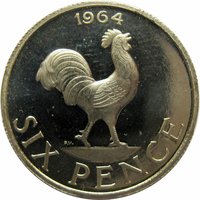
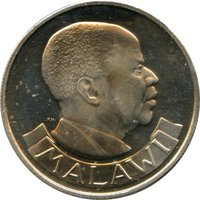
Series: 1964 Malawi circulation coins
🌱 Fairly Common