

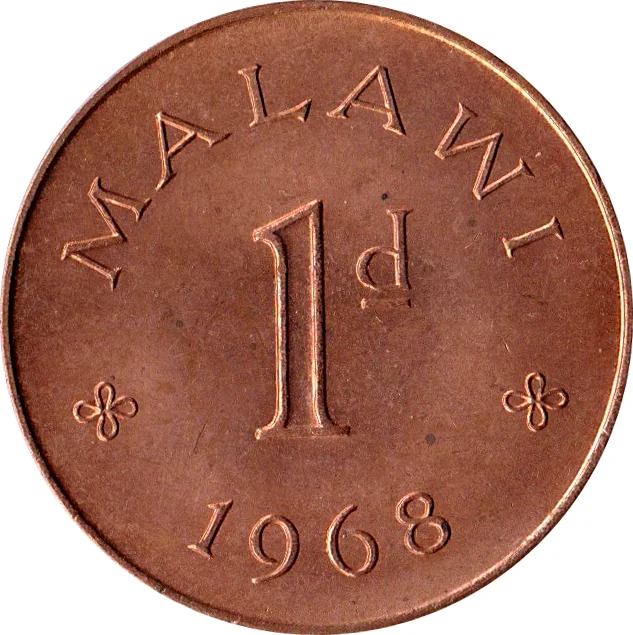
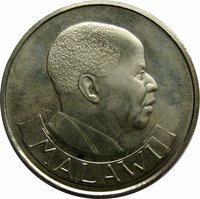
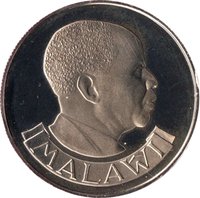
Obverse
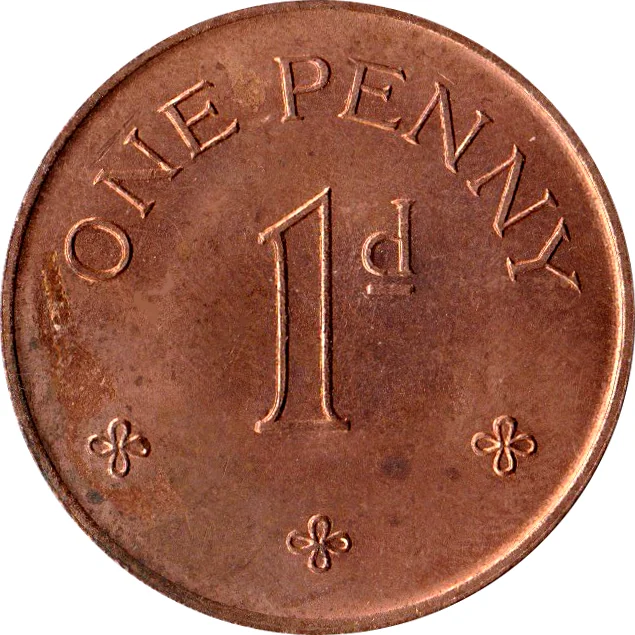
Reverse
Description:
Central number with English above and three simple designs below.
Inscription:
ONE PENNY
1d
1d
Script: Latin
Edge
Plain
Mints
| Name | Mark |
|---|---|
| Royal Mint (Tower Hill) | — |
Mintings
| Year | Mint Mark | Mintage | Quality | Collection |
|---|---|---|---|---|
| 1967 | — | 6,000,000 | ||
| 1968 | — | 3,600,000 |
Historical background
In 1967, Malawi's currency situation was fundamentally shaped by its recent independence in 1964 and its membership in the sterling area. The nation used the Malawian pound, which was pegged at par to the British pound sterling. This arrangement provided stability and facilitated trade with its largest economic partner, the United Kingdom, but it also meant Malawi's monetary policy was heavily influenced by British economic conditions and decisions made in London. The country's currency was issued by the Reserve Bank of Malawi, established just two years prior in 1965, which was still building its capacity to manage the national financial system.
The year was significant as it preceded a major monetary reform. Under the leadership of President Hastings Kamuzu Banda, Malawi was preparing to decimalize its currency and move away from the pound system. This change, which would occur in 1971 with the introduction of the Malawian kwacha, was already in planning stages to simplify transactions and assert greater national economic identity. However, in 1967, the immediate financial context was dominated by the November devaluation of the British pound sterling by 14.3%. As a member of the sterling area, Malawi was compelled to follow suit and devalue the Malawian pound accordingly.
This devaluation had mixed consequences. It increased the value of Malawi's primary agricultural exports, like tobacco and tea, on the global market, potentially boosting foreign earnings. However, it also made imported goods, particularly the machinery and manufactured products vital for development, more expensive. This placed a strain on the economy and highlighted the vulnerabilities of a peg to an external currency. Thus, 1967 stands as a transitional year where Malawi operated within a colonial-era monetary framework while laying the groundwork for a more independent system, all while navigating the immediate pressures of a significant sterling devaluation.
The year was significant as it preceded a major monetary reform. Under the leadership of President Hastings Kamuzu Banda, Malawi was preparing to decimalize its currency and move away from the pound system. This change, which would occur in 1971 with the introduction of the Malawian kwacha, was already in planning stages to simplify transactions and assert greater national economic identity. However, in 1967, the immediate financial context was dominated by the November devaluation of the British pound sterling by 14.3%. As a member of the sterling area, Malawi was compelled to follow suit and devalue the Malawian pound accordingly.
This devaluation had mixed consequences. It increased the value of Malawi's primary agricultural exports, like tobacco and tea, on the global market, potentially boosting foreign earnings. However, it also made imported goods, particularly the machinery and manufactured products vital for development, more expensive. This placed a strain on the economy and highlighted the vulnerabilities of a peg to an external currency. Thus, 1967 stands as a transitional year where Malawi operated within a colonial-era monetary framework while laying the groundwork for a more independent system, all while navigating the immediate pressures of a significant sterling devaluation.
🌱 Fairly Common