

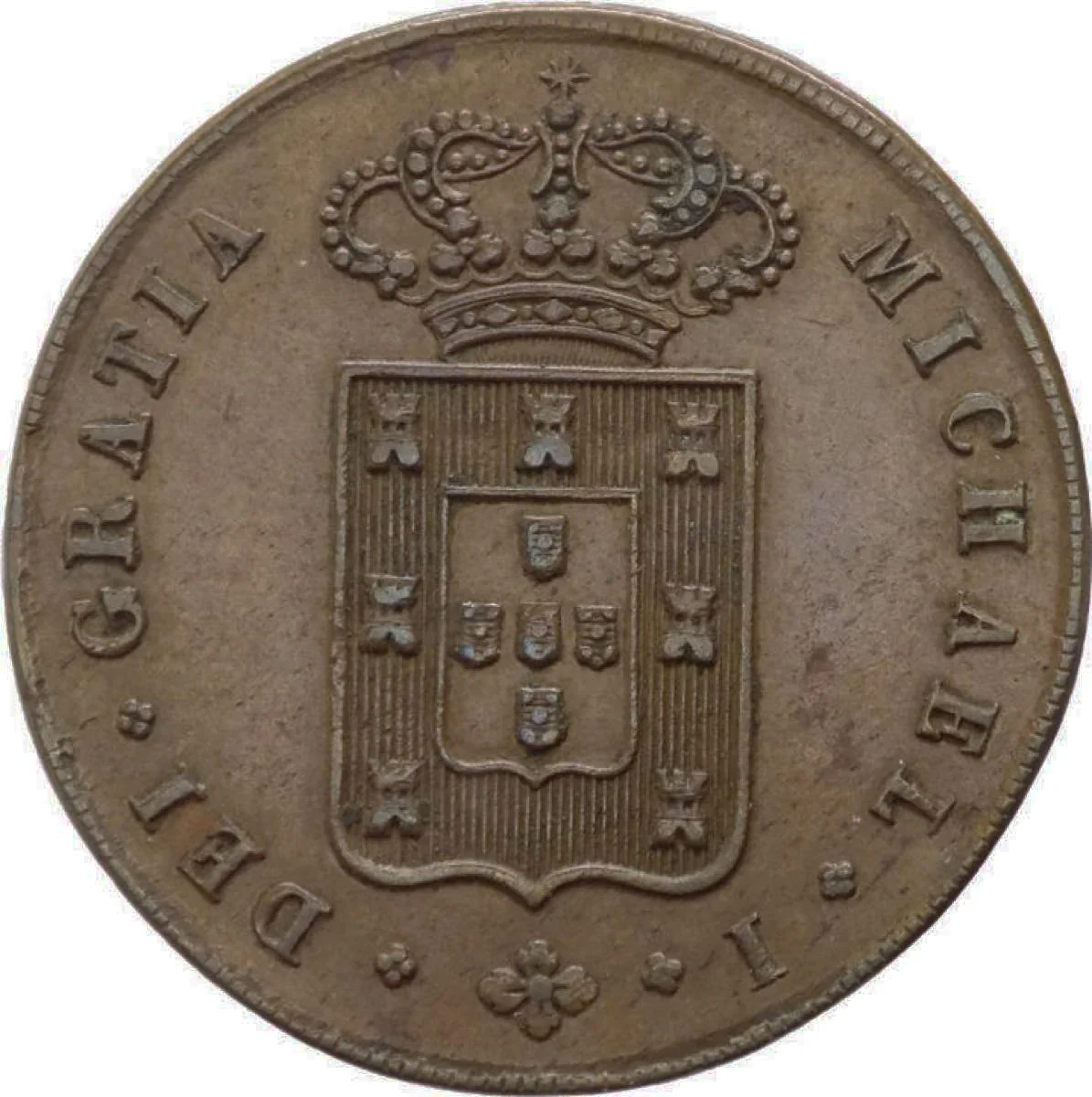
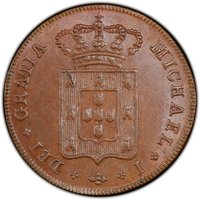
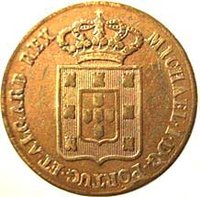
Obverse
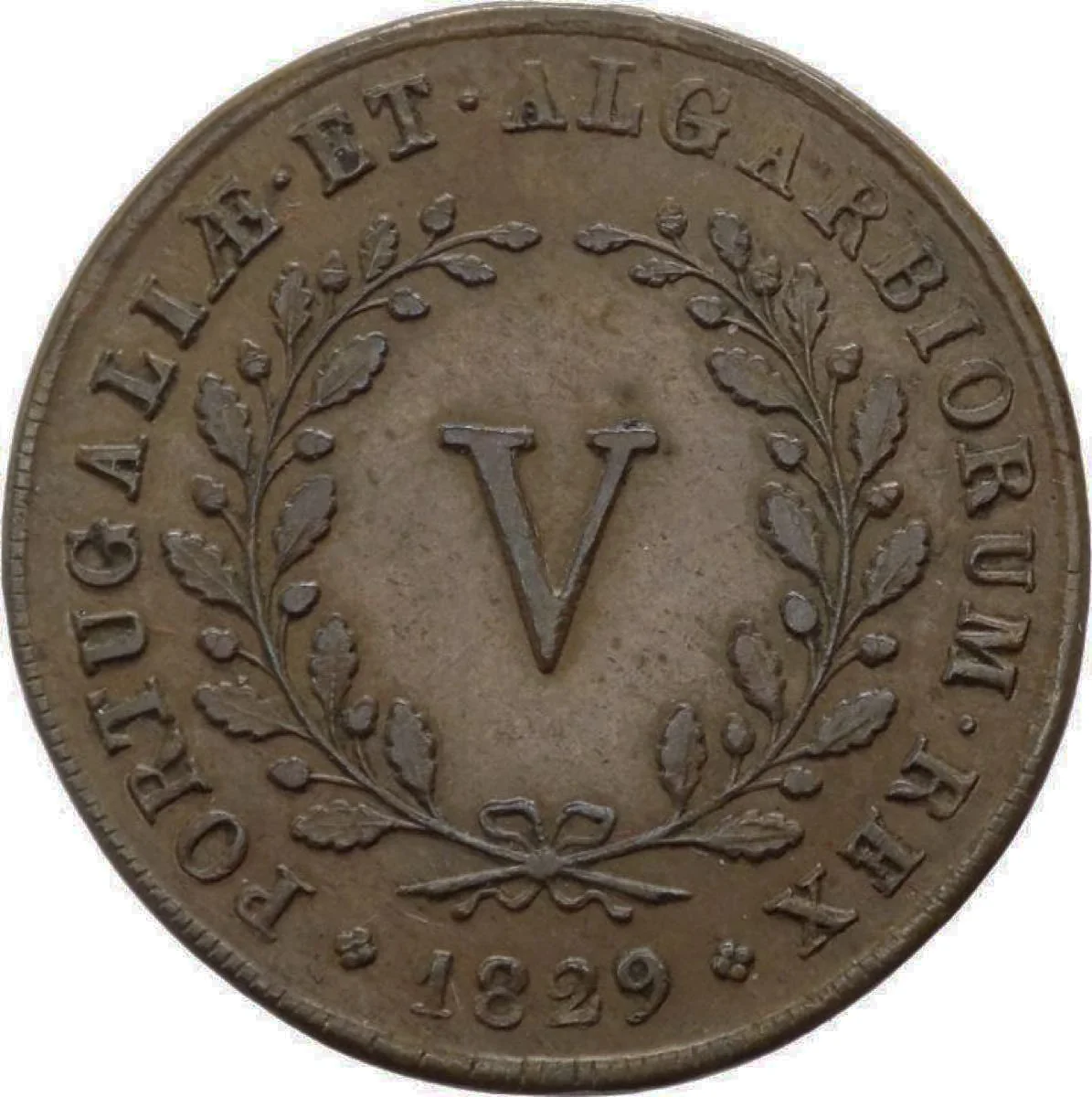
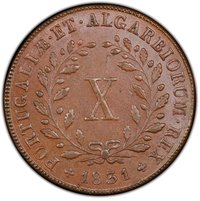
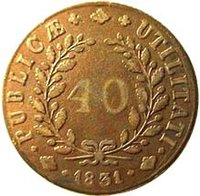
Reverse
Description:
Roman numeral in wreath
Inscription:
PORTVGALIE . ET . ALGARBIORUM . REX
*1829*
*1829*
Script: Latin
Edge
Plain
Mints
| Name | Mark |
|---|---|
| Imprensa Nacional - Casa da Moeda | — |
Mintings
| Year | Mint Mark | Mintage | Quality | Collection |
|---|---|---|---|---|
| 1829 | — | 401,081 |
Historical background
In 1829, Portugal was in the midst of a profound political and monetary crisis stemming from the Liberal Wars (1828-1834). The nation was divided between two rival claimants to the throne: the liberal constitutionalist Dom Pedro IV (Emperor of Brazil) and his brother, the absolutist Dom Miguel, who had seized control of mainland Portugal. This civil war created a de facto division of the country's currency system. The liberal government, based in the Azores and with strongholds in the north, continued to recognize the currency issued under the constitutional monarchy, while the Miguelist regime in Lisbon controlled the official mint and the bulk of the treasury.
The circulating coinage was a chaotic mixture of older, worn Portuguese réis from the reigns of Maria I and João VI, alongside a significant influx of foreign coins—particularly British gold—that filled the void left by a scarcity of reliable domestic currency. More critically, the war effort by both sides led to severe fiscal strain. The Miguelist administration, in particular, resorted to debasing the currency, issuing low-quality copper coins and printing paper money with little to no backing, which led to rapid inflation and a loss of public confidence in the monetary system. Economic activity was severely disrupted, and the value of money could vary dramatically depending on which political authority held sway in a given region.
Therefore, the currency situation in 1829 was not one of stability but of fragmentation and depreciation. It reflected the broader struggle for Portugal's future, with the reliability and value of one's money directly tied to the fortunes of war and the legitimacy of the competing regimes. A unified and stable national currency would only become possible after the conclusion of the civil war with the victory of the liberal forces in 1834.
The circulating coinage was a chaotic mixture of older, worn Portuguese réis from the reigns of Maria I and João VI, alongside a significant influx of foreign coins—particularly British gold—that filled the void left by a scarcity of reliable domestic currency. More critically, the war effort by both sides led to severe fiscal strain. The Miguelist administration, in particular, resorted to debasing the currency, issuing low-quality copper coins and printing paper money with little to no backing, which led to rapid inflation and a loss of public confidence in the monetary system. Economic activity was severely disrupted, and the value of money could vary dramatically depending on which political authority held sway in a given region.
Therefore, the currency situation in 1829 was not one of stability but of fragmentation and depreciation. It reflected the broader struggle for Portugal's future, with the reliability and value of one's money directly tied to the fortunes of war and the legitimacy of the competing regimes. A unified and stable national currency would only become possible after the conclusion of the civil war with the victory of the liberal forces in 1834.
💎 Extremely Rare