

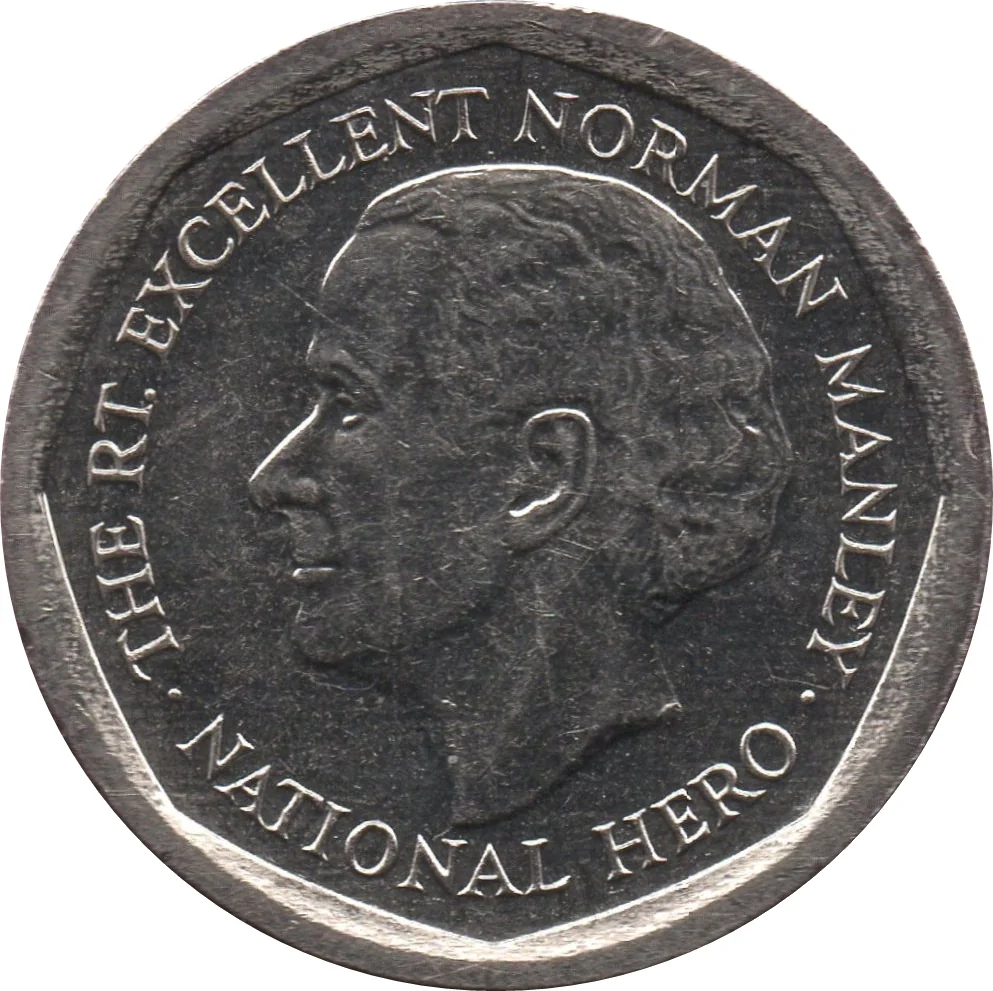
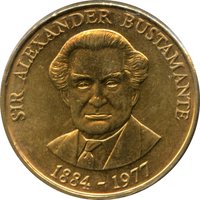
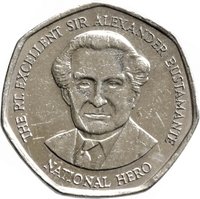
Obverse
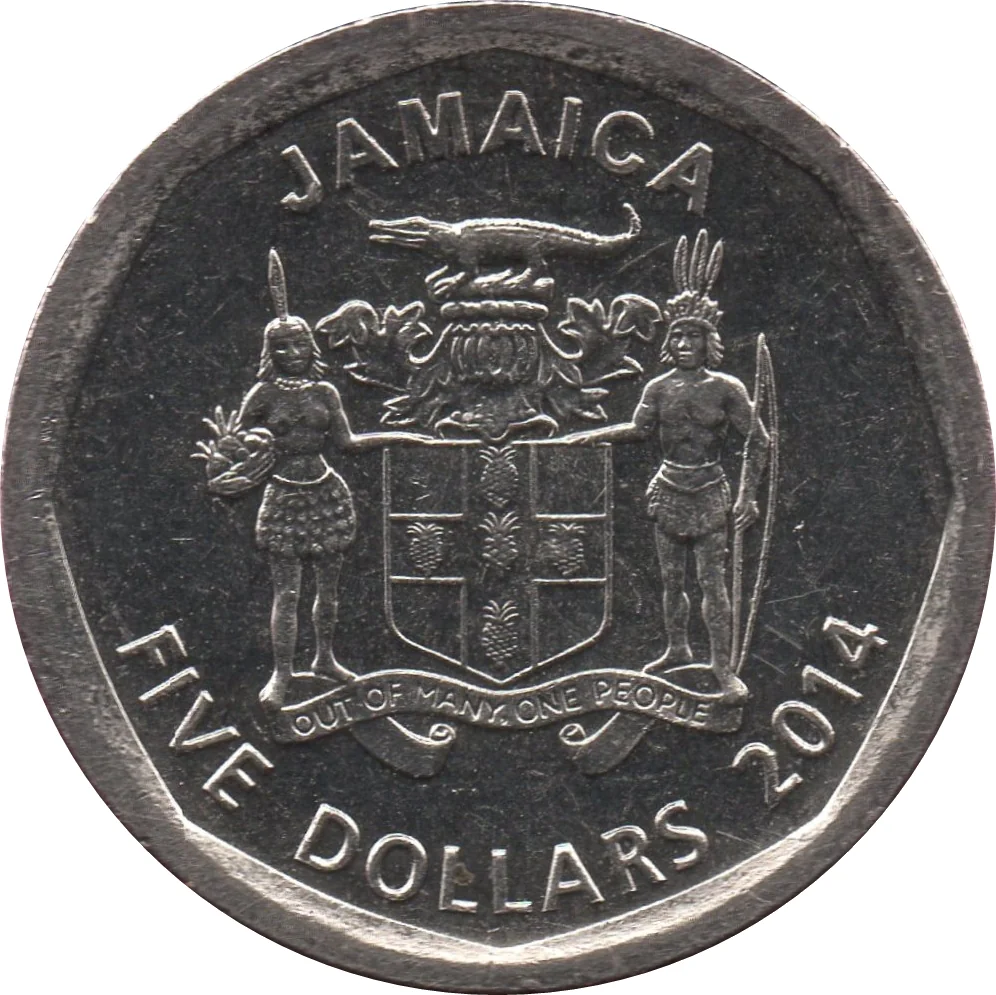
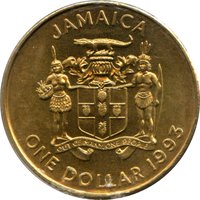
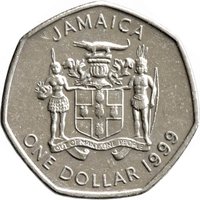
Reverse
Description:
Head of Norman Manley facing left, surrounded by legend.
Inscription:
THE RT. EXCELLENT NORMAN MANLEY
· NATIONAL HERO ·
· NATIONAL HERO ·
Script: Latin
Edge
Reeded
Categories
| Symbols> Coat of Arms |
| Person> Politician |
Mints
| Name | Mark |
|---|---|
| Royal Mint | — |
Mintings
| Year | Mint Mark | Mintage | Quality | Collection |
|---|---|---|---|---|
| 1994 | — | — | ||
| 1995 | — | — | Proof | |
| 1995 | — | — | ||
| 1996 | — | — | Proof | |
| 1996 | — | — | ||
| 2000 | — | — | Proof | |
| 2000 | — | — | ||
| 2002 | — | — | Proof | |
| 2002 | — | — | ||
| 2006 | — | — | ||
| 2014 | — | — | ||
| 2017 | — | — | ||
| 2018 | — | — | ||
| 2022 | — | — |
Historical background
In 1994, Jamaica was in the midst of a prolonged and severe economic crisis, characterized by high inflation, unsustainable debt, and a heavily managed exchange rate. The country operated under a dual exchange rate system, with an official rate fixed by the Bank of Jamaica and a more depreciated parallel "street" rate used for most transactions. This system, a legacy of the 1970s, created significant distortions, encouraged a thriving black market for foreign currency, and discouraged critical foreign investment due to the uncertainty and artificiality of the official rate. The government's attempts to defend the overvalued Jamaican dollar drained foreign reserves and required frequent devaluations, contributing to a cycle of inflation that eroded living standards.
The situation reached a critical point in the early 1990s under the P.J. Patterson administration, which recognized that the existing regime was a fundamental barrier to economic stability. Following a sharp devaluation in 1990 and under pressure from international lenders like the International Monetary Fund (IMF), the government embarked on a program of financial liberalization. The pivotal move came in September 1991, when Jamaica officially floated the currency, allowing market forces to determine its value. By 1994, this new system was still in its fragile early stages, with the Jamaican dollar having depreciated significantly since the float.
Therefore, the currency situation in 1994 was one of tense transition. The formal float had been implemented, but the economy was still grappling with the aftershocks: high inflation (around 30% in 1993), persistent volatility in the exchange rate, and the ongoing challenge of building confidence in the new market-driven framework. The year was less about a single dramatic event and more about the difficult process of stabilizing an economy after a major structural shock, as the government worked to establish credibility for its liberalized exchange regime amidst ongoing macroeconomic imbalances.
The situation reached a critical point in the early 1990s under the P.J. Patterson administration, which recognized that the existing regime was a fundamental barrier to economic stability. Following a sharp devaluation in 1990 and under pressure from international lenders like the International Monetary Fund (IMF), the government embarked on a program of financial liberalization. The pivotal move came in September 1991, when Jamaica officially floated the currency, allowing market forces to determine its value. By 1994, this new system was still in its fragile early stages, with the Jamaican dollar having depreciated significantly since the float.
Therefore, the currency situation in 1994 was one of tense transition. The formal float had been implemented, but the economy was still grappling with the aftershocks: high inflation (around 30% in 1993), persistent volatility in the exchange rate, and the ongoing challenge of building confidence in the new market-driven framework. The year was less about a single dramatic event and more about the difficult process of stabilizing an economy after a major structural shock, as the government worked to establish credibility for its liberalized exchange regime amidst ongoing macroeconomic imbalances.
Series: 1994 series
🌱 Very Common