

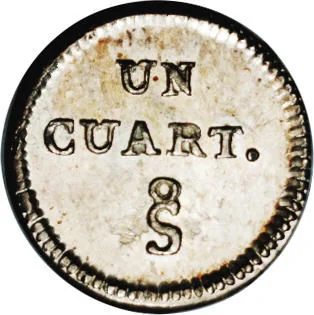
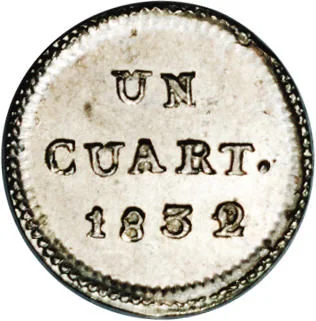

Edge
Plain
Mintings
| Year | Mint Mark | Mintage | Quality | Collection |
|---|---|---|---|---|
| 1832 | /1 | 30,532 | ||
| 1833 | So | 31,756 | ||
| 1834 | So | 9,146 |
Historical background
In 1832, Chile's currency situation was characterized by significant disorder and a lack of unified monetary authority, a legacy of the independence wars and the early republican period. The nation lacked a standardized national coinage, leading to a chaotic circulation of a wide variety of coins. These included old Spanish colonial coins (like pesos, reales, and maravedís), coins from other former Spanish colonies (especially Peru and Bolivia), and even counterfeits. This multiplicity of coins, each with varying weights and purities, made commerce cumbersome and fostered widespread fraud, as merchants and the public had to constantly assess and negotiate the value of each transaction.
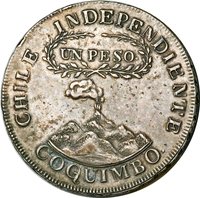
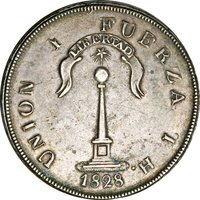
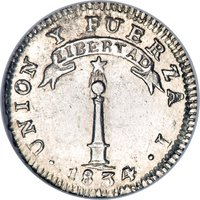
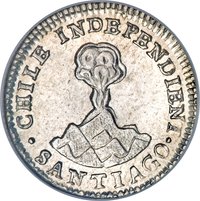
The government, under the conservative administration of President Joaquín Prieto and his influential Minister Diego Portales, recognized that this monetary anarchy was a major obstacle to economic stability, national integration, and foreign trade. A key step toward resolution had been taken in 1830 with the founding of the Casa de Moneda de Santiago (Santiago Mint), which began producing Chile's own silver coins. By 1832, the mint was actively striking the new national currency, most notably the silver peso of 8 reales and its fractional denominations, which bore the national coat of arms and were standardized to a specific fineness.
Thus, 1832 represents a pivotal year of transition within a longer process of monetary reform. While the chaotic circulation of foreign and obsolete coins persisted in daily life, the institutional foundations for a uniform national currency were being firmly laid. The systematic production of Chilean-minted coins was the essential first phase in the government's strategy to gradually drive out foreign coinage, establish monetary sovereignty, and create a reliable financial system to support the nation's growing export-oriented economy, which would soon be dominated by the silver and copper mining sectors.
The government, under the conservative administration of President Joaquín Prieto and his influential Minister Diego Portales, recognized that this monetary anarchy was a major obstacle to economic stability, national integration, and foreign trade. A key step toward resolution had been taken in 1830 with the founding of the Casa de Moneda de Santiago (Santiago Mint), which began producing Chile's own silver coins. By 1832, the mint was actively striking the new national currency, most notably the silver peso of 8 reales and its fractional denominations, which bore the national coat of arms and were standardized to a specific fineness.
Thus, 1832 represents a pivotal year of transition within a longer process of monetary reform. While the chaotic circulation of foreign and obsolete coins persisted in daily life, the institutional foundations for a uniform national currency were being firmly laid. The systematic production of Chilean-minted coins was the essential first phase in the government's strategy to gradually drive out foreign coinage, establish monetary sovereignty, and create a reliable financial system to support the nation's growing export-oriented economy, which would soon be dominated by the silver and copper mining sectors.
💎 Extremely Rare