

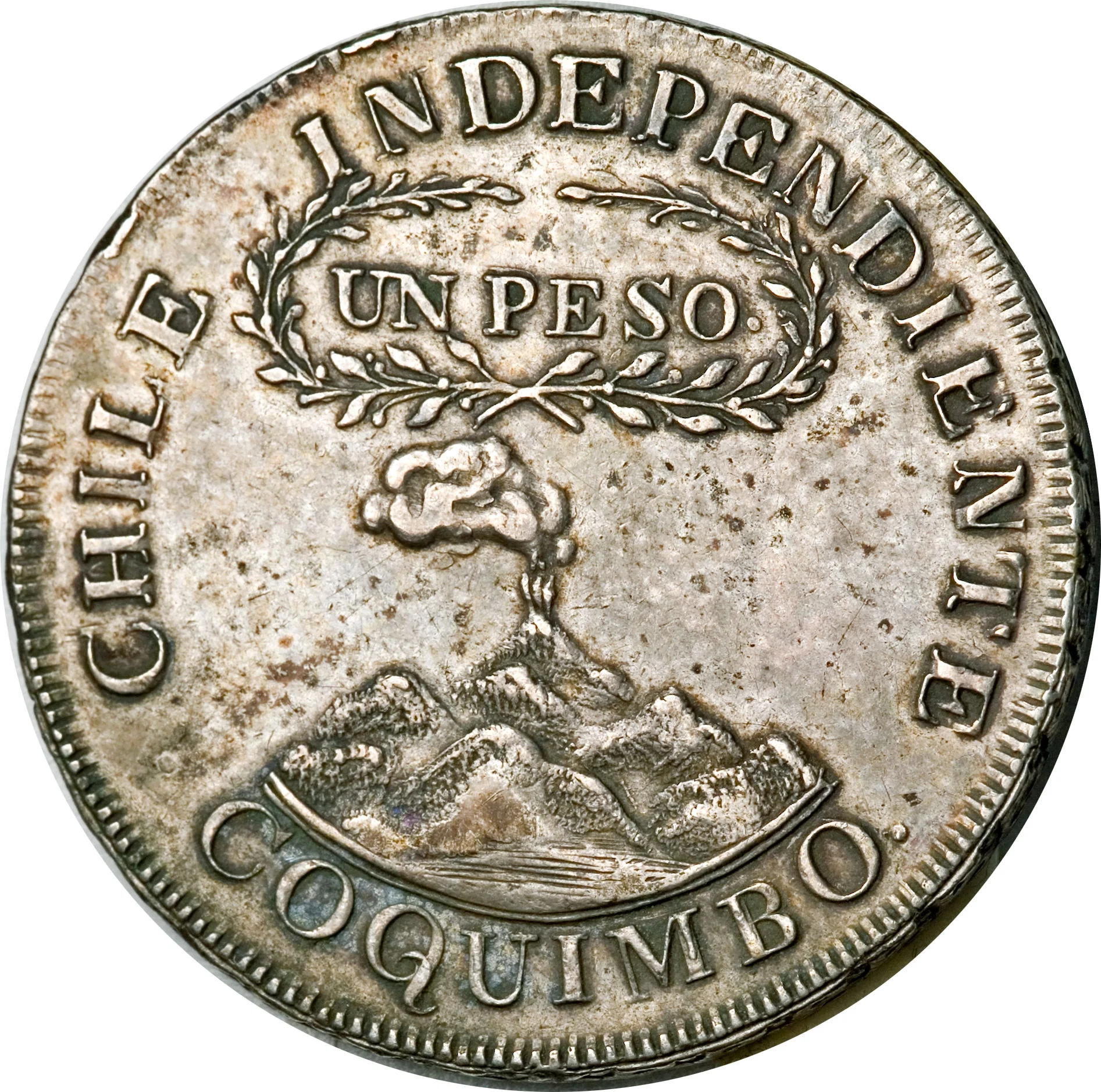
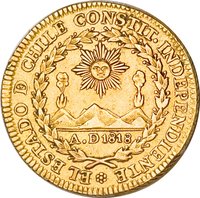
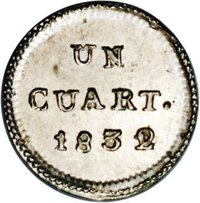
Obverse
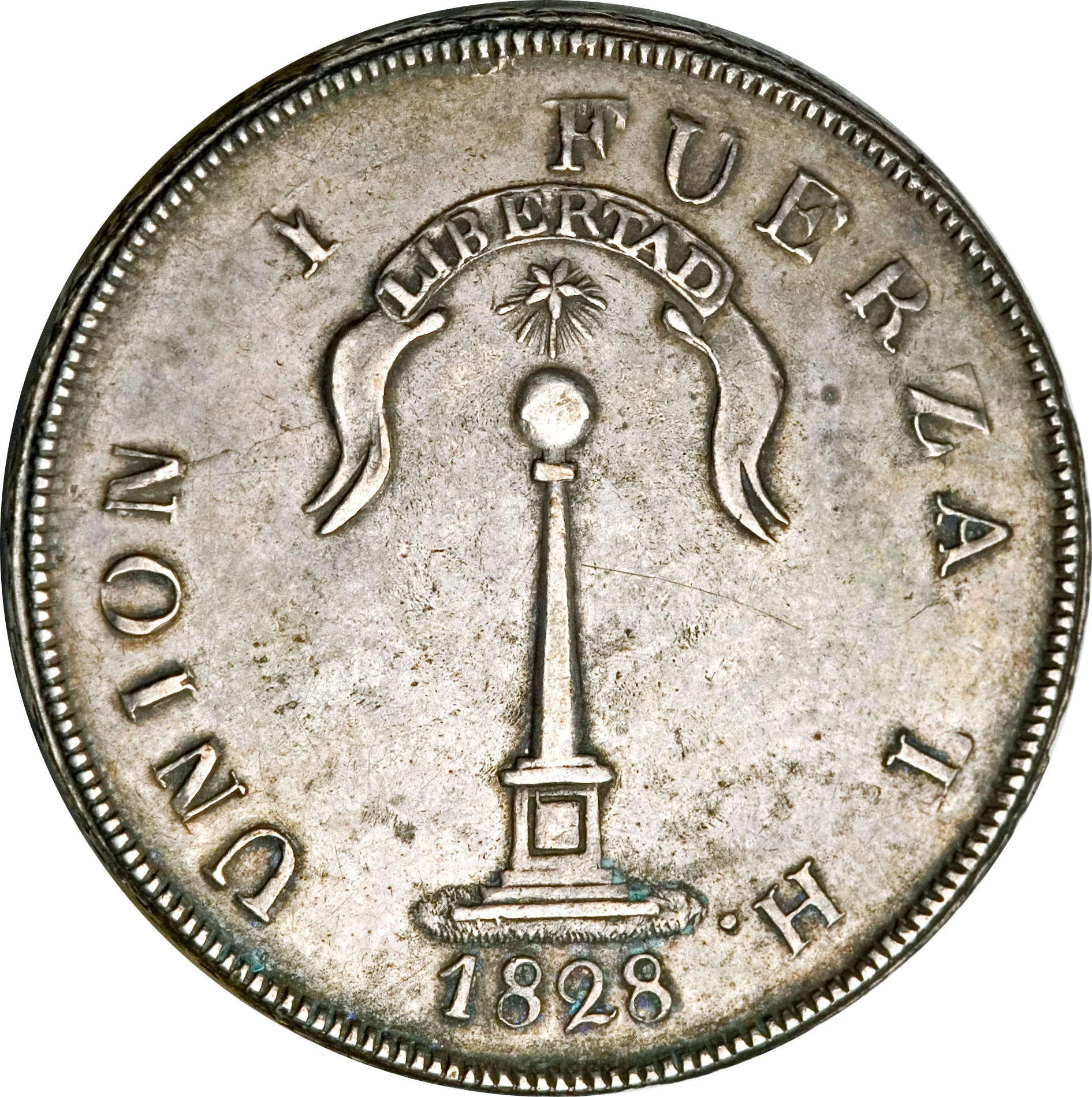
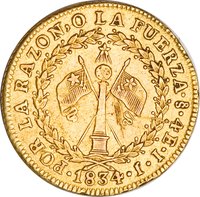
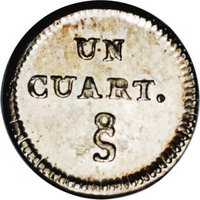
Reverse
Edge
Mintings
| Year | Mint Mark | Mintage | Quality | Collection |
|---|---|---|---|---|
| 1828 | TH | — |
Historical background
Following independence, Chile's early currency situation was one of profound disorder. The colonial real remained in circulation but was severely debased and scarce, while a chaotic mix of foreign coins—primarily Peruvian and Bolivian silver, as well as British sovereigns—circulated at fluctuating values. This monetary anarchy stifled commerce and state finances, as the government lacked the authority and minting capacity to impose a uniform standard, leading to confusion, fraud, and economic instability.
Recognizing this crisis, the conservative government of President Francisco Antonio Pinto, advised by Minister of Finance Manuel Rengifo, undertook a decisive reform in 1828. The cornerstone was the creation of the Chilean peso, defined as a coin of 8 reales and containing a specific weight and fineness of silver. Crucially, the law established a bimetallic system, fixing the value of gold coins in relation to the new silver peso. To enforce this, the government began recalling and recoining all foreign and old colonial currency at the national mint, aiming to replace the heterogeneous mix with a single, trustworthy national currency.
The 1828 reform was a foundational step toward monetary sovereignty and stability, though full implementation took years. It provided the first coherent legal framework for Chile's currency, directly supporting the nation's growing export economy, particularly the silver mining sector. This move laid the essential administrative and conceptual groundwork for the more robust financial institutions that would follow in the 1830s and 1840s, marking the beginning of Chile's transition from post-colonial monetary chaos to a modern, unified monetary system.
Recognizing this crisis, the conservative government of President Francisco Antonio Pinto, advised by Minister of Finance Manuel Rengifo, undertook a decisive reform in 1828. The cornerstone was the creation of the Chilean peso, defined as a coin of 8 reales and containing a specific weight and fineness of silver. Crucially, the law established a bimetallic system, fixing the value of gold coins in relation to the new silver peso. To enforce this, the government began recalling and recoining all foreign and old colonial currency at the national mint, aiming to replace the heterogeneous mix with a single, trustworthy national currency.
The 1828 reform was a foundational step toward monetary sovereignty and stability, though full implementation took years. It provided the first coherent legal framework for Chile's currency, directly supporting the nation's growing export economy, particularly the silver mining sector. This move laid the essential administrative and conceptual groundwork for the more robust financial institutions that would follow in the 1830s and 1840s, marking the beginning of Chile's transition from post-colonial monetary chaos to a modern, unified monetary system.
💎 Extremely Rare