

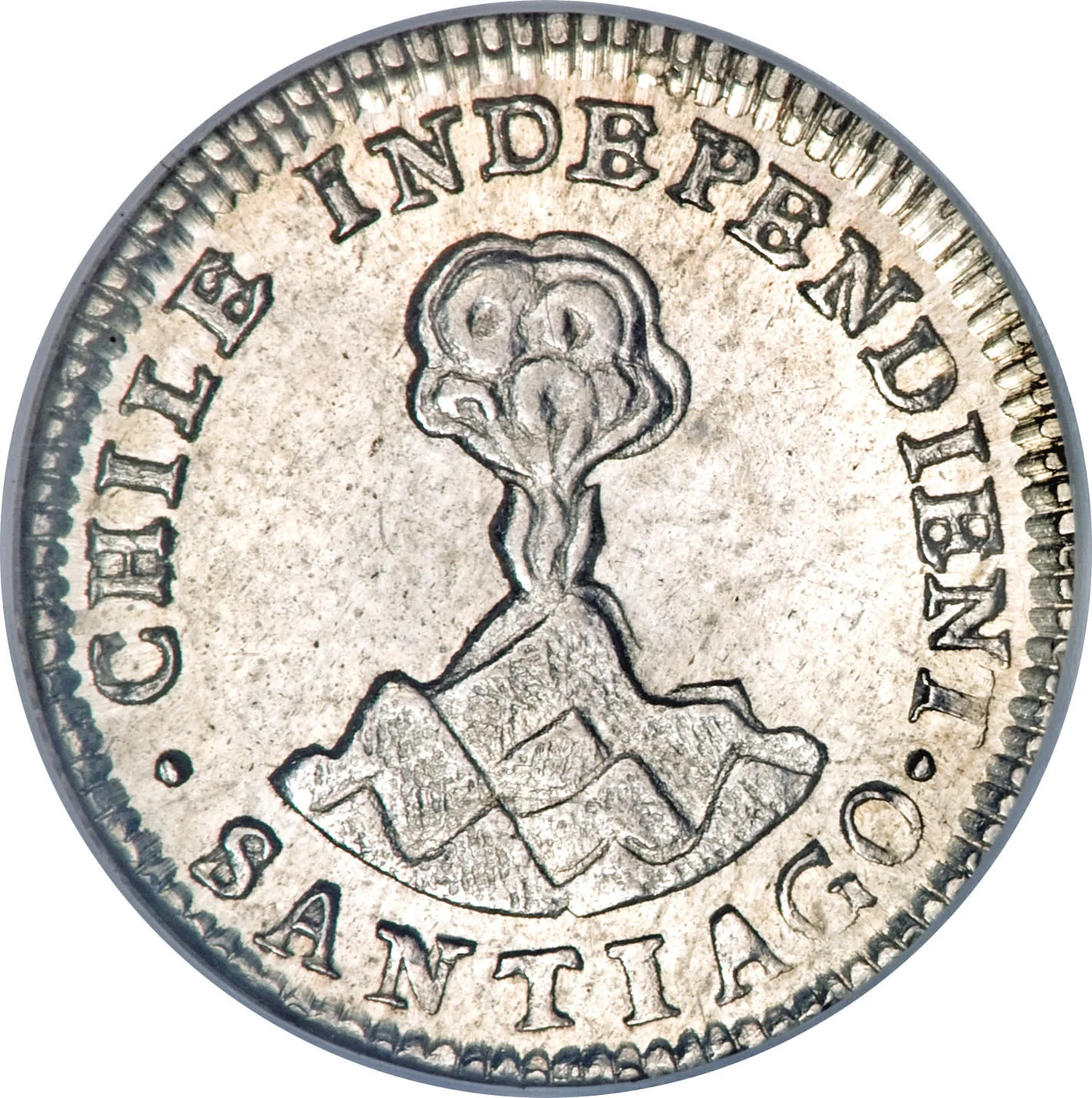
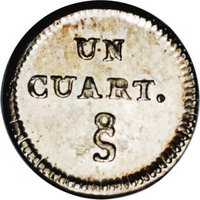
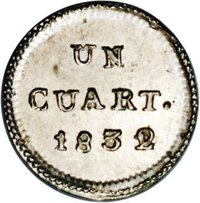
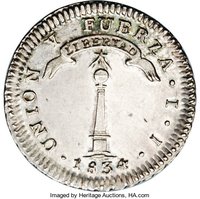
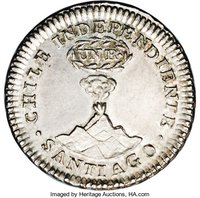
Obverse
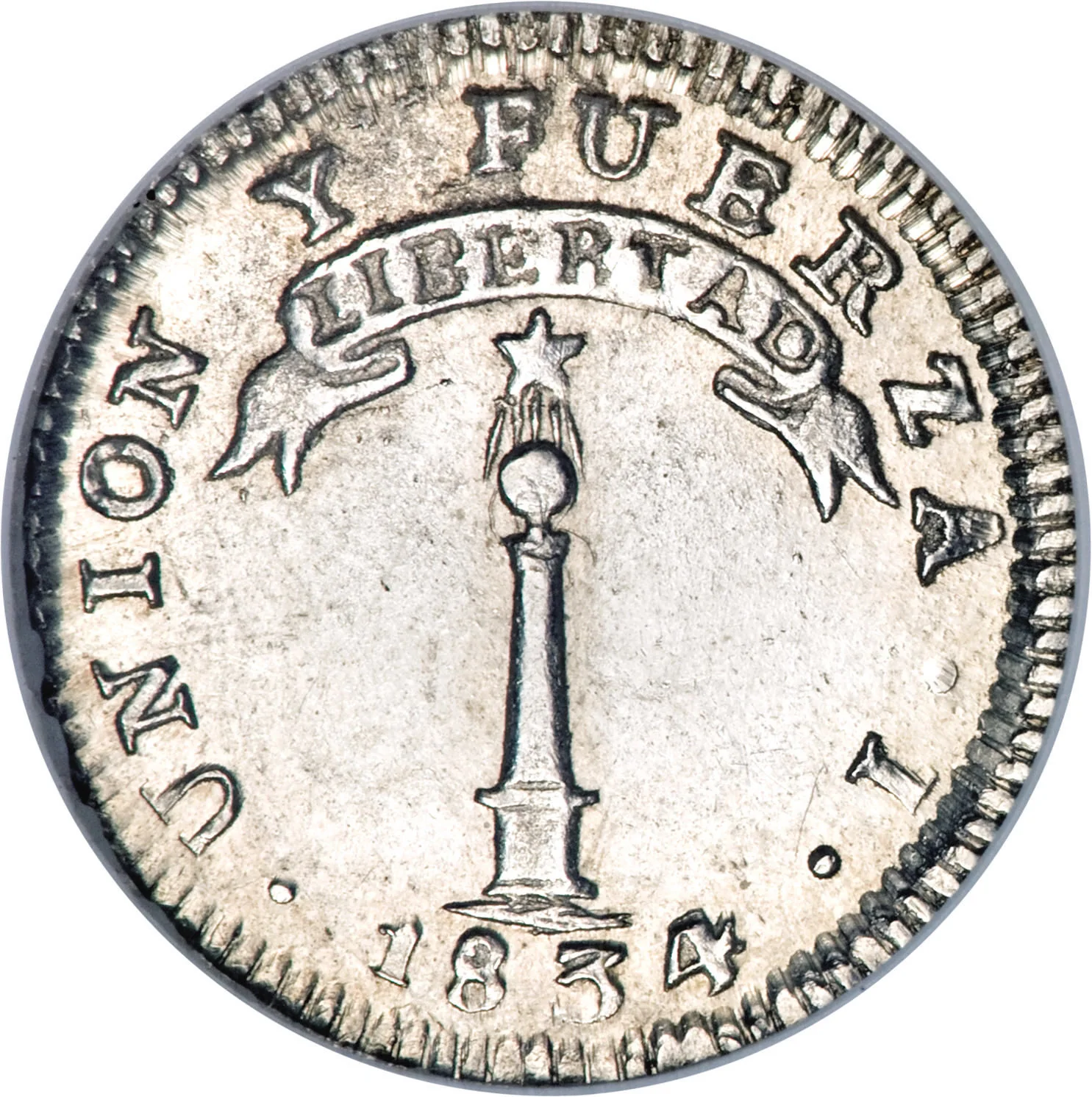
Reverse
Edge
Laureated
Mints
| Name | Mark |
|---|---|
| Casa de Moneda de Chile | — |
Mintings
| Year | Mint Mark | Mintage | Quality | Collection |
|---|---|---|---|---|
| 1833 | I | 39,440 | ||
| 1834 | I | 46,903 |
Historical background
In 1833, Chile's currency situation was characterized by significant disorder and a lack of unified national monetary authority. Following independence, the country was flooded with a chaotic mix of coins from the colonial era, other Latin American nations, and even Europe. The most common unit was the peso, but its value and metallic content were inconsistent, circulating alongside Peruvian pesos fuertes, Bolivian soles, and Spanish colonial reales. This proliferation of foreign and irregular coinage created a complex and inefficient system where trade often relied on the physical weight and assay of silver, rather than a trusted face value.
The political stability brought by the conservative 1833 Constitution, which centralized power and established a long-lasting political order, created the necessary conditions for monetary reform. The government, led by Minister Manuel Rengifo, recognized that economic progress and state-building required a stable and uniform currency. Consequently, in the same year the constitution was adopted, Chile took its first decisive step by authorizing the minting of its own national coins at the newly established Casa de Moneda de Santiago. The first official Chilean coins, the peso and medio peso in silver, began to be produced, bearing the national coat of arms.
However, the reform of 1833 was merely the beginning of a protracted process. While the introduction of a national coinage was a critical move toward sovereignty and uniformity, it did not immediately displace the vast quantity of heterogeneous coins already in circulation. The full consolidation of a reliable monetary system would take decades, culminating in the adoption of the Condor gold standard system in the 1850s and the eventual establishment of a decimal-based peso in 1851. Thus, the year 1833 stands as a pivotal turning point—the moment Chile began to actively impose order on its monetary chaos as a foundational element of the new republic's economic identity.
The political stability brought by the conservative 1833 Constitution, which centralized power and established a long-lasting political order, created the necessary conditions for monetary reform. The government, led by Minister Manuel Rengifo, recognized that economic progress and state-building required a stable and uniform currency. Consequently, in the same year the constitution was adopted, Chile took its first decisive step by authorizing the minting of its own national coins at the newly established Casa de Moneda de Santiago. The first official Chilean coins, the peso and medio peso in silver, began to be produced, bearing the national coat of arms.
However, the reform of 1833 was merely the beginning of a protracted process. While the introduction of a national coinage was a critical move toward sovereignty and uniformity, it did not immediately displace the vast quantity of heterogeneous coins already in circulation. The full consolidation of a reliable monetary system would take decades, culminating in the adoption of the Condor gold standard system in the 1850s and the eventual establishment of a decimal-based peso in 1851. Thus, the year 1833 stands as a pivotal turning point—the moment Chile began to actively impose order on its monetary chaos as a foundational element of the new republic's economic identity.
💎 Extremely Rare