

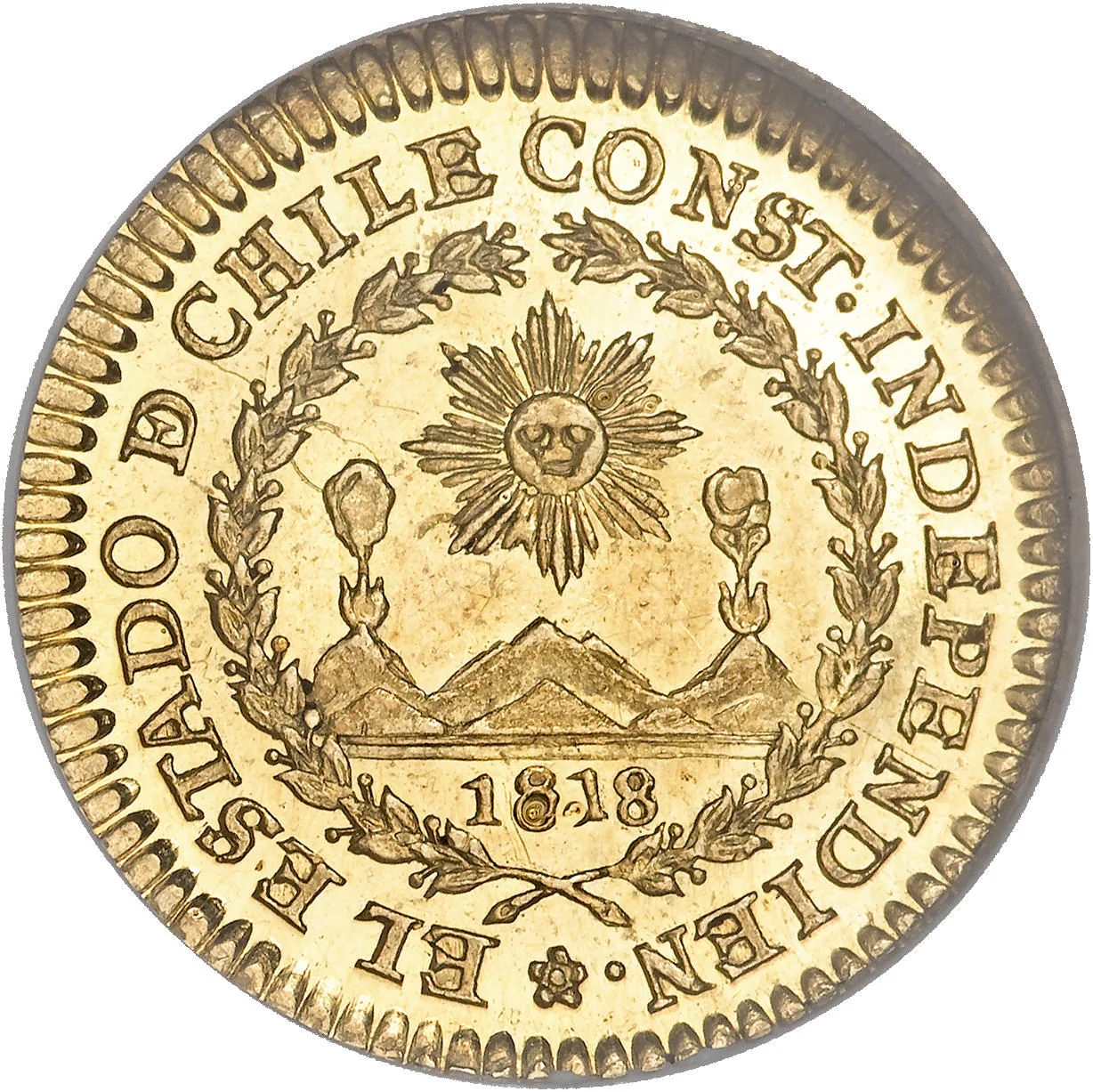
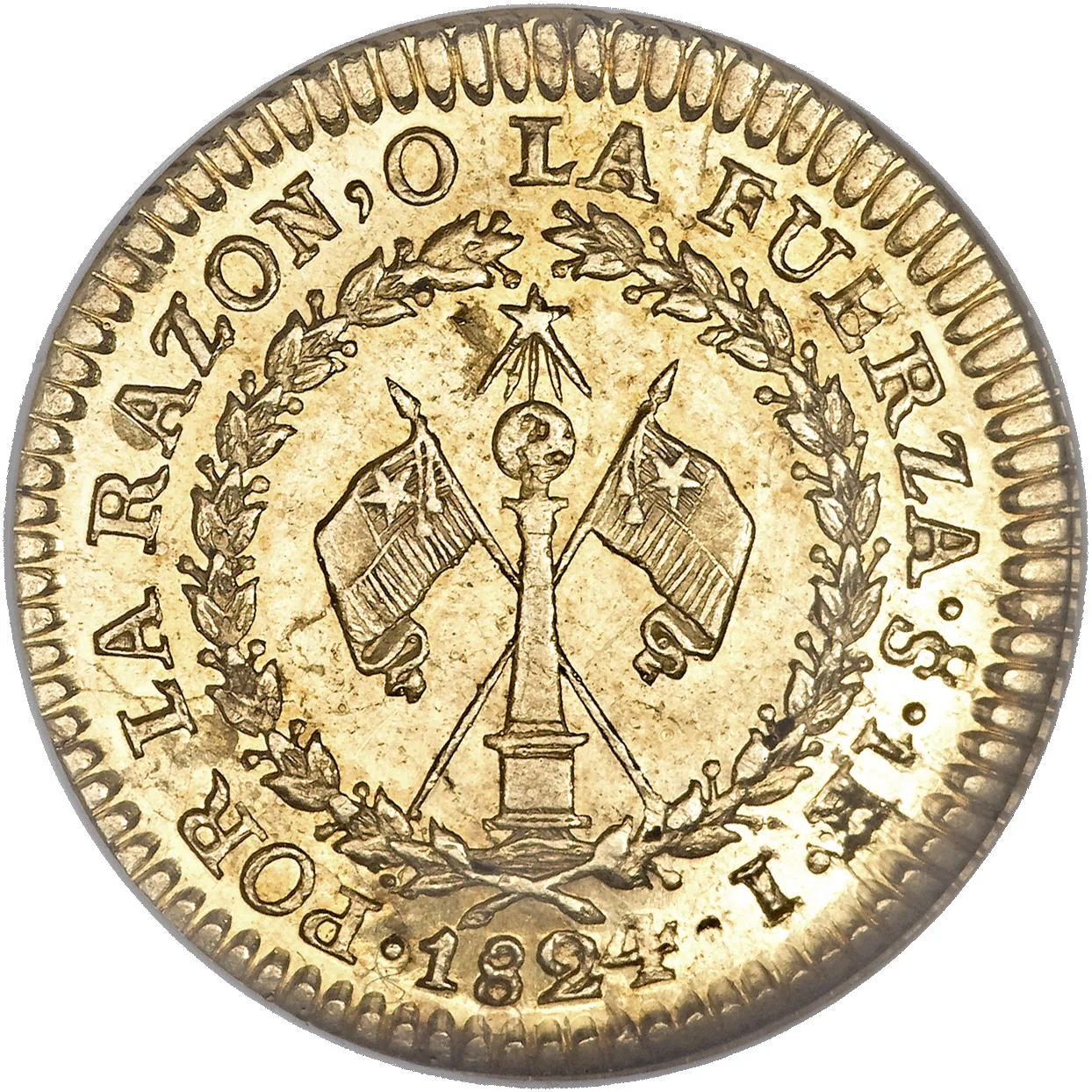
Mints
| Name | Mark |
|---|---|
| Casa de Moneda de Chile | (So) |
Mintings
| Year | Mint Mark | Mintage | Quality | Collection |
|---|---|---|---|---|
| 1824 | So | 3,400 | ||
| 1825 | So | 2,920 | ||
| 1826 | So | 4,280 | ||
| 1827 | So | 408 | ||
| 1828 | So | 4,488 | ||
| 1830 | So | 3,328 | ||
| 1832 | So | 2,338 | ||
| 1833 | So | 2,620 | ||
| 1834 | So | 10,614 |
Historical background
Following independence in 1818, Chile faced severe monetary instability, a legacy of the colonial era and the costly wars of liberation. The new republic inherited a chaotic mix of coins, including Spanish colonial reales, Peruvian pesos, and even counterfeits, leading to widespread confusion in commerce. The government's initial attempts to issue paper money to finance the state resulted in rapid depreciation and a loss of public trust, creating an urgent need for a unified, stable national currency to underpin economic sovereignty and growth.
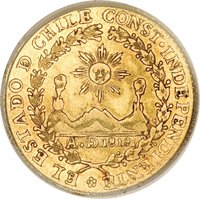
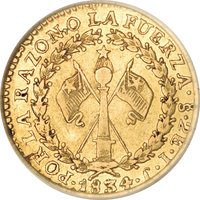
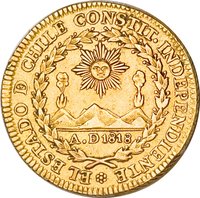
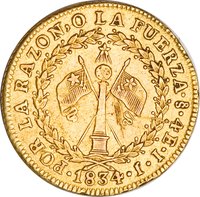
In response, the government of General Ramón Freire enacted the Currency Law of 1824, a decisive reform that established the Chilean peso as the sole official unit of account. The law was meticulously planned, defining the peso as a coin of 8 reales and 1 dineros of fine silver (roughly 22.5 grams), directly pegging its value to the widely respected Spanish colonial peso fuerte. To produce these new coins, the state officially opened the Casa de Moneda de Santiago (the Santiago Mint) in 1825, which began striking the first national coinage, featuring the national coat of arms and the iconic condor—a powerful symbol of the young republic's independence.
The 1824 reform was a foundational success, providing the stability necessary for commerce and state finance. By tying the new currency to a trusted silver standard and centralizing minting under state authority, Chile avoided the hyperinflation that plagued other post-independence Latin American nations. This early monetary stability became a cornerstone for Chile's subsequent relative economic and political cohesion in the 19th century, fostering both domestic confidence and foreign trade.
In response, the government of General Ramón Freire enacted the Currency Law of 1824, a decisive reform that established the Chilean peso as the sole official unit of account. The law was meticulously planned, defining the peso as a coin of 8 reales and 1 dineros of fine silver (roughly 22.5 grams), directly pegging its value to the widely respected Spanish colonial peso fuerte. To produce these new coins, the state officially opened the Casa de Moneda de Santiago (the Santiago Mint) in 1825, which began striking the first national coinage, featuring the national coat of arms and the iconic condor—a powerful symbol of the young republic's independence.
The 1824 reform was a foundational success, providing the stability necessary for commerce and state finance. By tying the new currency to a trusted silver standard and centralizing minting under state authority, Chile avoided the hyperinflation that plagued other post-independence Latin American nations. This early monetary stability became a cornerstone for Chile's subsequent relative economic and political cohesion in the 19th century, fostering both domestic confidence and foreign trade.
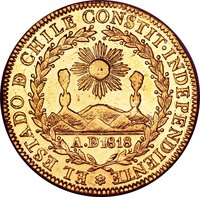
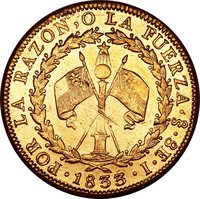
💎 Extremely Rare