

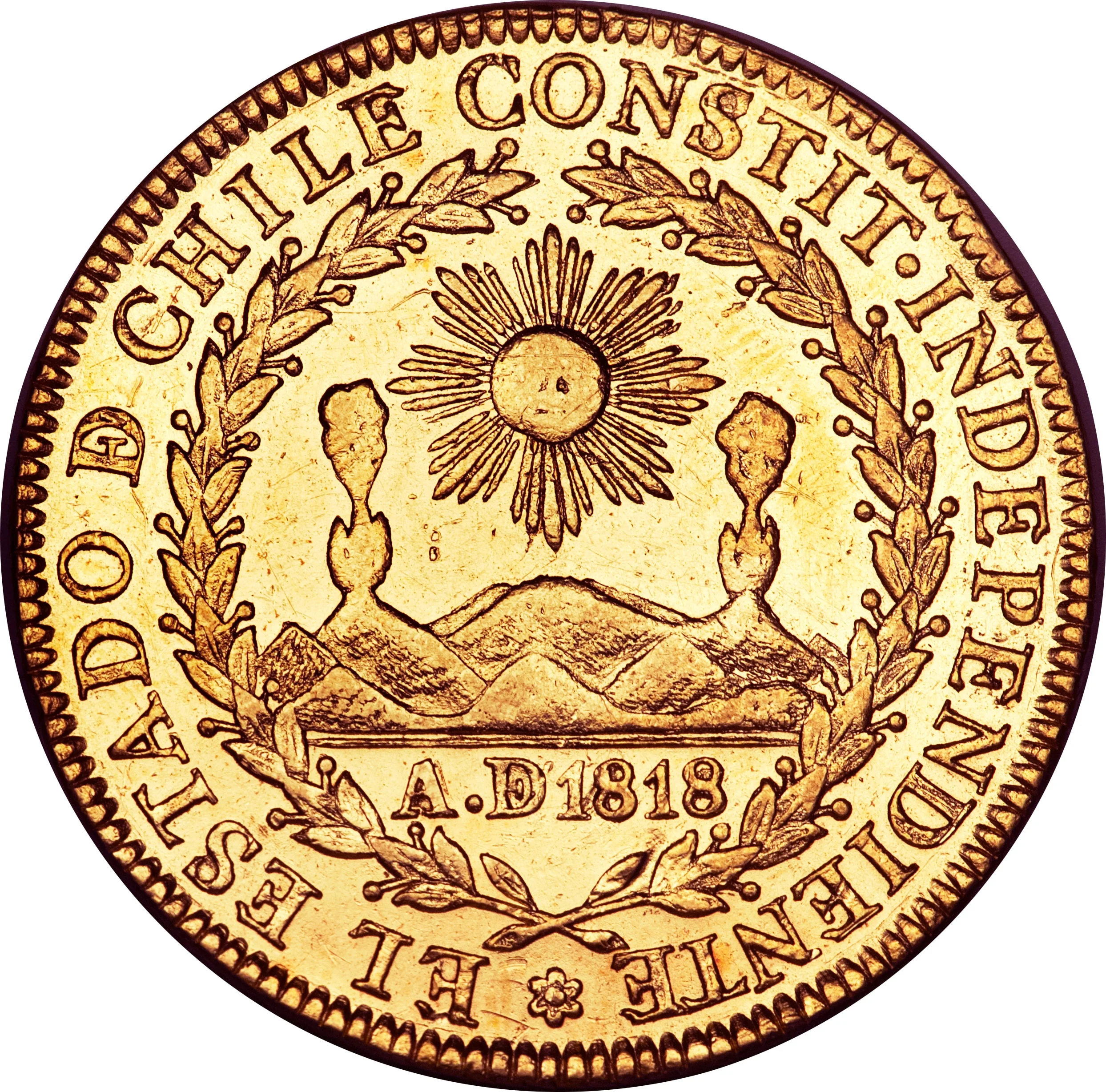
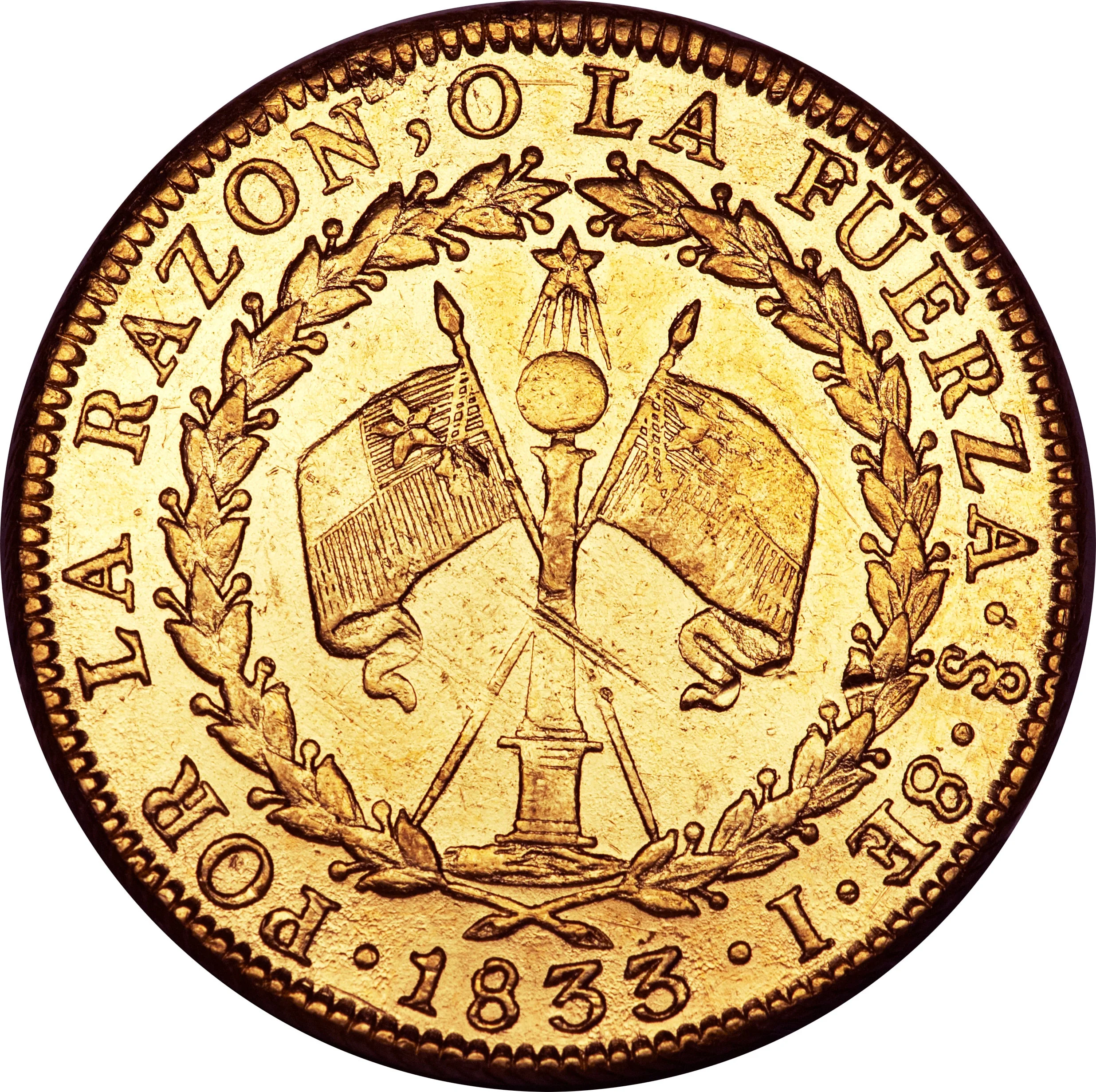
Mints
| Name | Mark |
|---|---|
| Casa de Moneda de Chile | (So) |
Mintings
| Year | Mint Mark | Mintage | Quality | Collection |
|---|---|---|---|---|
| 1818 | So | 29,000 | ||
| 1819 | So | 37,000 | ||
| 1820 | So | 35,000 | ||
| 1821 | So | 16,000 | ||
| 1822 | So | 31,000 | ||
| 1823 | So | 19,000 | ||
| 1824 | So | 10,000 | ||
| 1825 | So | 8,483 | ||
| 1826 | So | 7,607 | ||
| 1827 | So | 2,176 | ||
| 1828 | So | 4,250 | ||
| 1829 | So | — | ||
| 1830 | So | 3,068 | ||
| 1831 | So | 1,745 | ||
| 1832 | So | 11,000 | ||
| 1833 | So | 25,000 | ||
| 1834 | So | — |
Historical background
Following Chile's declaration of independence in 1818, the new nation faced an immediate and severe currency crisis. The prolonged War of Independence had drained the treasury, disrupted mining and agriculture, and left the government of Bernardo O'Higgins with massive debts to finance the ongoing military campaigns. The Spanish colonial monetary system had collapsed, and the precious silver and gold that traditionally backed currency were in short supply, having been exported to pay for arms or hoarded by the populace.
In response, the government resorted to issuing large quantities of paper money, known as papel moneda. These were essentially promissory notes, not backed by specie (hard metal), but by the future success of the state. This led to rapid inflation and a steep decline in the value of the paper peso against the old Spanish colonial silver peso, creating a chaotic dual-system. Public confidence plummeted, as people preferred the tangible security of silver coins, which began to disappear from circulation—a classic example of Gresham's Law, where "bad money drives out good."
Thus, the currency situation in 1818 was defined by instability and scarcity. The provisional government's paper issues were a necessary but inflationary measure to fund the fragile independence, establishing a pattern of monetary challenge that would persist for Chile's early decades. The fundamental task of creating a unified, trusted, and solvent national currency remained unresolved, awaiting the political stability and economic recovery that would follow the final royalist defeat.
In response, the government resorted to issuing large quantities of paper money, known as papel moneda. These were essentially promissory notes, not backed by specie (hard metal), but by the future success of the state. This led to rapid inflation and a steep decline in the value of the paper peso against the old Spanish colonial silver peso, creating a chaotic dual-system. Public confidence plummeted, as people preferred the tangible security of silver coins, which began to disappear from circulation—a classic example of Gresham's Law, where "bad money drives out good."
Thus, the currency situation in 1818 was defined by instability and scarcity. The provisional government's paper issues were a necessary but inflationary measure to fund the fragile independence, establishing a pattern of monetary challenge that would persist for Chile's early decades. The fundamental task of creating a unified, trusted, and solvent national currency remained unresolved, awaiting the political stability and economic recovery that would follow the final royalist defeat.
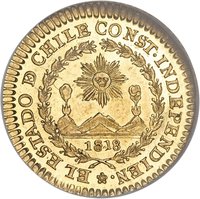
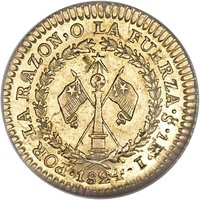
💎 Extremely Rare