

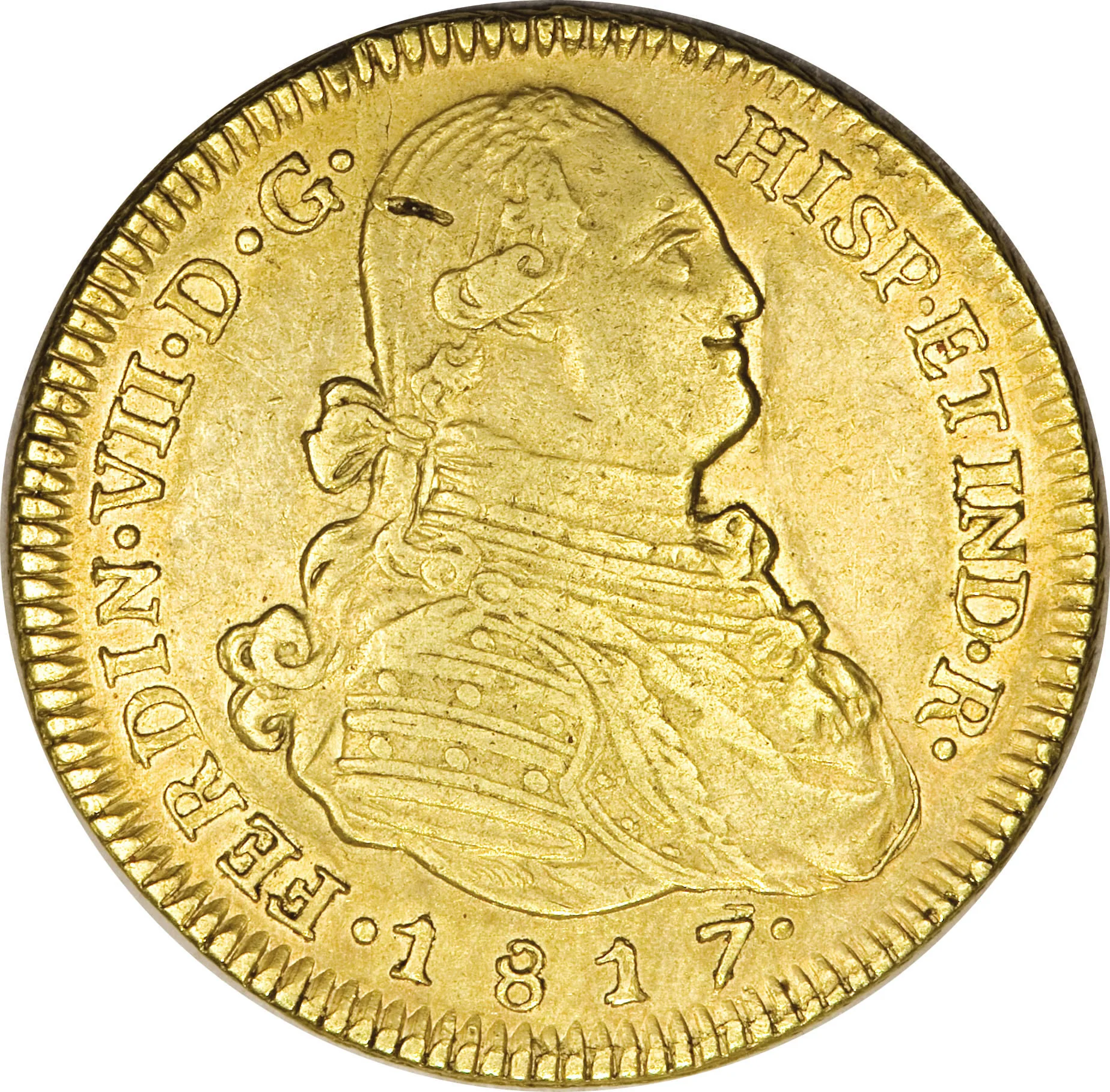
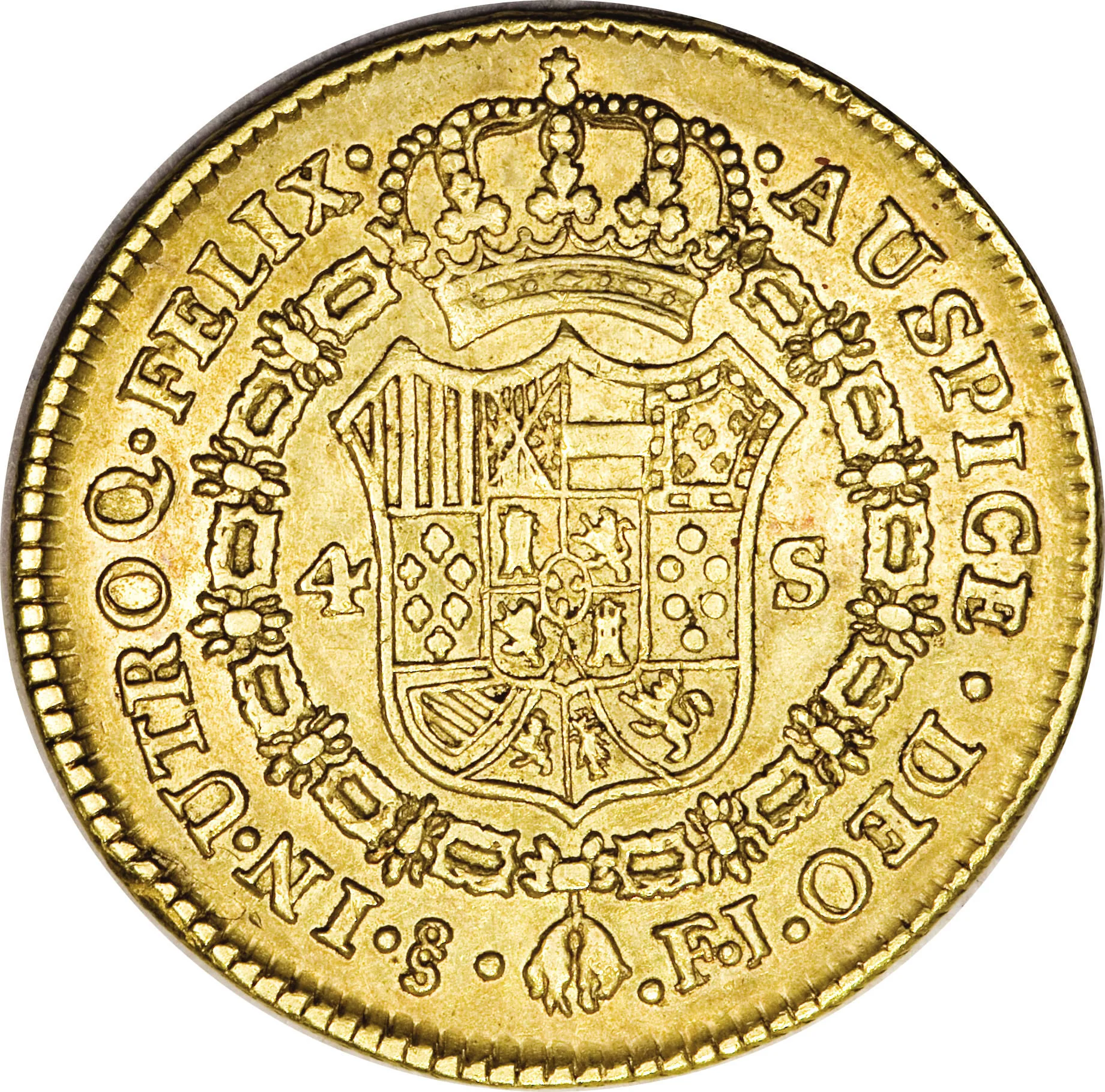
4 escudos – Chile
Add to wishlist
Chile
Context
Years: 1810–1817
Issuer: Chile
Ruler: Ferdinand VII
Currency:
(1541—1852)
Demonetized: Yes
Total mintage: 2,326
Material
References
KM: #
Numista: #35216
Value
Bullion value: $1804.88
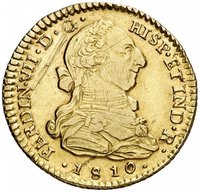
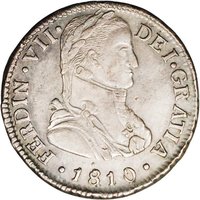
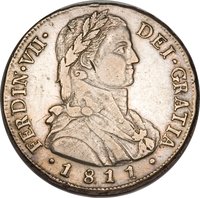
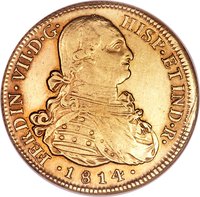
Obverse
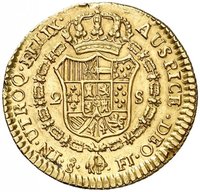
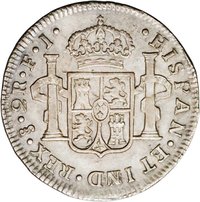
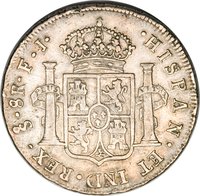
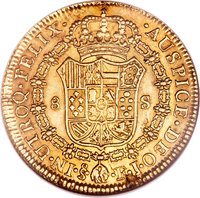
Reverse
Edge
Mints
| Name | Mark |
|---|---|
| Casa de Moneda de Chile | (So) |
Mintings
| Year | Mint Mark | Mintage | Quality | Collection |
|---|---|---|---|---|
| 1810 | So | 272 | ||
| 1811 | So | 170 | ||
| 1812 | So | 254 | ||
| 1813 | So | 1,462 | ||
| 1816 | So | 100 | ||
| 1817 | So | 68 |
Historical background
In 1810, Chile's currency situation was a direct reflection of its colonial status and the economic turmoil triggered by the Napoleonic invasion of Spain. The official medium of exchange was the Spanish colonial real, with coins minted in Peru (at the Lima mint) and, to a lesser extent, in Bolivia (Potosi) circulating throughout the country. However, the political crisis of 1808, which saw King Ferdinand VII deposed, severed vital economic and administrative links with the metropolis. This led to a severe shortage of official coinage, as the supply of newly minted currency from Peru became irregular and unreliable.
To address this acute scarcity, the newly established First Government Junta of Chile, formed in September 1810, took a momentous step in early 1811 by authorizing the creation of the country's first local coinage. These provisional coins, crudely minted in silver and copper, were a bold assertion of autonomy. They were often stamped with the name "CHILE" and symbols like a column or a spear, representing liberty, but crucially, they omitted the portrait of the imprisoned Spanish king, a significant political statement. This emergency issue was necessary to facilitate basic commerce and pay government and military expenses, but it also flooded the market with coins of inconsistent weight and purity.
Consequently, the monetary landscape in 1810-1811 was one of confusion and instability. A mix of worn Spanish colonial coins, these new provisional Chilean issues, and even cut or counterfeited pieces circulated simultaneously, eroding public trust. The lack of a standardized, trustworthy currency hampered trade and was a pressing problem for the nascent patriot government. Thus, the currency situation at the dawn of Chilean independence was not merely an economic issue but a potent symbol of the break with Spain and the practical challenges of establishing a sovereign state.
To address this acute scarcity, the newly established First Government Junta of Chile, formed in September 1810, took a momentous step in early 1811 by authorizing the creation of the country's first local coinage. These provisional coins, crudely minted in silver and copper, were a bold assertion of autonomy. They were often stamped with the name "CHILE" and symbols like a column or a spear, representing liberty, but crucially, they omitted the portrait of the imprisoned Spanish king, a significant political statement. This emergency issue was necessary to facilitate basic commerce and pay government and military expenses, but it also flooded the market with coins of inconsistent weight and purity.
Consequently, the monetary landscape in 1810-1811 was one of confusion and instability. A mix of worn Spanish colonial coins, these new provisional Chilean issues, and even cut or counterfeited pieces circulated simultaneously, eroding public trust. The lack of a standardized, trustworthy currency hampered trade and was a pressing problem for the nascent patriot government. Thus, the currency situation at the dawn of Chilean independence was not merely an economic issue but a potent symbol of the break with Spain and the practical challenges of establishing a sovereign state.
Series: 1810 Chile circulation coins
✨ Legendary