

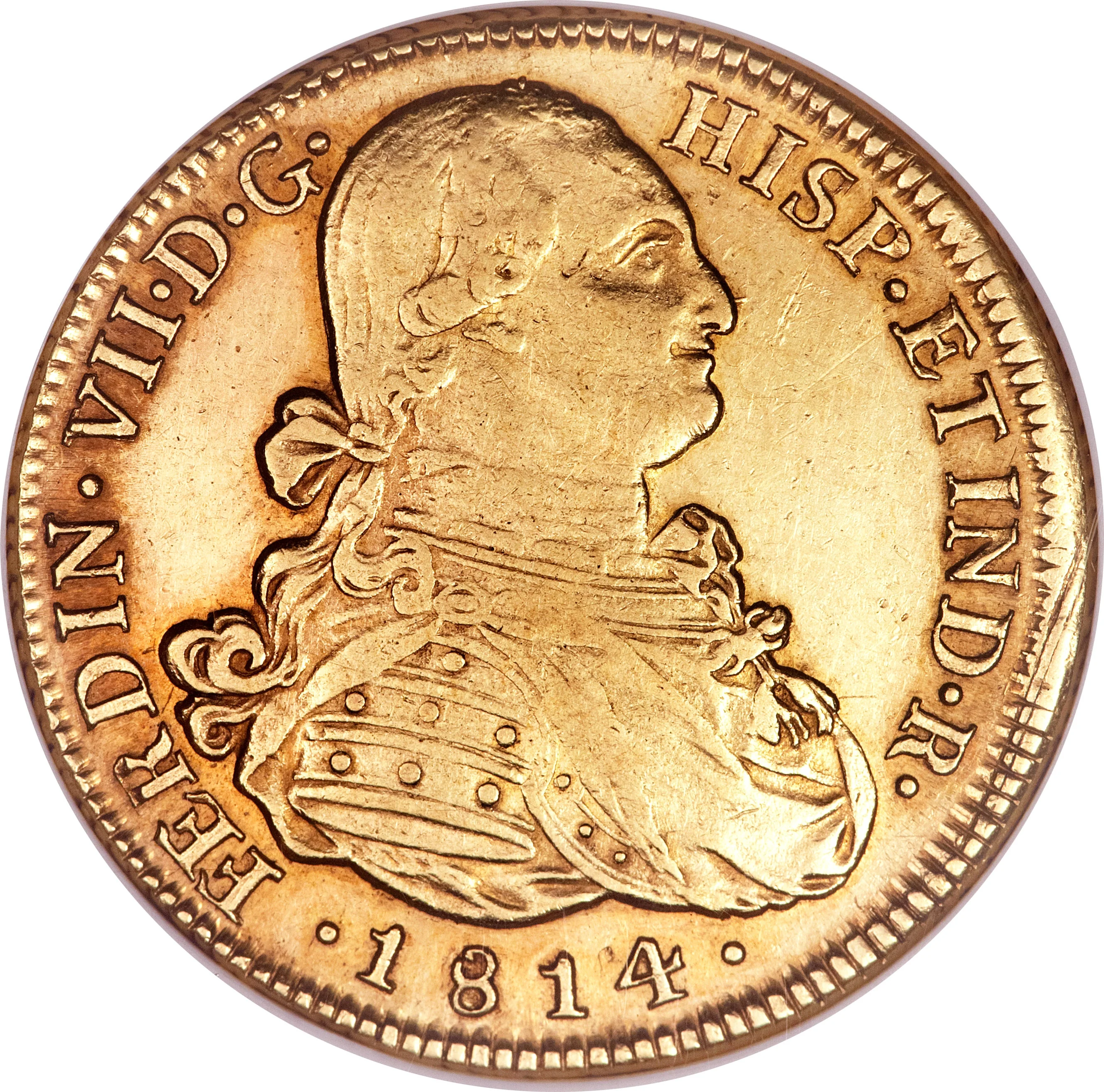
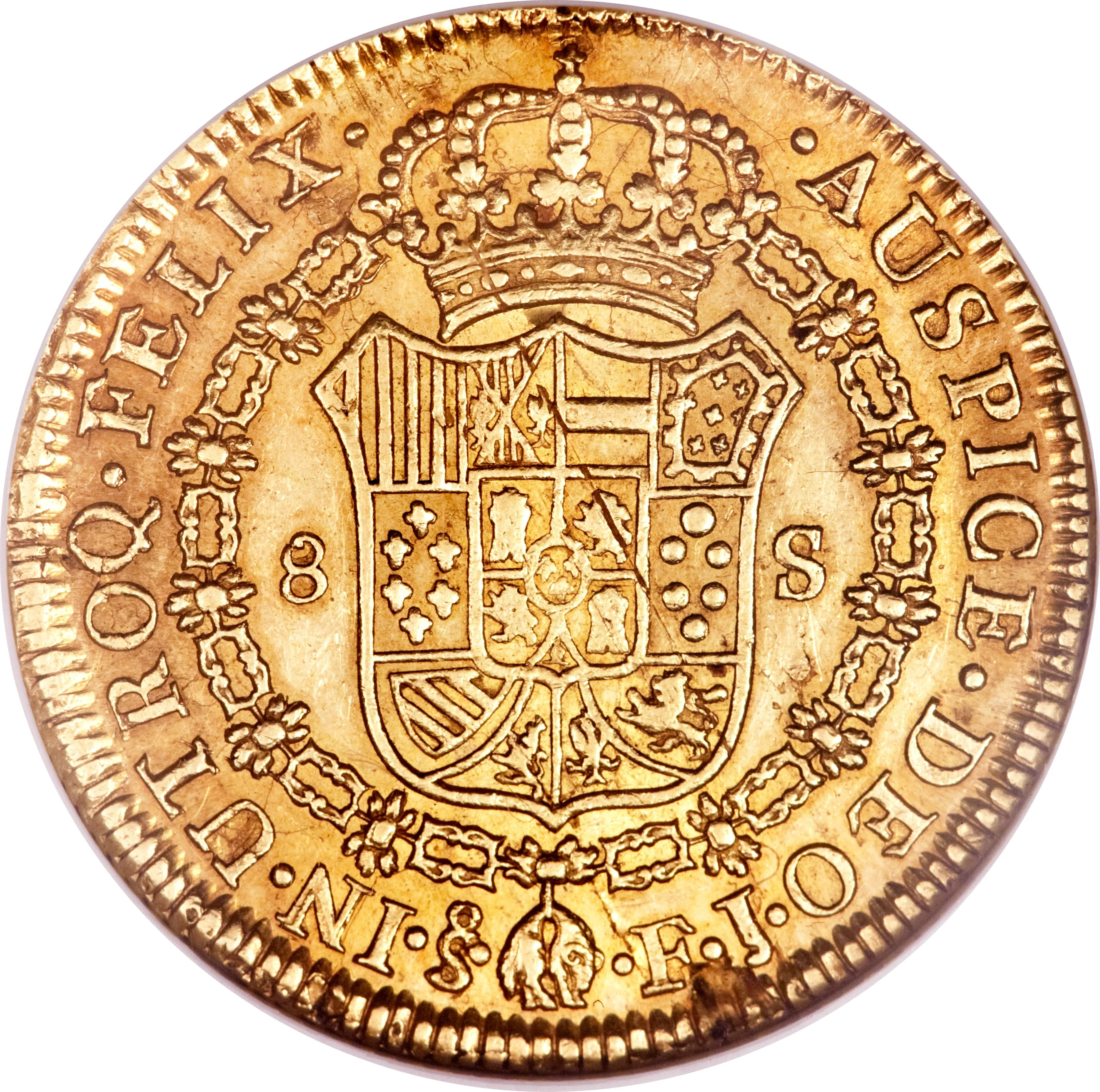
8 Escudos – Chile
Chile
Context
Years: 1811–1817
Issuer: Chile 
Ruler: Ferdinand VII
Currency:
(1541—1852)
Demonetized: Yes
Total mintage: 194,000
Material
References
KM: #Click to copy to clipboard78
Numista: #22917
Value
Bullion value: $3959.04
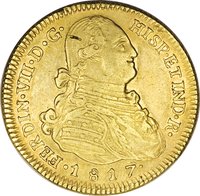
Obverse
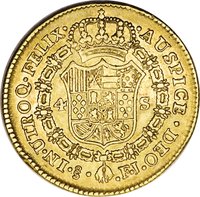
Reverse
Edge
Mints
| Name | Mark |
|---|---|
| Casa de Moneda de Chile | (So) |
Mintings
| Year | Mint Mark | Mintage | Quality | Collection |
|---|---|---|---|---|
| 1811 | So | — | ||
| 1812 | So | 48,000 | ||
| 1813 | /2 | 37,000 | ||
| 1813 | So | — | ||
| 1814 | So | 29,000 | ||
| 1815 | So | 39,000 | ||
| 1816 | So | 30,000 | ||
| 1817 | So | 11,000 |
Historical background
In 1811, Chile's currency situation was a direct reflection of its turbulent political transition. The colony, then known as the Captaincy General of Chile, was in the early stages of the Patria Vieja period following the establishment of the First Government Junta in 1810. This break from Spanish rule immediately disrupted the existing monetary system, which had been reliant on coins minted in Peru (primarily silver pesos and gold escudos) and a limited supply of Spanish currency. The new creole government faced the urgent fiscal demands of administration and defense, but lacked control over formal minting facilities and saw its supply of official coinage dwindle as trade with loyalist Peru became strained.
To address the acute shortage of circulating money, the revolutionary government resorted to emergency measures. The most significant was the issuance of paper money, a first in Chilean history. These notes, printed in simple designs and bearing the inscription "Papel Moneda del Estado," were essentially promissory notes intended to be backed by future state revenues. Additionally, the government authorized the use of "macuquina" – crude, irregularly cut silver coins from Peru – and even allowed foreign coins, like British and Portuguese, to circulate at officially set values. This created a heterogeneous and unstable monetary environment where multiple forms of money coexisted without a strong central guarantee.
The fundamental problem was one of trust and authority. The paper money, issued without sufficient bullion reserves, quickly began to depreciate as public confidence in the fledgling state's ability to redeem it wavered. This early experiment with fiat currency was plagued by skepticism and would contribute to inflationary pressures. Thus, the currency situation of 1811 was less a coherent system and more a patchwork of emergency solutions, emblematic of a revolutionary state asserting its fiscal sovereignty while grappling with the practical realities of economic survival amidst political uncertainty.
To address the acute shortage of circulating money, the revolutionary government resorted to emergency measures. The most significant was the issuance of paper money, a first in Chilean history. These notes, printed in simple designs and bearing the inscription "Papel Moneda del Estado," were essentially promissory notes intended to be backed by future state revenues. Additionally, the government authorized the use of "macuquina" – crude, irregularly cut silver coins from Peru – and even allowed foreign coins, like British and Portuguese, to circulate at officially set values. This created a heterogeneous and unstable monetary environment where multiple forms of money coexisted without a strong central guarantee.
The fundamental problem was one of trust and authority. The paper money, issued without sufficient bullion reserves, quickly began to depreciate as public confidence in the fledgling state's ability to redeem it wavered. This early experiment with fiat currency was plagued by skepticism and would contribute to inflationary pressures. Thus, the currency situation of 1811 was less a coherent system and more a patchwork of emergency solutions, emblematic of a revolutionary state asserting its fiscal sovereignty while grappling with the practical realities of economic survival amidst political uncertainty.
✨ Legendary