

Obverse
Description:
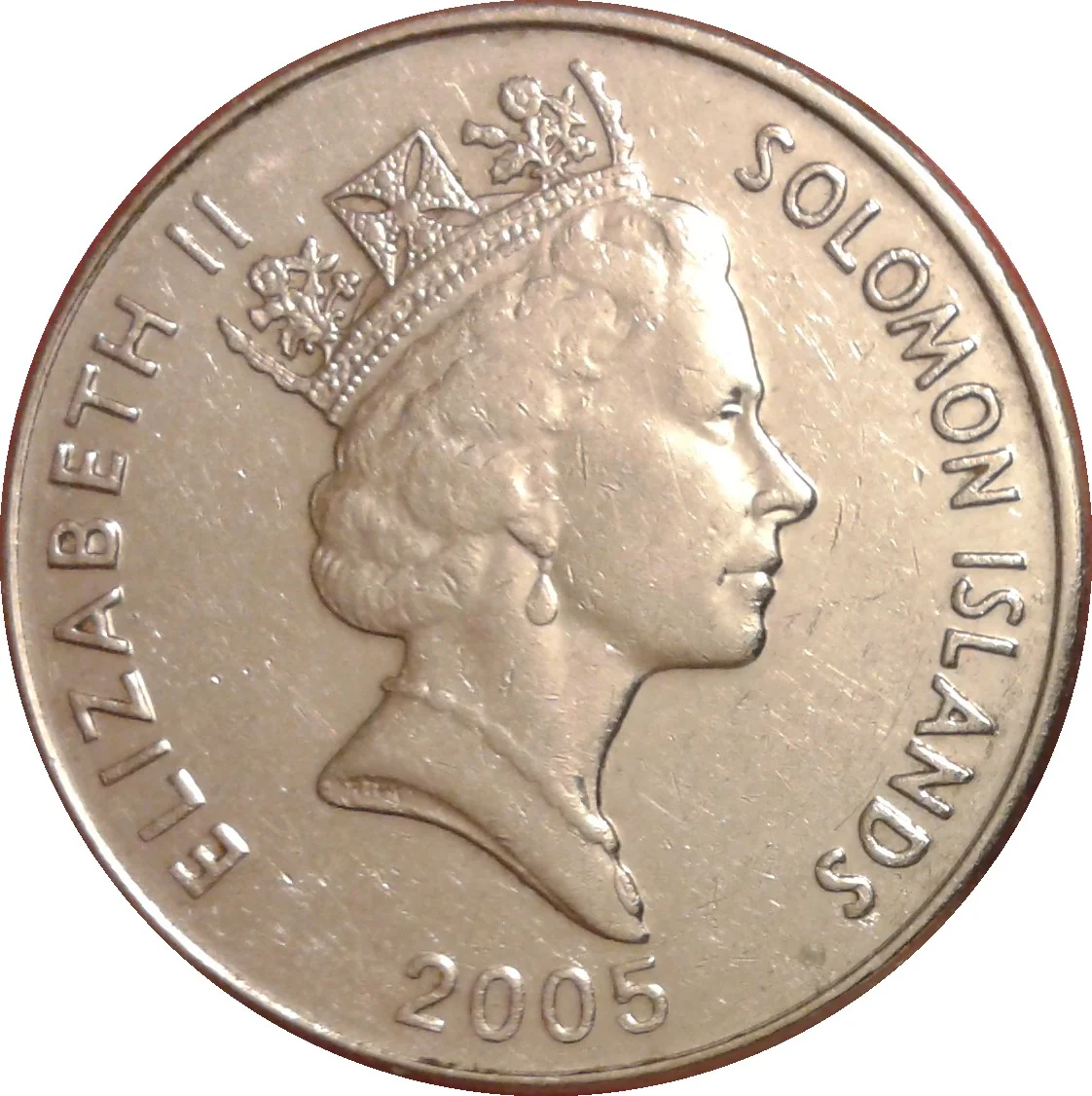
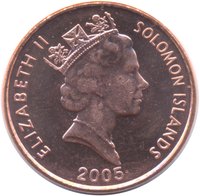
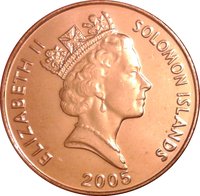
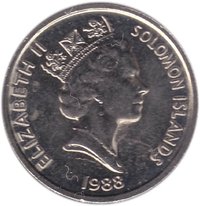
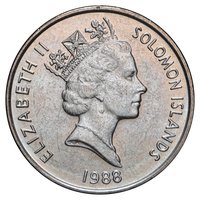
Queen Elizabeth II facing right.
Inscription:
ELIZABETH II SOLOMON ISLANDS
RDM
2005
RDM
2005
Translation:
ELIZABETH II SOLOMON ISLANDS
REGINA DEDIT MONETAM
2005
REGINA DEDIT MONETAM
2005
Script: Latin
Engraver: Raphael David Maklouf
Reverse
Description:
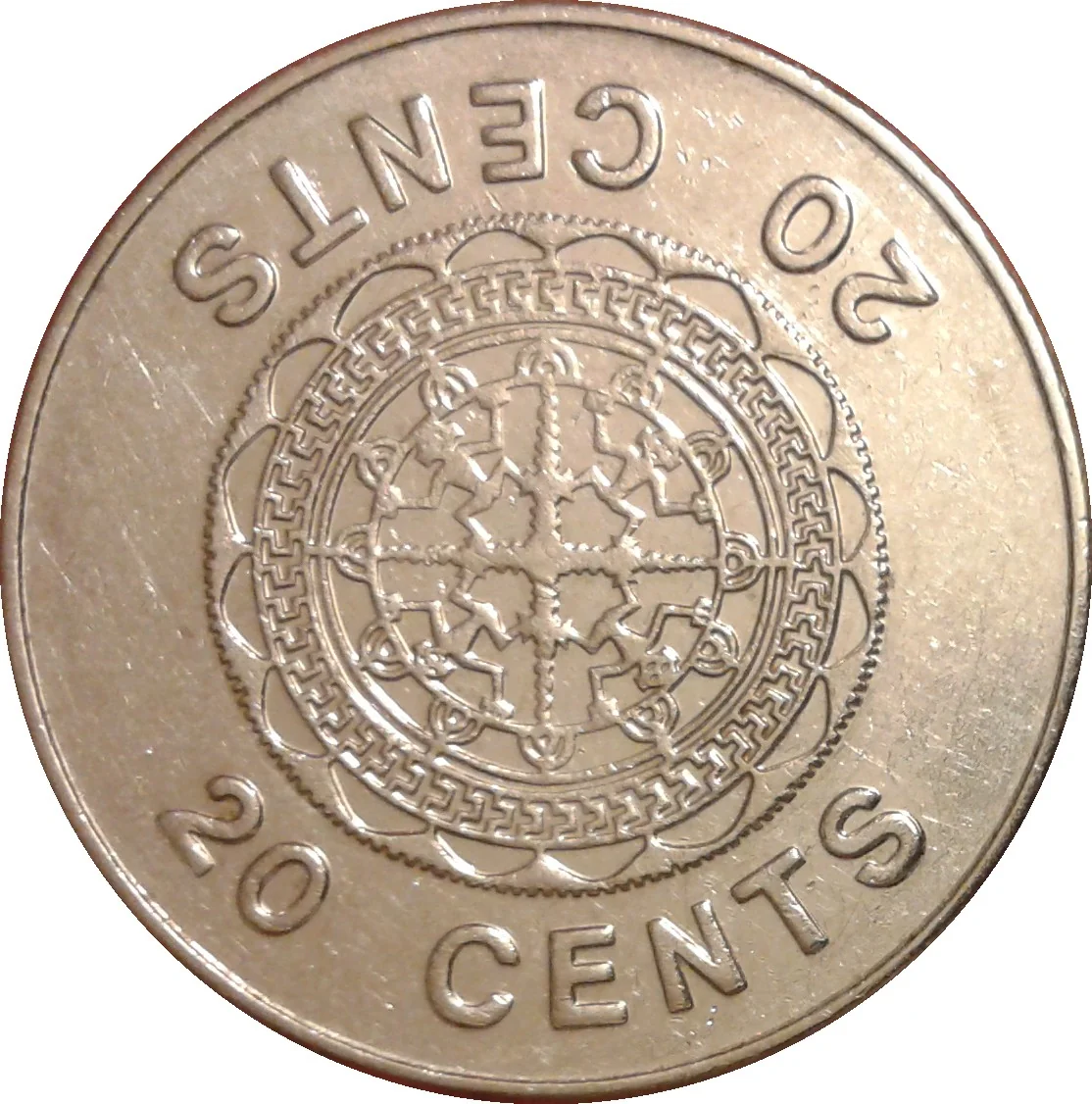
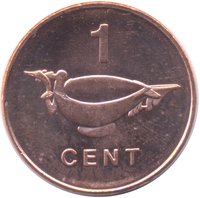
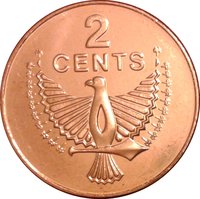
Malaita pendant in circle
Inscription:
20 CENTS 20 CENTS
Script: Latin
Engraver: David Thomas
Edge
Milled
Mintings
| Year | Mint Mark | Mintage | Quality | Collection |
|---|---|---|---|---|
| 1987 | — | — | ||
| 1989 | — | — | ||
| 1993 | — | — | ||
| 1996 | — | — | ||
| 1997 | — | — | ||
| 2000 | — | — | ||
| 2005 | — | — | ||
| 2008 | — | — | ||
| 2010 | — | — |
Historical background
In 1987, the Solomon Islands was navigating a complex currency situation rooted in its colonial history and regional monetary agreements. As a member of the Solomon Islands Monetary Authority (SIMA), established in 1976, the country did not issue its own independent currency. Instead, it remained part of the Australian dollar bloc, using the Solomon Islands dollar (SBD) which was peged at par to the Australian dollar (AUD). This peg provided stability but also tied the nation's monetary policy and economic fortunes closely to its larger, more developed neighbour.
The year 1987 was significant as it marked a pivotal step toward greater monetary sovereignty. On 24 March 1987, the Central Bank of Solomon Islands (CBSI) was formally established, replacing SIMA. This institutional change was driven by a desire for greater control over domestic monetary policy and to better manage the country's foreign exchange reserves. However, the currency remained pegged to the Australian dollar, a link that would be maintained until 1997. The economy was heavily dependent on exports of timber, fish, and palm oil, and the fixed exchange rate was seen as crucial for maintaining trader and investor confidence.
Despite the institutional shift, the currency situation in 1987 was characterised by underlying economic pressures. The fixed parity to the Australian dollar, while stabilising, sometimes failed to reflect the Solomon Islands' distinct economic conditions and trade patterns. This period laid the groundwork for future monetary challenges, including debates over the appropriateness of the peg as the country sought to balance the benefits of stability against the need for policy flexibility to stimulate domestic growth and manage external shocks.
The year 1987 was significant as it marked a pivotal step toward greater monetary sovereignty. On 24 March 1987, the Central Bank of Solomon Islands (CBSI) was formally established, replacing SIMA. This institutional change was driven by a desire for greater control over domestic monetary policy and to better manage the country's foreign exchange reserves. However, the currency remained pegged to the Australian dollar, a link that would be maintained until 1997. The economy was heavily dependent on exports of timber, fish, and palm oil, and the fixed exchange rate was seen as crucial for maintaining trader and investor confidence.
Despite the institutional shift, the currency situation in 1987 was characterised by underlying economic pressures. The fixed parity to the Australian dollar, while stabilising, sometimes failed to reflect the Solomon Islands' distinct economic conditions and trade patterns. This period laid the groundwork for future monetary challenges, including debates over the appropriateness of the peg as the country sought to balance the benefits of stability against the need for policy flexibility to stimulate domestic growth and manage external shocks.
🌱 Very Common