

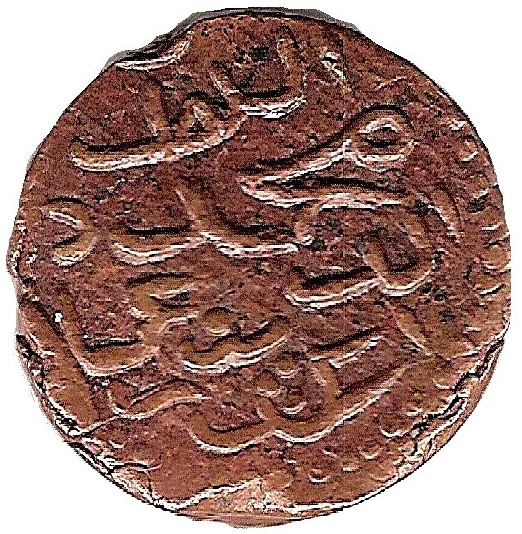
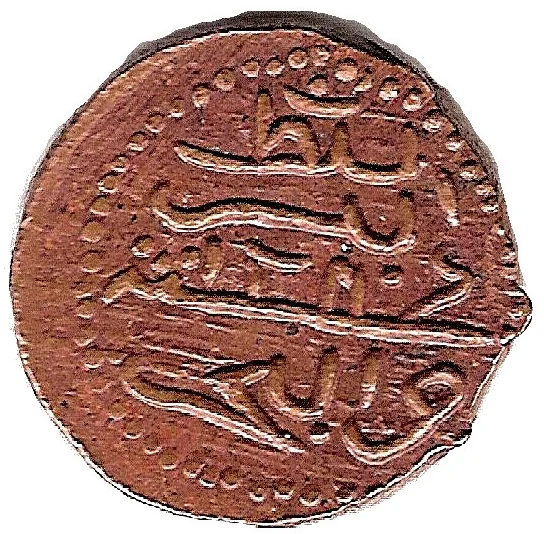
½ larin – Maldives
Add to wishlist
Maldives
Context
Years: 1836–1881
Issuer: Maldives
Ruler: Muhammad Imaaduddeen IV
Currency:
(1660—1947)
Demonetized: Yes
Material
Diameter: 11 mm
Thickness: 2.1 mm
Shape: Irregular round
Composition: Bronze
Magnetic: No
Alignment: Coin alignment
flip
References
KM: #
Numista: #34559
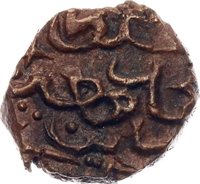
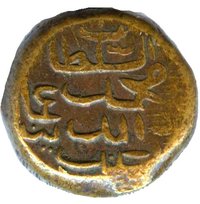
Obverse
Description:
Muhammad Imad al-Din IV, r. 1835–1882 (AH 1250–1300).
Inscription:
السلطان
محمد د
الحين عما
اسكندر
محمد د
الحين عما
اسكندر
Translation:
The Sultan
Muhammad, son of
Humayun, son of
Iskandar
Muhammad, son of
Humayun, son of
Iskandar
Language: Arabic
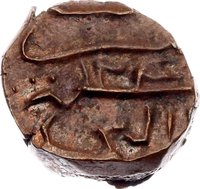
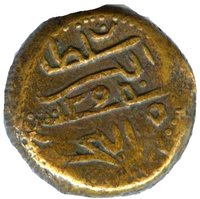
Reverse
Inscription:
سلطان
البر
١٢٨٠
سنة
والبحر
البر
١٢٨٠
سنة
والبحر
Translation:
Sultan of the Land and the Sea
Year 1280
Year 1280
Language: Arabic
Edge
Plain
Legend:
١٢٥٨
Mintings
| Year | Mint Mark | Mintage | Quality | Collection |
|---|---|---|---|---|
| 1836 | — | — | ||
| 1841 | — | — | ||
| 1842 | — | — | ||
| 1859 | — | — | BU | |
| 1860 | — | — | ||
| 1864 | — | — | ||
| 1869 | — | — | ||
| 1870 | — | — | ||
| 1870 | — | — | ||
| 1875 | — | — | ||
| 1877 | — | — | ||
| 1881 | — | — |
Historical background
In 1836, the Maldives operated under a complex and fragmented monetary system, heavily influenced by its position as a key node in the Indian Ocean trade network. The official currency was the Larín, a small, bent silver wire or hook-shaped token that had been in regional use for centuries. However, the reality in the markets of Malé and across the atolls was one of concurrent circulation. Foreign silver coins, particularly the Indian Rupee and the Maria Theresa Thaler, were widely used for larger transactions and external trade, while cowrie shells and gold fanams still served for smaller, local exchanges.
This multi-currency environment was a direct result of the Maldives' economic role. The archipelago's primary exports—dried fish (Maldive fish), cowrie shells, and coir rope—were traded for essential imports like rice, textiles, and metals. This trade, conducted with merchants from Sri Lanka, India, Arabia, and beyond, naturally brought a flood of foreign coinage into the islands. The state attempted to manage this by stamping some foreign coins with a local seal to authorize their use, but control over the money supply was limited.
Ultimately, the currency situation reflected a pre-modern economy caught between tradition and global commerce. The Sultanate’s authority was symbolized by the issuance of its own Larín, yet its practical economic life was dictated by the ebb and flow of foreign silver. This system, while functional, was inherently unstable, subject to the varying quality and supply of foreign coins, and would remain so until more formal monetary reforms were undertaken in the early 20th century under British influence.
This multi-currency environment was a direct result of the Maldives' economic role. The archipelago's primary exports—dried fish (Maldive fish), cowrie shells, and coir rope—were traded for essential imports like rice, textiles, and metals. This trade, conducted with merchants from Sri Lanka, India, Arabia, and beyond, naturally brought a flood of foreign coinage into the islands. The state attempted to manage this by stamping some foreign coins with a local seal to authorize their use, but control over the money supply was limited.
Ultimately, the currency situation reflected a pre-modern economy caught between tradition and global commerce. The Sultanate’s authority was symbolized by the issuance of its own Larín, yet its practical economic life was dictated by the ebb and flow of foreign silver. This system, while functional, was inherently unstable, subject to the varying quality and supply of foreign coins, and would remain so until more formal monetary reforms were undertaken in the early 20th century under British influence.
🌟 Limited