

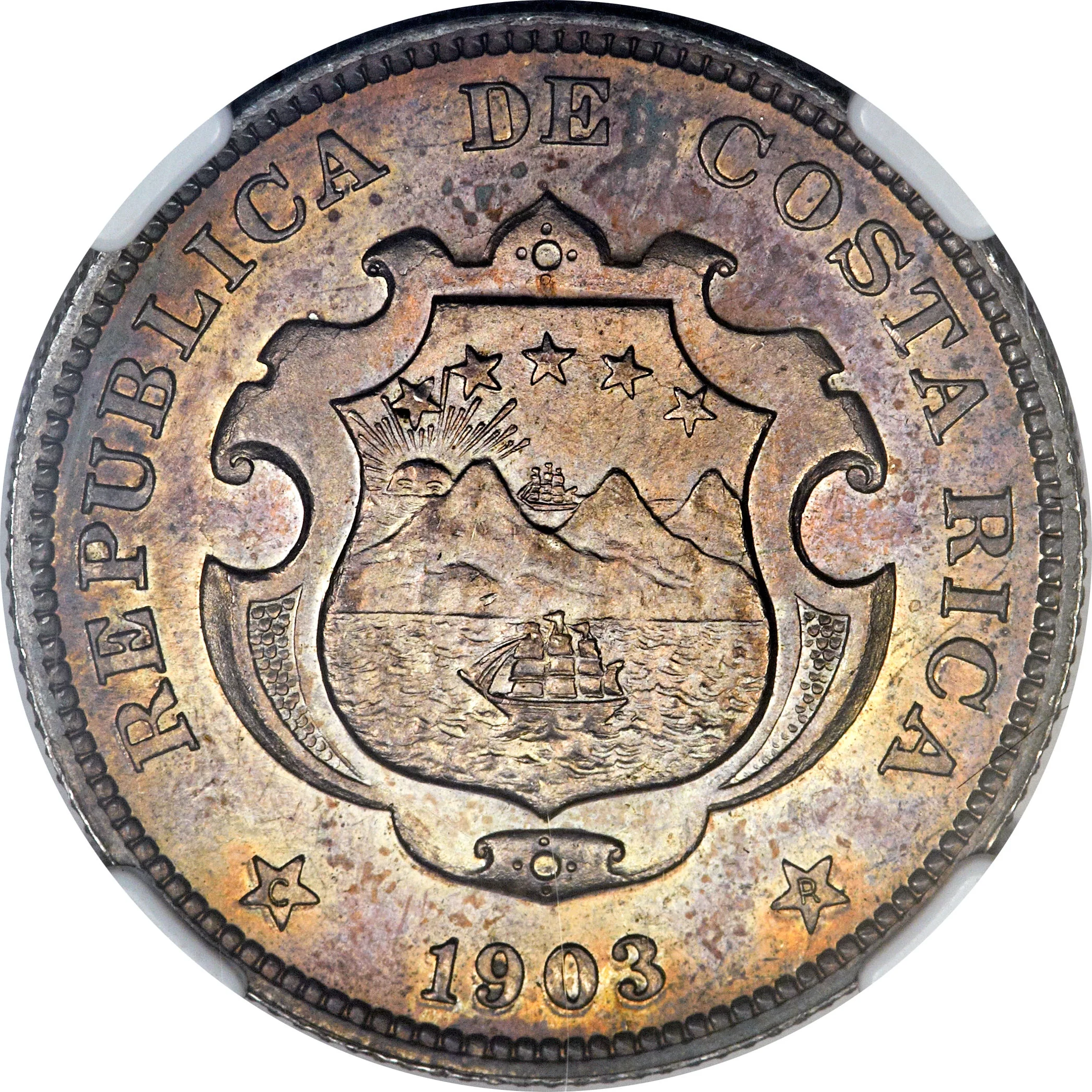
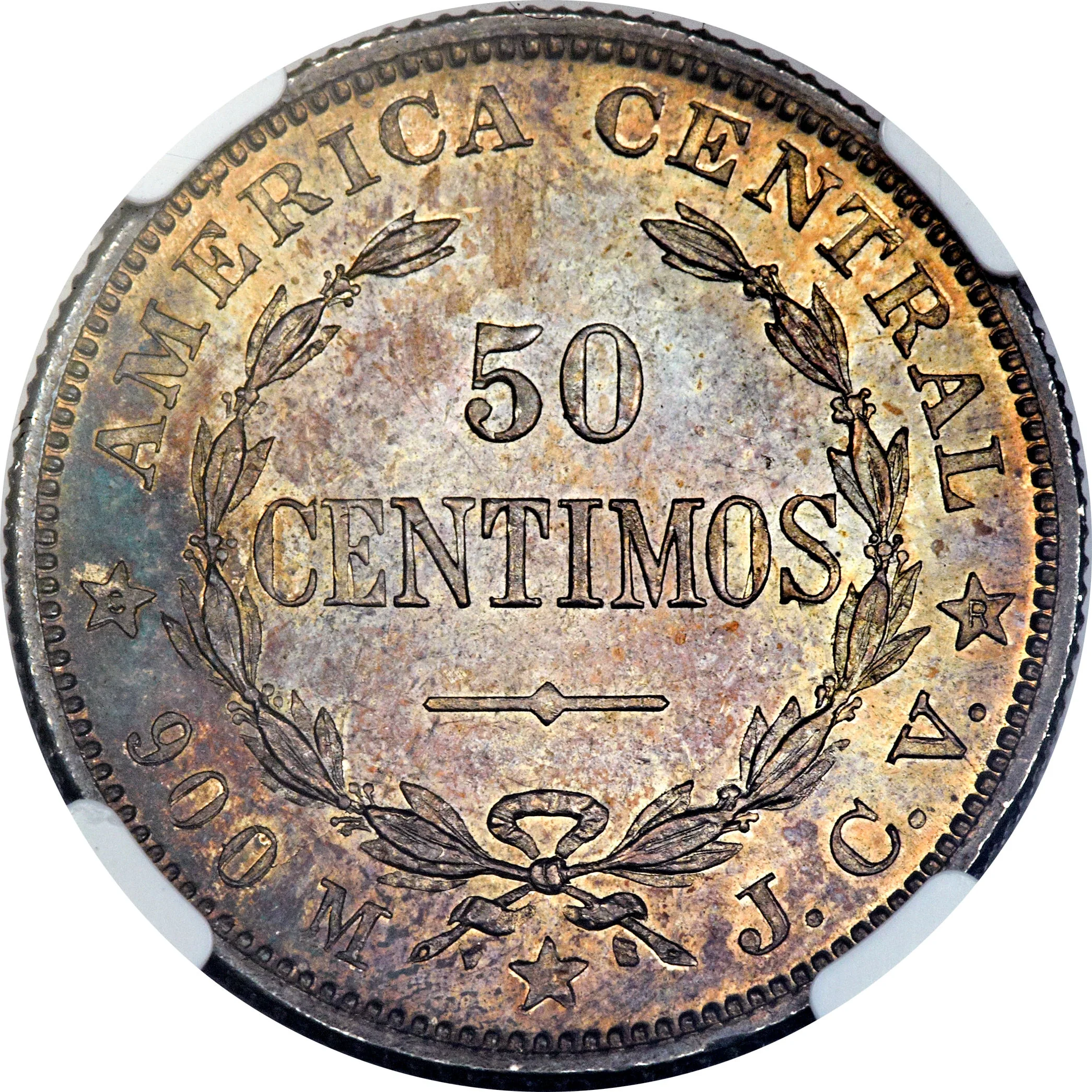
50 Centimos – Costa Rica
Costa Rica
Context
Years: 1902–1914
Issuer: Costa Rica 
Period:
(1848—1948)
Currency:
(since 1896)
Demonetization: 19 January 1924
Total mintage: 704,213
Material
References
KM: #Click to copy to clipboard143
Numista: #34431
Value
Exchange value: 0.50 CRC
Bullion value: $25.33
Obverse
Reverse
Edge
Reeded
Categories
| Symbol> Wreath |
| Symbols> Coat of Arms |
Mintings
| Year | Mint Mark | Mintage | Quality | Collection |
|---|---|---|---|---|
| 1902 | — | 120,000 | ||
| 1903 | — | 382,000 | ||
| 1904 | — | — | ||
| 1914 | — | 202,213 |
Historical background
In 1902, Costa Rica's currency situation was characterized by a complex and unstable system of multiple, competing currencies. The official currency was the silver Peso, but its value had been eroded by the issuance of paper money. More significantly, the country operated on a de facto gold standard for international trade, with the British gold sovereign and the US gold dollar being widely used for large transactions and government finance. This created a dual system where daily commerce was conducted in often-depreciated silver and paper, while the stable value of gold was reserved for the external sector, leading to frequent exchange rate fluctuations and confusion.
This monetary fragmentation stemmed from the 19th century, when successive governments, facing fiscal shortfalls, had authorized private banks to issue their own paper banknotes. By 1902, notes from banks like the Banco de la Unión and the Banco de Costa Rica circulated alongside silver coins, but with varying degrees of public trust and convertibility. The lack of a strong, centralized issuer and the over-issuance of paper money led to inflation and a loss of confidence, particularly as the paper peso's value against gold continued to decline.
Consequently, the year 1902 fell within a period of active reform and debate. Policymakers and economists recognized the detrimental effects of this chaotic system on both foreign investment and domestic price stability. The discussions and legislative efforts of this era would culminate just a few years later, in 1905, with a major monetary reform that abolished private banknote issuance, created a single national currency (the colón), and formally established a gold exchange standard, finally unifying and stabilizing the country's monetary system.
This monetary fragmentation stemmed from the 19th century, when successive governments, facing fiscal shortfalls, had authorized private banks to issue their own paper banknotes. By 1902, notes from banks like the Banco de la Unión and the Banco de Costa Rica circulated alongside silver coins, but with varying degrees of public trust and convertibility. The lack of a strong, centralized issuer and the over-issuance of paper money led to inflation and a loss of confidence, particularly as the paper peso's value against gold continued to decline.
Consequently, the year 1902 fell within a period of active reform and debate. Policymakers and economists recognized the detrimental effects of this chaotic system on both foreign investment and domestic price stability. The discussions and legislative efforts of this era would culminate just a few years later, in 1905, with a major monetary reform that abolished private banknote issuance, created a single national currency (the colón), and formally established a gold exchange standard, finally unifying and stabilizing the country's monetary system.
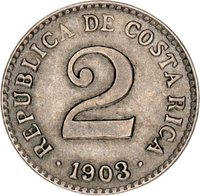
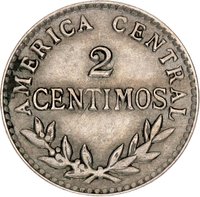
💎 Extremely Rare