

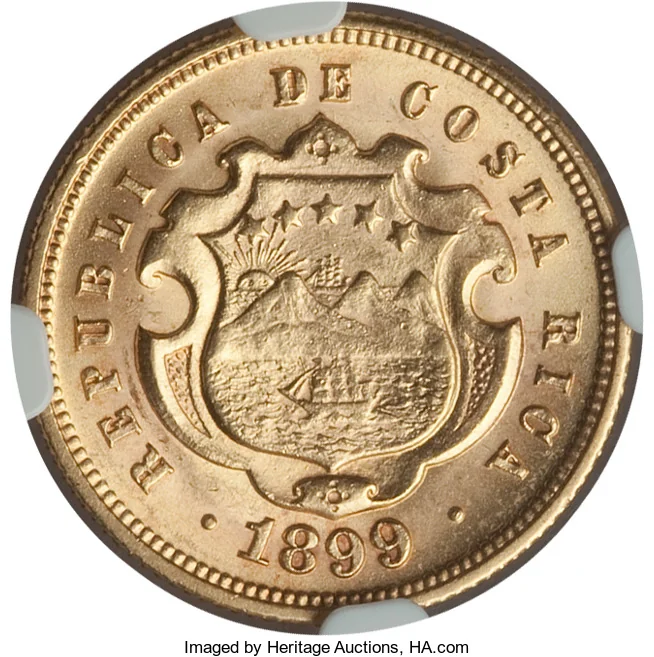
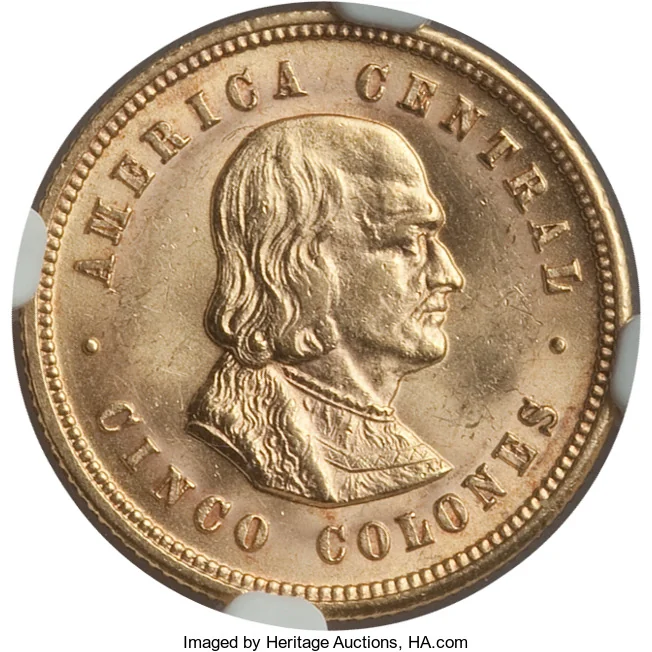
5 Colones – Costa Rica
Costa Rica
Context
Years: 1899–1900
Issuer: Costa Rica 
Period:
(1848—1948)
Currency:
(since 1896)
Demonetized: Yes
Total mintage: 200,000
Material
References
KM: #Click to copy to clipboard142
Numista: #20952
Value
Exchange value: 5 CRC
Bullion value: $583.73
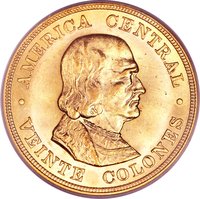
Obverse
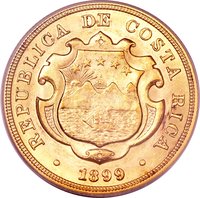
Reverse
Edge
Categories
| Symbols> Coat of Arms |
| Person> Explorer |
Mints
| Name | Mark |
|---|---|
| United States Mint of Philadelphia | — |
Mintings
| Year | Mint Mark | Mintage | Quality | Collection |
|---|---|---|---|---|
| 1899 | — | 100,000 | ||
| 1900 | — | 100,000 |
Historical background
In 1899, Costa Rica found itself in a precarious monetary situation, characterized by a chaotic and depreciated currency system. The nation's primary circulating medium was the "peso", a silver coin that had been significantly debased over decades. However, its value was unstable and it traded at a steep discount compared to gold-backed currencies like the British pound or the U.S. dollar, which were essential for international trade, particularly for the vital coffee export industry. This created a dual-currency economy where domestic transactions used the devalued silver pesos, while international settlements required scarce and valuable gold.
The root of the crisis lay in the mid-19th century, when successive governments, facing fiscal shortfalls, had resorted to issuing fiduciary coins (moneda fiduciaria) with a face value far exceeding their metallic content. This practice, combined with the global decline in the price of silver, led to severe inflation and a loss of public confidence in the currency. By 1899, the monetary chaos was stifling economic growth, complicating government finance, and creating uncertainty for both domestic businesses and foreign creditors.
Recognizing the urgent need for reform, the government of President Rafael Yglesias was actively laying the groundwork for a radical solution. The year 1899 was a pivotal point of transition, as plans were finalized to abandon the silver standard entirely. The following year, in 1900, Costa Rica would introduce the colón as its new national currency, pegged directly to the British gold pound sterling. This reform, part of the "Ley del Gold Standard" (Gold Standard Law), aimed to stabilize the economy, attract foreign investment, and integrate Costa Rica more securely into the global financial system, marking the definitive end of the turbulent silver peso era.
The root of the crisis lay in the mid-19th century, when successive governments, facing fiscal shortfalls, had resorted to issuing fiduciary coins (moneda fiduciaria) with a face value far exceeding their metallic content. This practice, combined with the global decline in the price of silver, led to severe inflation and a loss of public confidence in the currency. By 1899, the monetary chaos was stifling economic growth, complicating government finance, and creating uncertainty for both domestic businesses and foreign creditors.
Recognizing the urgent need for reform, the government of President Rafael Yglesias was actively laying the groundwork for a radical solution. The year 1899 was a pivotal point of transition, as plans were finalized to abandon the silver standard entirely. The following year, in 1900, Costa Rica would introduce the colón as its new national currency, pegged directly to the British gold pound sterling. This reform, part of the "Ley del Gold Standard" (Gold Standard Law), aimed to stabilize the economy, attract foreign investment, and integrate Costa Rica more securely into the global financial system, marking the definitive end of the turbulent silver peso era.
💎 Very Rare