

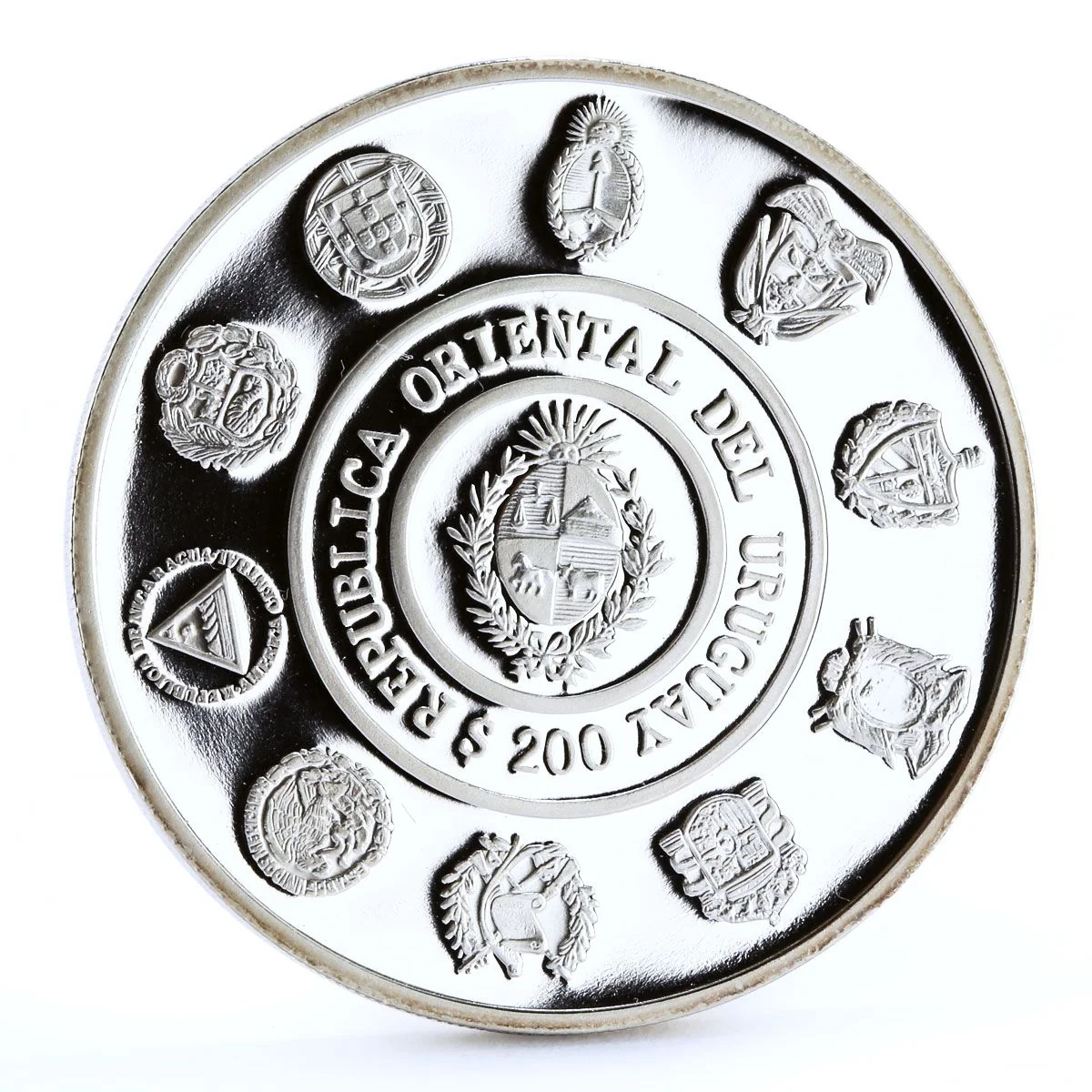
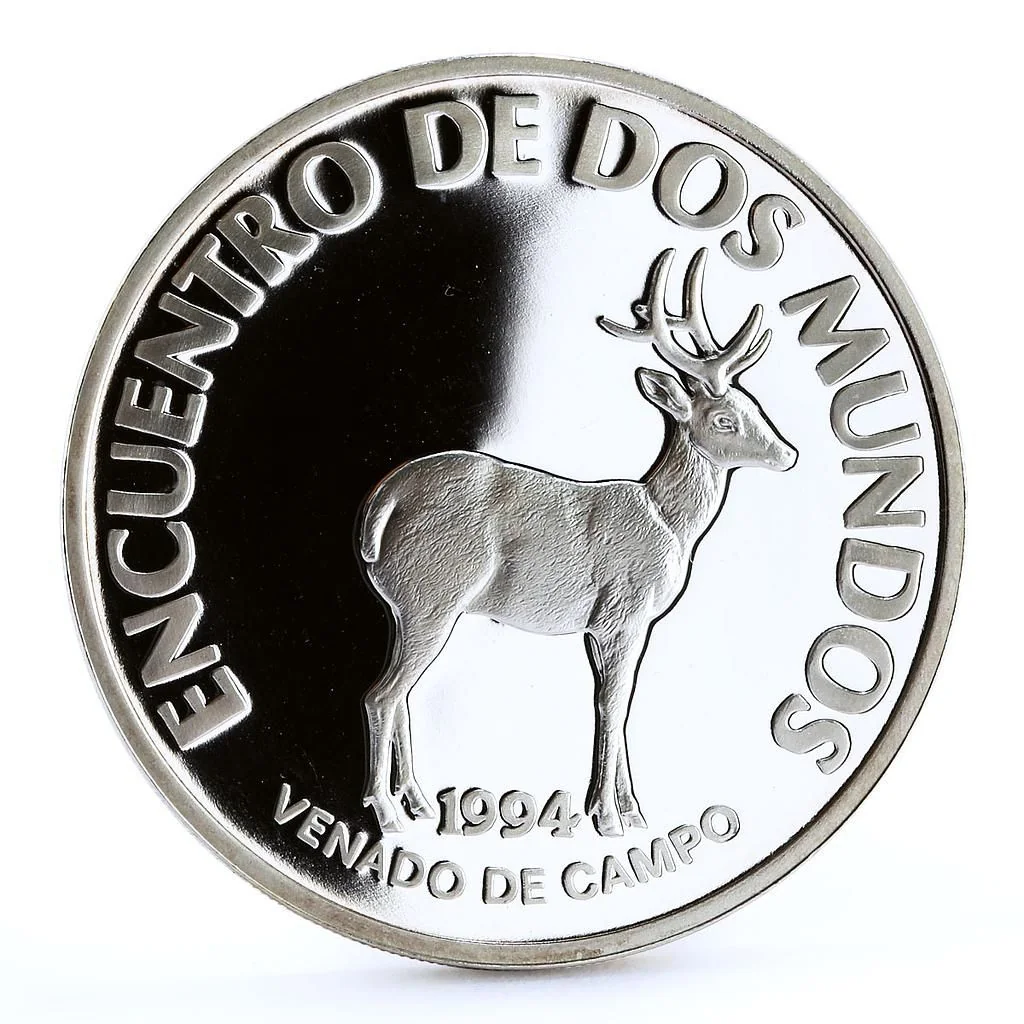
200 pesos uruguayos – Uruguay
Add to wishlist
Non-circulating coins
Commemoration: Ibero-American Series II - Endangered Wildlife
Series: Ibero-American
Uruguay
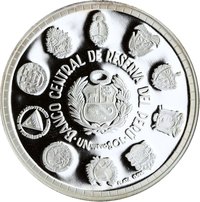
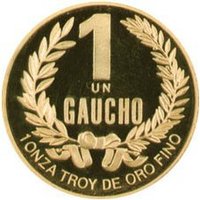
Obverse
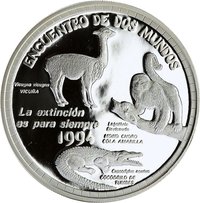
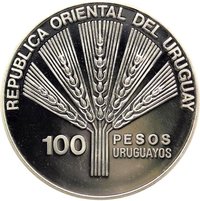
Reverse
Edge
Reeded. See comments section for varieties.
Categories
| Symbols> Coat of Arms |
| Animal> Deer |
Mints
| Name | Mark |
|---|---|
| Mexican Mint | — |
Mintings
| Year | Mint Mark | Mintage | Quality | Collection |
|---|---|---|---|---|
| 1994 | — | 13,000 | Proof |
Historical background
In 1994, Uruguay's currency situation was defined by a period of relative stability and economic confidence under a managed exchange rate regime. Following the hyperinflation and crisis of the early 1980s, the country had implemented the "Crawling Peg" system in 1992. This policy involved small, pre-announced devaluations of the Uruguayan peso against the US dollar, typically around 2% annually. The goal was to maintain export competitiveness by offsetting the difference between Uruguay's inflation rate and that of its major trading partners, while providing a stable and predictable framework to anchor expectations and control inflationary pressures.
This stability was underpinned by strong macroeconomic fundamentals at the time. The economy was growing, foreign investment was increasing, and the country had accumulated substantial international reserves. The banking sector, a cornerstone of the Uruguayan economy, held significant dollar-denominated deposits, reflecting a high degree of financial dollarization among the populace. This "dollarization" meant that many Uruguayans saved and conducted major transactions in US dollars, a lingering effect of past instability, even as the peso's managed decline provided a controlled environment for daily economic activity.
Consequently, 1994 represents a calm interlude within a longer narrative of monetary management. The crawling peg was largely successful in its immediate aims, fostering a period of low inflation and economic growth. However, this system also contained inherent vulnerabilities, particularly the reliance on maintaining discipline and sufficient reserves. The tranquility of 1994 stands in contrast to the pressures that would later emerge, culminating in the severe financial crisis of 2002, which forced the abandonment of the crawling peg and led to a sharp devaluation.
This stability was underpinned by strong macroeconomic fundamentals at the time. The economy was growing, foreign investment was increasing, and the country had accumulated substantial international reserves. The banking sector, a cornerstone of the Uruguayan economy, held significant dollar-denominated deposits, reflecting a high degree of financial dollarization among the populace. This "dollarization" meant that many Uruguayans saved and conducted major transactions in US dollars, a lingering effect of past instability, even as the peso's managed decline provided a controlled environment for daily economic activity.
Consequently, 1994 represents a calm interlude within a longer narrative of monetary management. The crawling peg was largely successful in its immediate aims, fostering a period of low inflation and economic growth. However, this system also contained inherent vulnerabilities, particularly the reliance on maintaining discipline and sufficient reserves. The tranquility of 1994 stands in contrast to the pressures that would later emerge, culminating in the severe financial crisis of 2002, which forced the abandonment of the crawling peg and led to a sharp devaluation.
Series: Ibero-American


⭐ Rare