

50 centimes – Belgian Congo and Ruanda-Urundi
Add to wishlist
Context
Years: 1954–1955
Country: Rwanda and Urundi Belgian Congo
Issuer: Belgian Congo and Ruanda-Urundi
Issuing organization: Central Bank of Belgian Congo and Rwanda-Urundi
Currency:
(1908—1960)
Demonetized: Yes
Total mintage: 25,000,000
Material
References
KM: #
Numista: #3422
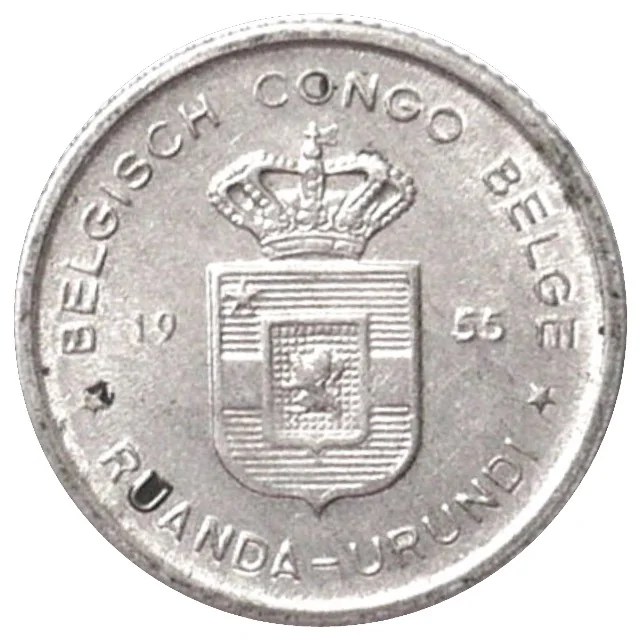
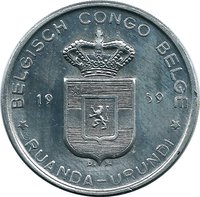
Obverse
Description:
Arms flank date.
Inscription:
BELGISCH CONGO BELGE
19 55
RUANDA-URUNDI
19 55
RUANDA-URUNDI
Translation:
Belgian Congo
1955
Ruanda-Urundi
1955
Ruanda-Urundi
Script: Latin
Engraver: Joseph De Bruyn
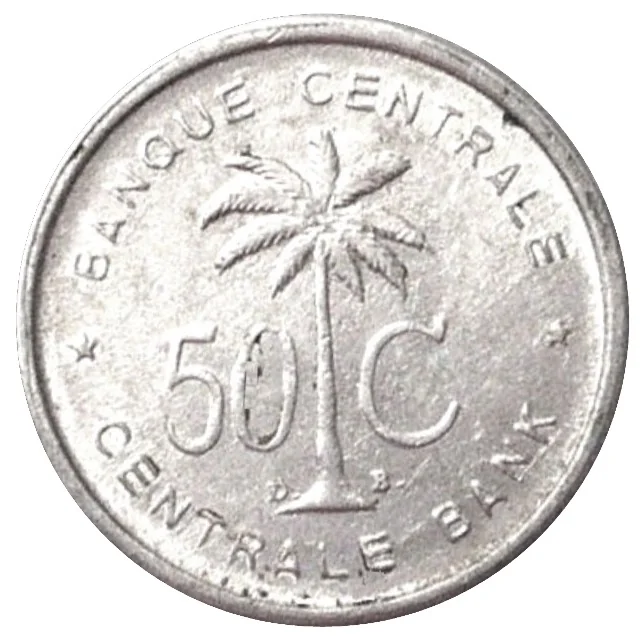
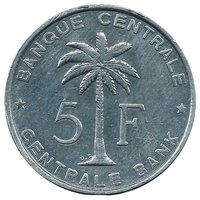
Reverse
Description:
Oil palm classification.
Inscription:
BANQUE CENTRALE
50 C
D B
CENTRALE BANK
50 C
D B
CENTRALE BANK
Translation:
Central Bank
50 Cents
German Bank
Central Bank
50 Cents
German Bank
Central Bank
Script: Latin
Engraver: Joseph De Bruyn
Edge
Reeded
Mints
| Name | Mark |
|---|---|
| Royal Mint of Belgium | — |
Mintings
| Year | Mint Mark | Mintage | Quality | Collection |
|---|---|---|---|---|
| 1954 | — | 4,700,000 | ||
| 1955 | — | 20,300,000 |
Historical background
In 1954, the Belgian Congo and Ruanda-Urundi operated under a unified monetary system anchored by the Congolese franc (CF). This currency was issued by the Banque Centrale du Congo Belge et du Ruanda-Urundi, established in 1952, which succeeded a private issuing bank. The CF was not pegged to the Belgian franc but was instead linked to the Belgian gold franc at a fixed parity, creating a stable and distinct colonial currency zone. This system facilitated the extraction and export of the territories' vast mineral and agricultural resources, integrating their economies firmly with Belgium while limiting direct financial volatility from the metropole.
The currency's stability and convertibility were crucial for the colonial administration and European enterprises, particularly in the Congo's booming post-war mining sector. However, this monetary integration masked profound economic disparities. While the currency served large-scale export industries, the vast majority of the African population participated in a subsistence or cash-crop economy, with limited access to the formal banking system. The monetary policy was designed primarily to benefit the colonial state and foreign investors, with little focus on broader indigenous economic development.
By the mid-1950s, this currency regime was a pillar of the colonial economic structure, but it existed within a growing atmosphere of political change. Although nationalist movements were not yet at their peak, the underlying economic inequalities perpetuated by the system would later become a point of contention. The stable franc of 1954 thus represented both the height of consolidated Belgian colonial economic control and the foundation of a system that would be challenged and ultimately transformed in the decade to come during the rush to independence.
The currency's stability and convertibility were crucial for the colonial administration and European enterprises, particularly in the Congo's booming post-war mining sector. However, this monetary integration masked profound economic disparities. While the currency served large-scale export industries, the vast majority of the African population participated in a subsistence or cash-crop economy, with limited access to the formal banking system. The monetary policy was designed primarily to benefit the colonial state and foreign investors, with little focus on broader indigenous economic development.
By the mid-1950s, this currency regime was a pillar of the colonial economic structure, but it existed within a growing atmosphere of political change. Although nationalist movements were not yet at their peak, the underlying economic inequalities perpetuated by the system would later become a point of contention. The stable franc of 1954 thus represented both the height of consolidated Belgian colonial economic control and the foundation of a system that would be challenged and ultimately transformed in the decade to come during the rush to independence.
🌱 Common