

5 Francs – Belgian Congo and Ruanda-Urundi
Context
Year: 1952
Country: Rwanda and Urundi Belgian Congo
Issuer: Belgian Congo and Ruanda-Urundi
Issuing organization: Central Bank of Belgian Congo and Rwanda-Urundi
Currency:
(1908—1960)
Demonetized: Yes
Total mintage: 10,000,000
Material

References
KM: #Click to copy to clipboard1
Numista: #11003
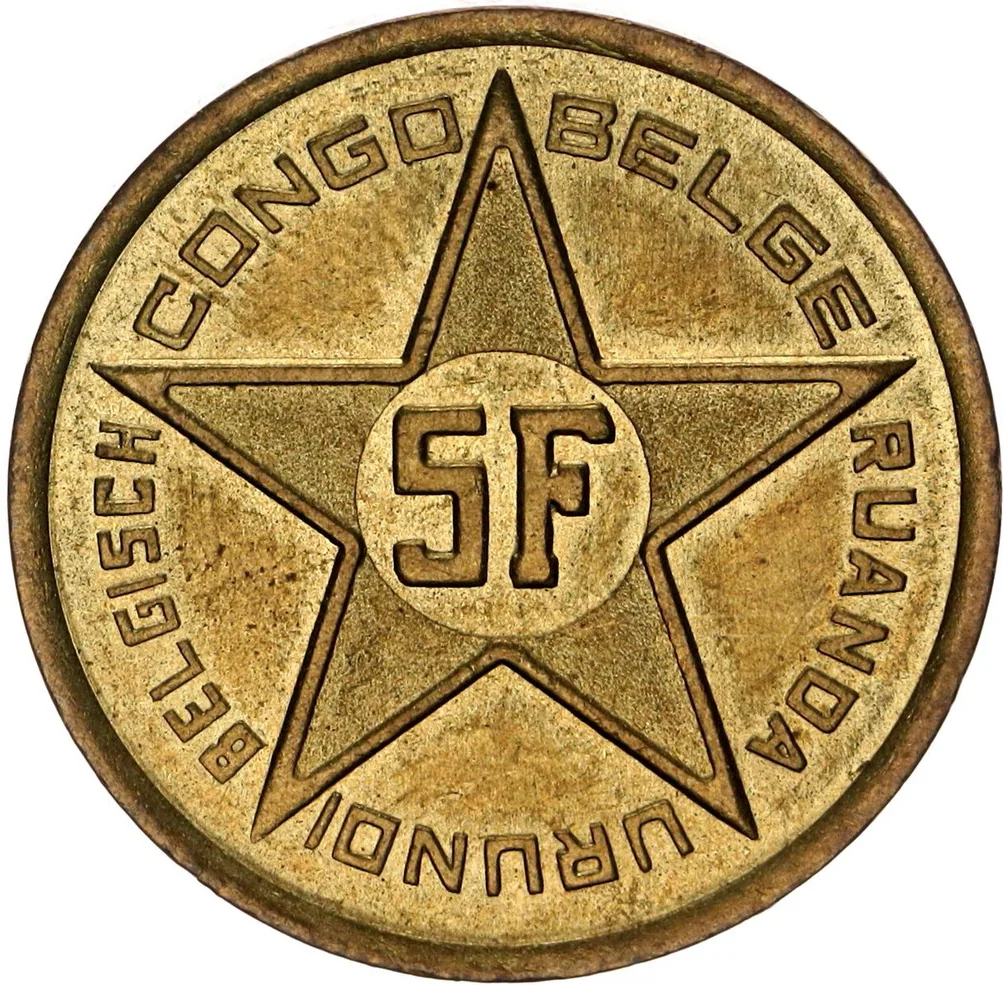
Obverse
Description:
Star denomination.
Inscription:
BELGISCH CONGO BELGE
5F
RUANDA - URUNDI
5F
RUANDA - URUNDI
Translation:
Belgian Congo
5 Francs
Ruanda-Urundi
5 Francs
Ruanda-Urundi
Script: Latin
Engraver: Joseph De Bruyn
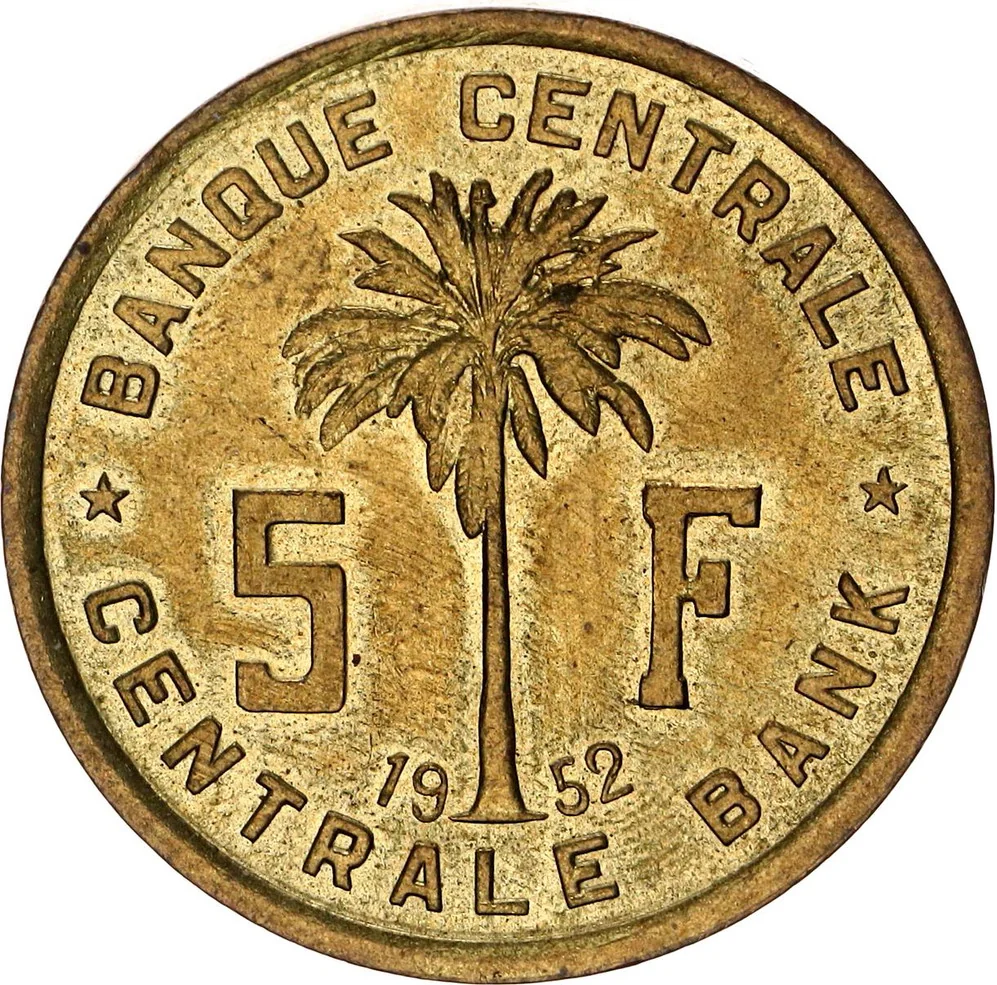
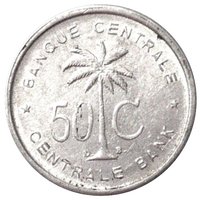
Reverse
Description:
Oil palm classification.
Inscription:
BANQUE CENTRALE
5F
1952
CENTRALE BANK
5F
1952
CENTRALE BANK
Translation:
Central Bank
5 Francs
1952
Central Bank
5 Francs
1952
Central Bank
Script: Latin
Engraver: Joseph De Bruyn
Edge
Plain
Mintings
| Year | Mint Mark | Mintage | Quality | Collection |
|---|---|---|---|---|
| 1952 | — | 10,000,000 |
Historical background
In 1952, the Belgian Congo and Ruanda-Urundi operated under a unified monetary system anchored by the Congolese franc (CF). This currency was managed by the Banque Centrale du Congo Belge et du Ruanda-Urundi, established in 1952, which took over from the earlier Banque du Congo Belge. The CF was not pegged to the Belgian franc at a 1:1 ratio but was instead fixed to a gold standard and, by extension, to the Belgian franc at a fixed but distinct parity. This system facilitated trade and administrative integration within the territories while formally distinguishing the colony's currency from that of the metropole, a structure designed to insulate Belgium from colonial financial fluctuations.
The currency's stability and value were fundamentally tied to the Congo's robust export economy, which in 1952 was experiencing a post-war boom driven primarily by copper, cobalt, uranium, and agricultural products like cotton and palm oil. The substantial foreign exchange earnings from these exports, largely controlled by Belgian corporations, provided the gold and hard currency reserves that backed the Congolese franc. This economic strength allowed for relatively low inflation and confidence in the currency within the regional context, supporting both state expenditures and the vast mining and infrastructure projects underway.
However, this monetary arrangement was inherently extractive and administrative. The system primarily served to facilitate the export of colonial resources to Belgium and the global market, while integrating Ruanda-Urundi—a UN trust territory administered by Belgium—into the Congo's economic orbit. The currency policy reflected and reinforced the broader colonial economic structure: wealth generation was concentrated in the export sector for the benefit of the colony and Belgian interests, with limited development of a diversified internal market. The stability of the Congolese franc in 1952 thus belied the profound economic inequalities and external dependencies that characterized the late colonial period.
The currency's stability and value were fundamentally tied to the Congo's robust export economy, which in 1952 was experiencing a post-war boom driven primarily by copper, cobalt, uranium, and agricultural products like cotton and palm oil. The substantial foreign exchange earnings from these exports, largely controlled by Belgian corporations, provided the gold and hard currency reserves that backed the Congolese franc. This economic strength allowed for relatively low inflation and confidence in the currency within the regional context, supporting both state expenditures and the vast mining and infrastructure projects underway.
However, this monetary arrangement was inherently extractive and administrative. The system primarily served to facilitate the export of colonial resources to Belgium and the global market, while integrating Ruanda-Urundi—a UN trust territory administered by Belgium—into the Congo's economic orbit. The currency policy reflected and reinforced the broader colonial economic structure: wealth generation was concentrated in the export sector for the benefit of the colony and Belgian interests, with limited development of a diversified internal market. The stability of the Congolese franc in 1952 thus belied the profound economic inequalities and external dependencies that characterized the late colonial period.
🌱 Common