

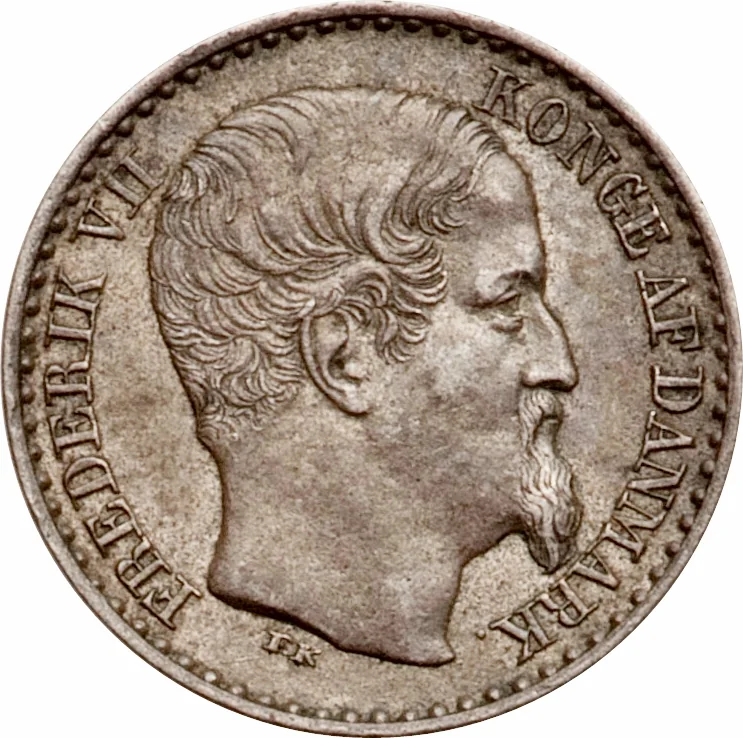
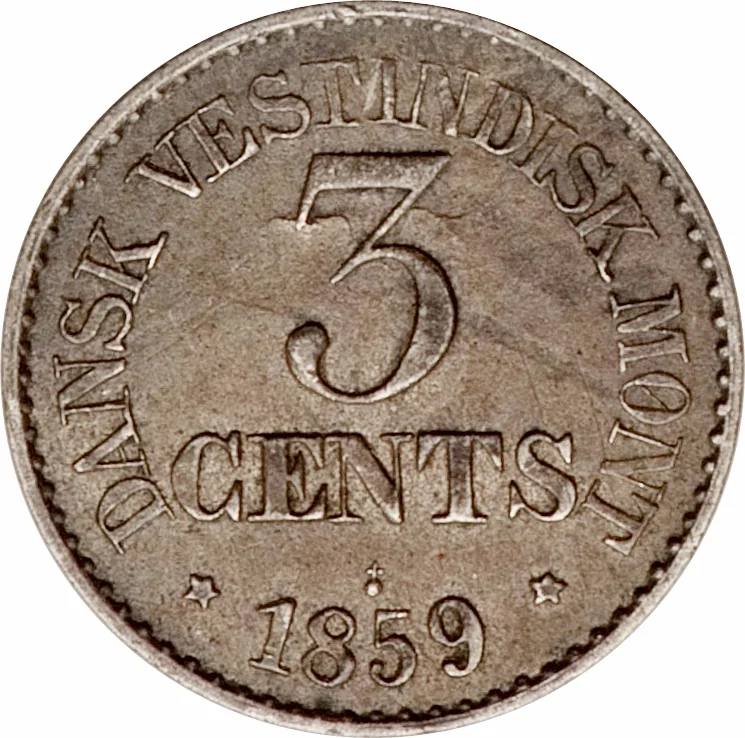
3 Cents – Danish West Indies
Context
Year: 1859
Issuer: Danish West Indies
Ruler: Frederick VII
Currency:
(1849—1905)
Demonetized: Yes
Total mintage: 291,010
Material
References
KM: #Click to copy to clipboard64
Numista: #34073
Value
Bullion value: $1.87
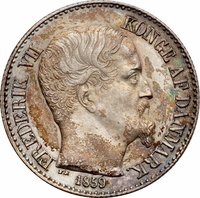
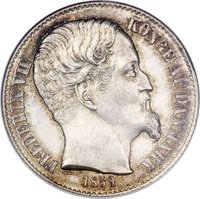
Obverse
Description:
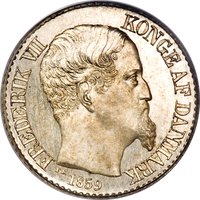
Right-facing bust
Inscription:
FREDERIK VII KONGE AF DANMARK.
Translation:
FREDERIK VII KING OF DENMARK.
Script: Latin
Language: Danish
Engraver: Federick Christopher Khorn
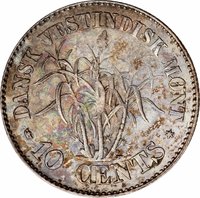
Reverse
Edge
Plain
Categories
| Person> Monarch |
| Mustache/Beard |
Mintings
| Year | Mint Mark | Mintage | Quality | Collection |
|---|---|---|---|---|
| 1859 | — | 291,000 | ||
| 1859 | — | 10 | Proof |
Historical background
In 1859, the currency situation in the Danish West Indies (St. Thomas, St. John, and St. Croix) was characterized by a complex and often chaotic multiplicity of coins. The official currency was the Danish rigsdaler, divided into 96 skilling, but it circulated alongside a wide array of foreign specie due to the islands' pivotal role in regional trade. Spanish and Mexican silver dollars (pieces of eight), British sovereigns, French francs, and United States gold and silver coins all passed freely in daily transactions, their values fluctuating based on weight, fineness, and local demand. This created a constant challenge for merchants and planters, who required reliable exchange rates to conduct business.
The Danish colonial government attempted to impose order by periodically issuing official exchange rate bulletins, fixing the value of common foreign coins against the rigsdaler. However, these proclamations often failed to reflect market realities, leading to a disconnect between the legal and actual value of money. The scarcity of small-denomination coins for everyday purchases was a persistent problem, often alleviated by cutting larger silver coins into "bits" (eighths of a dollar). This practice further complicated commerce, as these physical fragments had to be weighed for each transaction.
Underlying this monetary disorder was the colony's economic structure, heavily dependent on the sugar trade and a bustling free port in Charlotte Amalie. The international merchant community, crucial to the islands' prosperity, naturally operated in the more universally accepted silver dollar standard. Consequently, while Danish authority was symbolized on official documents and some government transactions, the real lifeblood of the economy flowed in silver pesos and gold doubloons, making the Danish West Indies a monetary microcosm of the Atlantic world.
The Danish colonial government attempted to impose order by periodically issuing official exchange rate bulletins, fixing the value of common foreign coins against the rigsdaler. However, these proclamations often failed to reflect market realities, leading to a disconnect between the legal and actual value of money. The scarcity of small-denomination coins for everyday purchases was a persistent problem, often alleviated by cutting larger silver coins into "bits" (eighths of a dollar). This practice further complicated commerce, as these physical fragments had to be weighed for each transaction.
Underlying this monetary disorder was the colony's economic structure, heavily dependent on the sugar trade and a bustling free port in Charlotte Amalie. The international merchant community, crucial to the islands' prosperity, naturally operated in the more universally accepted silver dollar standard. Consequently, while Danish authority was symbolized on official documents and some government transactions, the real lifeblood of the economy flowed in silver pesos and gold doubloons, making the Danish West Indies a monetary microcosm of the Atlantic world.
⭐ Somewhat Rare