

20 cents – French Indochina
Add to wishlist
Context
Material
References
KM: #
Numista: #34034
Value
Exchange value: 0.20 ICFP
Bullion value: $11.74
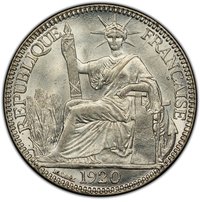
Obverse
Description:
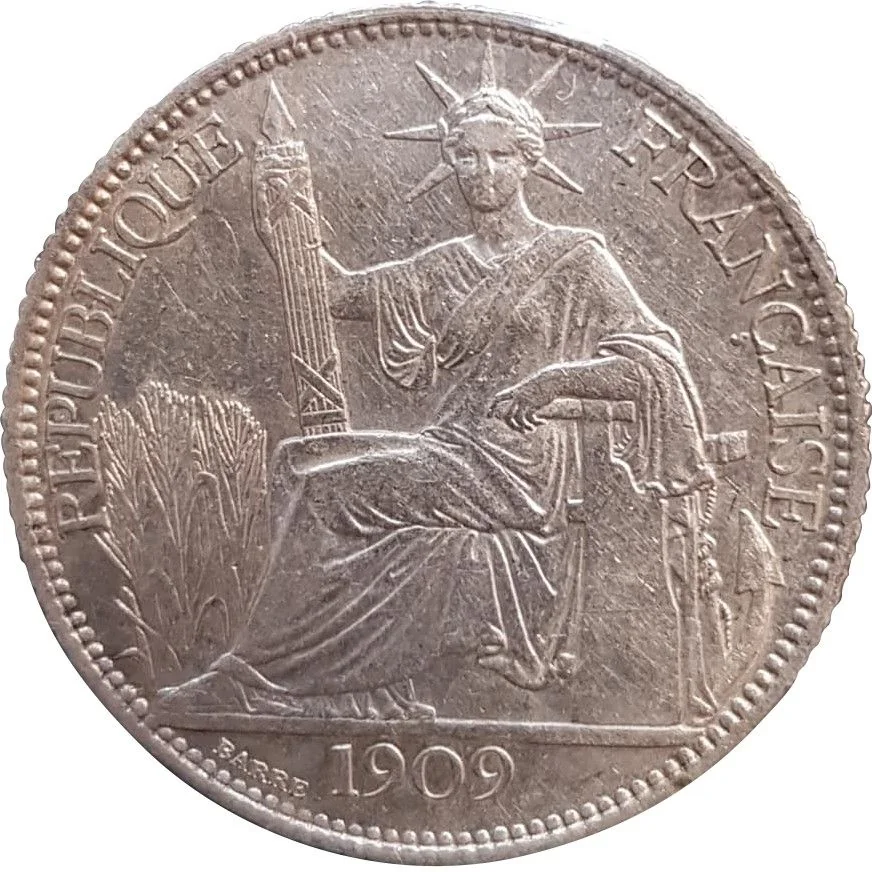
Marianne seated left, holding fasces, date below.
Inscription:
REPUBLIQUE FRANÇAISE
1909
BARRE
1909
BARRE
Translation:
FRENCH REPUBLIC
1909
BARRE
1909
BARRE
Script: Latin
Language: French
Engraver: Jean-Auguste Barre
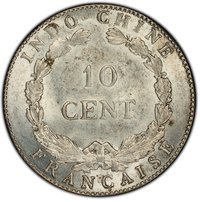
Reverse
Description:
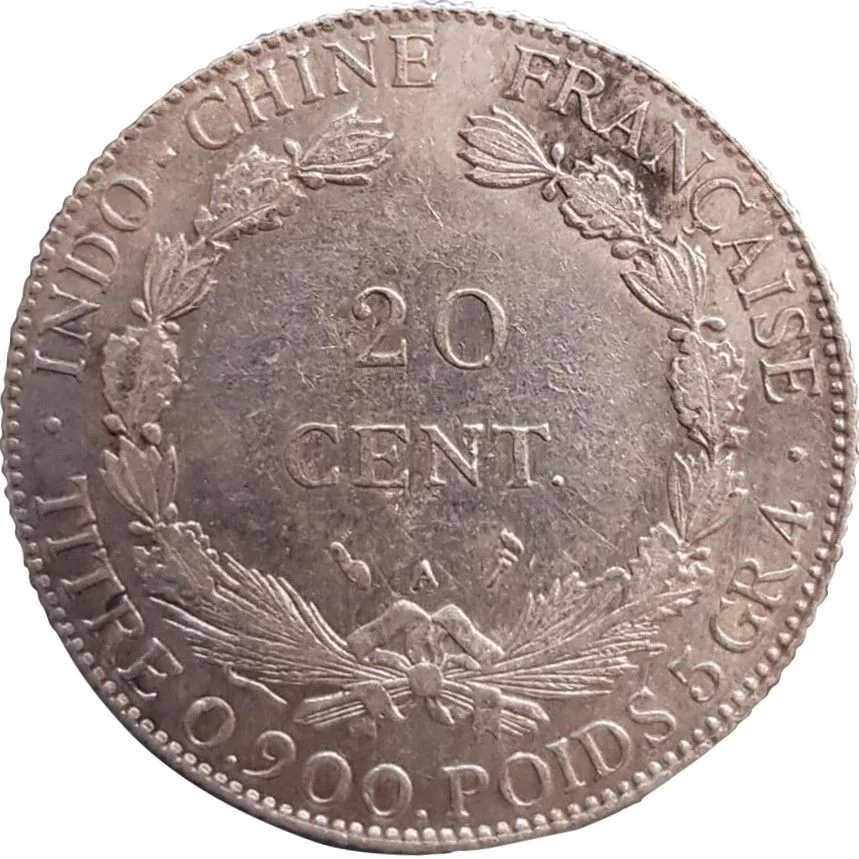
Wreath denomination.
Inscription:
INDO-CHINE FRANÇAISE
20 CENT.
·TITRE 0.900 . POIDS 5 GR 4·
20 CENT.
·TITRE 0.900 . POIDS 5 GR 4·
Translation:
FRENCH INDO-CHINA
20 CENT.
·FINENESS 0.900 . WEIGHT 5 GR 4·
20 CENT.
·FINENESS 0.900 . WEIGHT 5 GR 4·
Script: Latin
Language: French
Engraver: Jean-Auguste Barre
Edge
Reeded
Mints
| Name | Mark |
|---|---|
| Monnaie de Paris | (A) |
Mintings
| Year | Mint Mark | Mintage | Quality | Collection |
|---|---|---|---|---|
| 1909 | A | — |
Historical background
In 1909, the currency situation in French Indochina was characterized by a state-managed monetary transition and consolidation. The cornerstone of the system was the French Indochinese Piastre (piastre de commerce), a distinctive silver coin minted since 1885. Unlike France itself, which was on the gold standard, Indochina operated on a silver standard, giving its currency a high intrinsic value and making it a strong regional trade coin, particularly coveted in neighboring China. This created a persistent problem of piastres being hoarded or exported for their bullion value, often leaving the colony short of circulating currency.
To address this and streamline the economy, the authorities were in the process of implementing a major reform initiated with the decree of January 1903. This established the Bank of Indochina (Banque de l'Indochine) as the sole issuer of paper money for the federation. By 1909, the bank's notes were becoming increasingly central to commerce, circulating alongside the silver piastre coins and various subsidiary coins. The system was deliberately overvalued, with the piastre pegged at 2.5 French francs, a rate far above its metallic value in the Asian silver market, designed to tie the colony more firmly to the French economy and facilitate capital transfers.
Consequently, the monetary landscape was a dual one: a theoretical silver standard coexisting with a growing fiduciary system controlled by a French colonial bank. This arrangement privileged French businesses and administrators, as the artificial exchange rate made imports from France cheaper but hindered exports from Indochina. For the local population, the system was often opaque and exploitative, integrating their economies into a framework designed for colonial profit and fiscal control, setting a precedent for financial management that would last until the end of the colonial era.
To address this and streamline the economy, the authorities were in the process of implementing a major reform initiated with the decree of January 1903. This established the Bank of Indochina (Banque de l'Indochine) as the sole issuer of paper money for the federation. By 1909, the bank's notes were becoming increasingly central to commerce, circulating alongside the silver piastre coins and various subsidiary coins. The system was deliberately overvalued, with the piastre pegged at 2.5 French francs, a rate far above its metallic value in the Asian silver market, designed to tie the colony more firmly to the French economy and facilitate capital transfers.
Consequently, the monetary landscape was a dual one: a theoretical silver standard coexisting with a growing fiduciary system controlled by a French colonial bank. This arrangement privileged French businesses and administrators, as the artificial exchange rate made imports from France cheaper but hindered exports from Indochina. For the local population, the system was often opaque and exploitative, integrating their economies into a framework designed for colonial profit and fiscal control, setting a precedent for financial management that would last until the end of the colonial era.
✨ Legendary