

1 cent – French Indochina
Add to wishlist
Context
Years: 1908–1939
Issuer: French Indochina
Period:
(1870—1940)
Currency:
(1880—1952)
Demonetized: Yes
Total mintage: 255,024,362
Material
References
KM: #
Numista: #5152
Value
Exchange value: 0.01 ICFP
Obverse
Description:
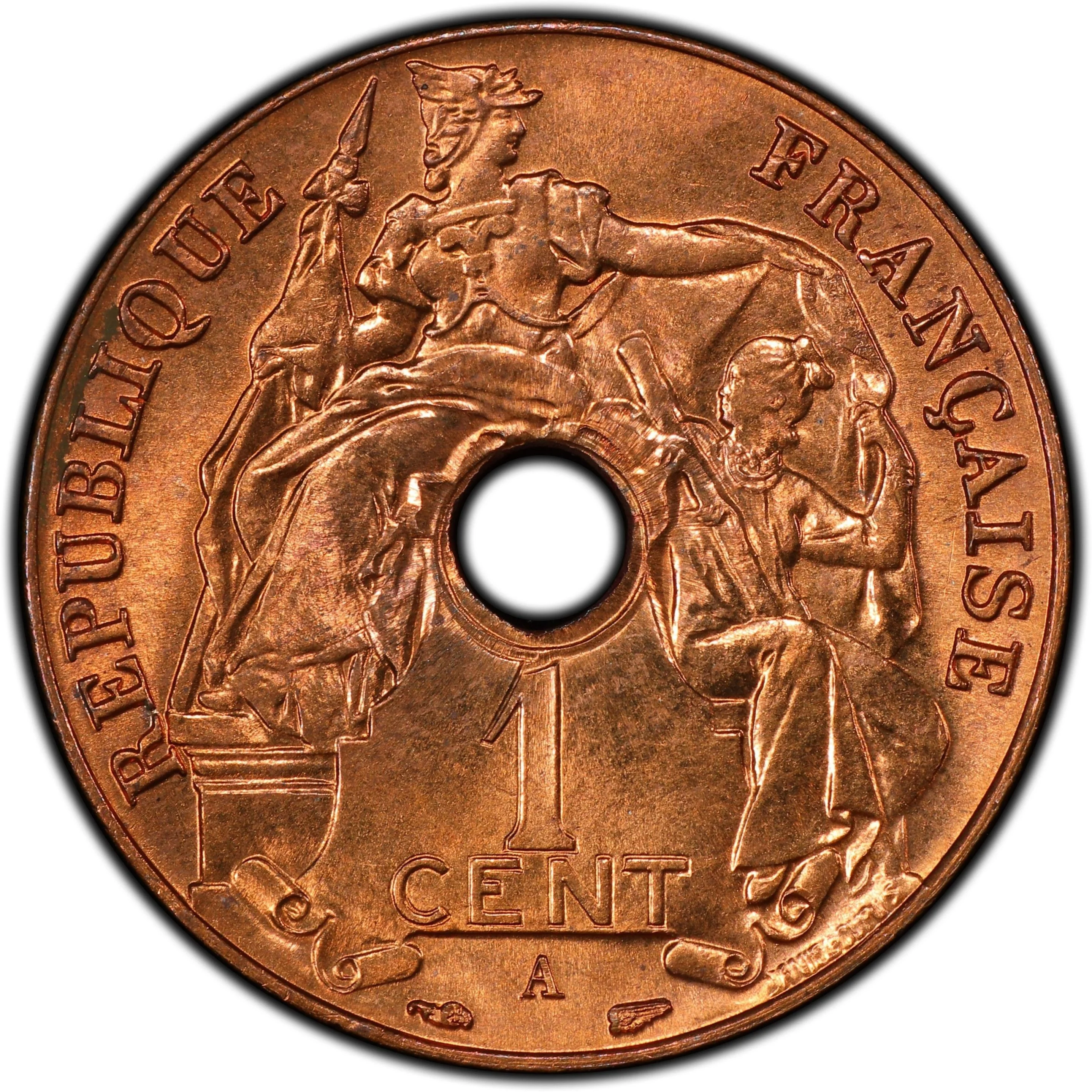
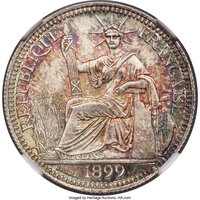
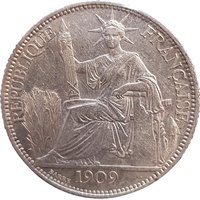
Two female allegories of France and Indochina seated opposite each other on a pedestal with its denomination. "REPUBLIQUE FRANÇAISE" and mintmark in exergue.
Inscription:
REPUBLIQUE FRANÇAISE
1
CENT
A
1
CENT
A
Translation:
FRENCH REPUBLIC
1
CENT
A
1
CENT
A
Script: Latin
Language: French
Engraver: Jean-Baptiste-Daniel Dupuis
Reverse
Edge
Plain
Mints
| Name | Mark |
|---|---|
| Société Française de Monnayage | — |
| United States Mint of San Francisco | — |
| Monnaie de Paris | (A) |
Mintings
| Year | Mint Mark | Mintage | Quality | Collection |
|---|---|---|---|---|
| 1908 | A | 3,000,000 | ||
| 1909 | A | 5,000,000 | ||
| 1910 | A | 7,703,000 | ||
| 1911 | A | 15,234,000 | ||
| 1912 | A | 17,027,000 | ||
| 1913 | A | 3,945,000 | ||
| 1914 | A | 11,026,799 | ||
| 1916 | A | 1,311,570 | ||
| 1917 | A | 9,761,559 | ||
| 1918 | A | 2,371,528 | ||
| 1919 | A | 9,147,572 | ||
| 1920 | — | 13,290,000 | ||
| 1920 | A | 18,305,304 | ||
| 1921 | — | 1,710,000 | ||
| 1921 | A | 14,271,854 | ||
| 1922 | — | 9,475,520 | ||
| 1922 | A | 8,850,117 | ||
| 1923 | — | 35,524,280 | ||
| 1923 | A | 1,079,468 | ||
| 1926 | A | 11,672,270 | ||
| 1927 | A | 3,327,730 | ||
| 1930 | A | 4,682,208 | ||
| 1931 | A | 5,317,591 | ||
| 1937 | A | 8,901,992 | ||
| 1938 | A | 15,499,000 | ||
| 1939 | A | 17,589,000 |
Historical background
In 1908, the currency situation in French Indochina was characterized by a state-managed, multi-metallic system designed to stabilize the colonial economy and integrate it firmly into the French financial orbit. The cornerstone was the Indochinese Piastre (Piastre de Commerce), a silver coin minted by the Banque de l'Indochine, which held the exclusive right of issue. This piastre was established with a fixed exchange rate to the French franc, initially set at 1 piastre = 2.70 francs in 1902, a rate that would remain a point of contention. Alongside the silver piastre, the system included subsidiary copper and zinc coins for local daily transactions, while French gold coins also circulated at officially decreed values, creating a complex hierarchy of legal tender.
This monetary regime faced significant challenges. The fixed franc-piastre rate often failed to reflect the actual market value of silver, leading to persistent arbitrage and causing the piastre to trade at a premium on the open market in Asia. This overvaluation benefited French administrators and exporters paid in strong piastres but burdened local populations and Vietnamese rice exporters, whose products became more expensive in regional markets. Furthermore, the system was deliberately deflationary, with the Banque de l'Indochine maintaining a conservative policy on note issuance, which restricted credit and economic growth, fueling resentment among local entrepreneurs and French colonists alike.
Consequently, the currency situation in 1908 was a source of economic tension and a tool of colonial control. It facilitated the extraction of resources and the alignment of Indochina's trade with France and the gold-standard bloc, but at the cost of distorting the local economy and stifling development. The debates over the piastre's value and the bank's policies were constant features of colonial politics, setting the stage for future reforms in the 1920s and 1930s, while embedding a financial dependency that would define the region's economic landscape for decades.
This monetary regime faced significant challenges. The fixed franc-piastre rate often failed to reflect the actual market value of silver, leading to persistent arbitrage and causing the piastre to trade at a premium on the open market in Asia. This overvaluation benefited French administrators and exporters paid in strong piastres but burdened local populations and Vietnamese rice exporters, whose products became more expensive in regional markets. Furthermore, the system was deliberately deflationary, with the Banque de l'Indochine maintaining a conservative policy on note issuance, which restricted credit and economic growth, fueling resentment among local entrepreneurs and French colonists alike.
Consequently, the currency situation in 1908 was a source of economic tension and a tool of colonial control. It facilitated the extraction of resources and the alignment of Indochina's trade with France and the gold-standard bloc, but at the cost of distorting the local economy and stifling development. The debates over the piastre's value and the bank's policies were constant features of colonial politics, setting the stage for future reforms in the 1920s and 1930s, while embedding a financial dependency that would define the region's economic landscape for decades.
🌱 Very Common