

10 Cents – French Indochina
Context
Year: 1920
Issuer: French Indochina
Period:
(1870—1940)
Currency:
(1880—1952)
Demonetized: Yes
Total mintage: 10,000,000
Material
References
KM: #Click to copy to clipboard14
Numista: #11282
Value
Exchange value: 0.10 ICFP
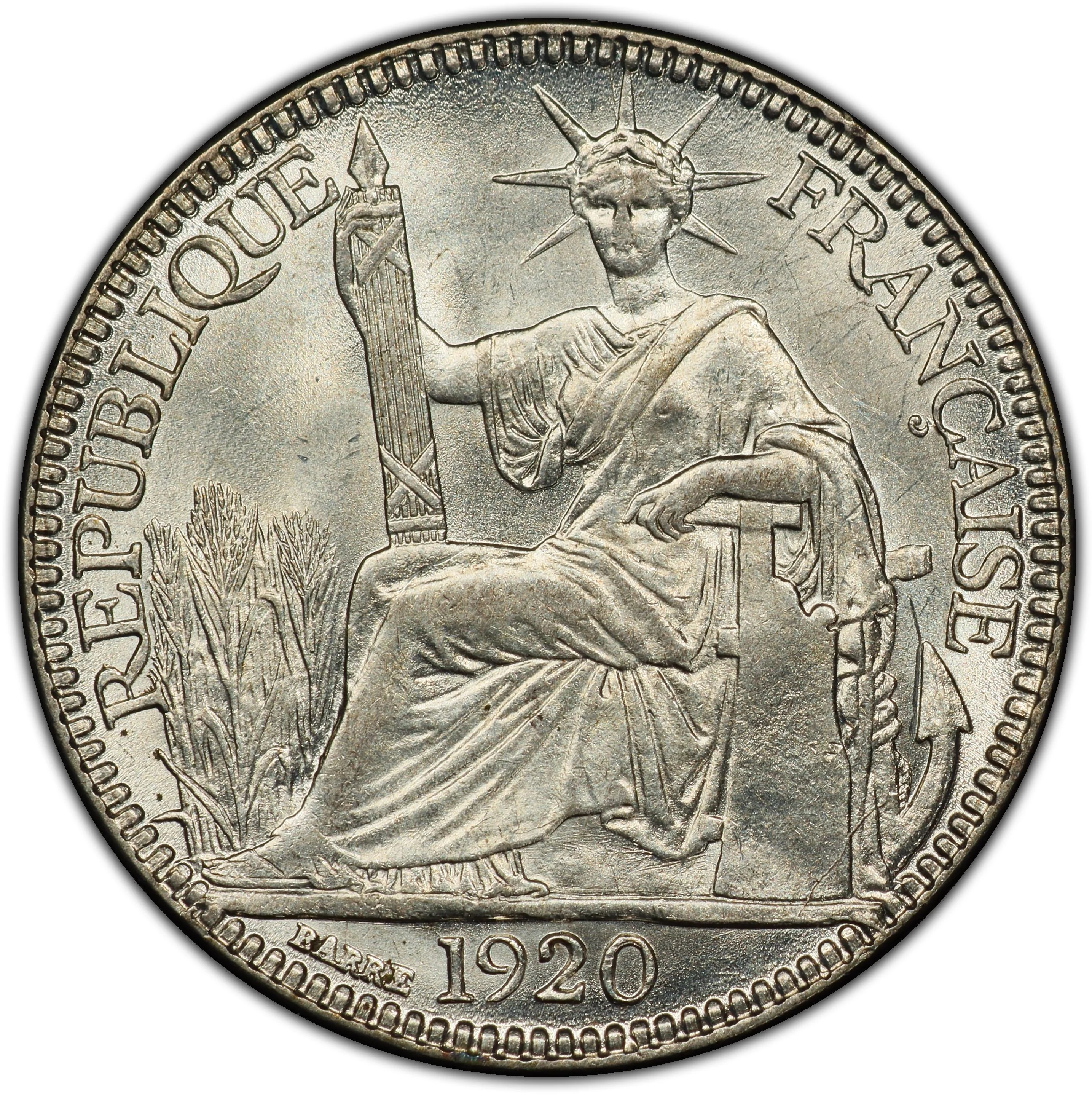
Obverse
Description:
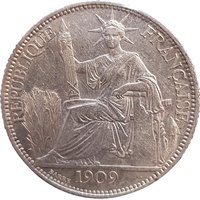
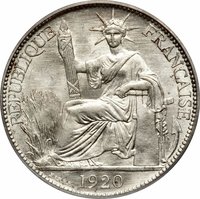
Marianne seated left, holding fasces, date below.
Inscription:
REPUBLIQUE FRANÇAISE
BARRE
1920
BARRE
1920
Translation:
FRENCH REPUBLIC
BARRE
1920
BARRE
1920
Script: Latin
Language: French
Engraver: Jean-Auguste Barre
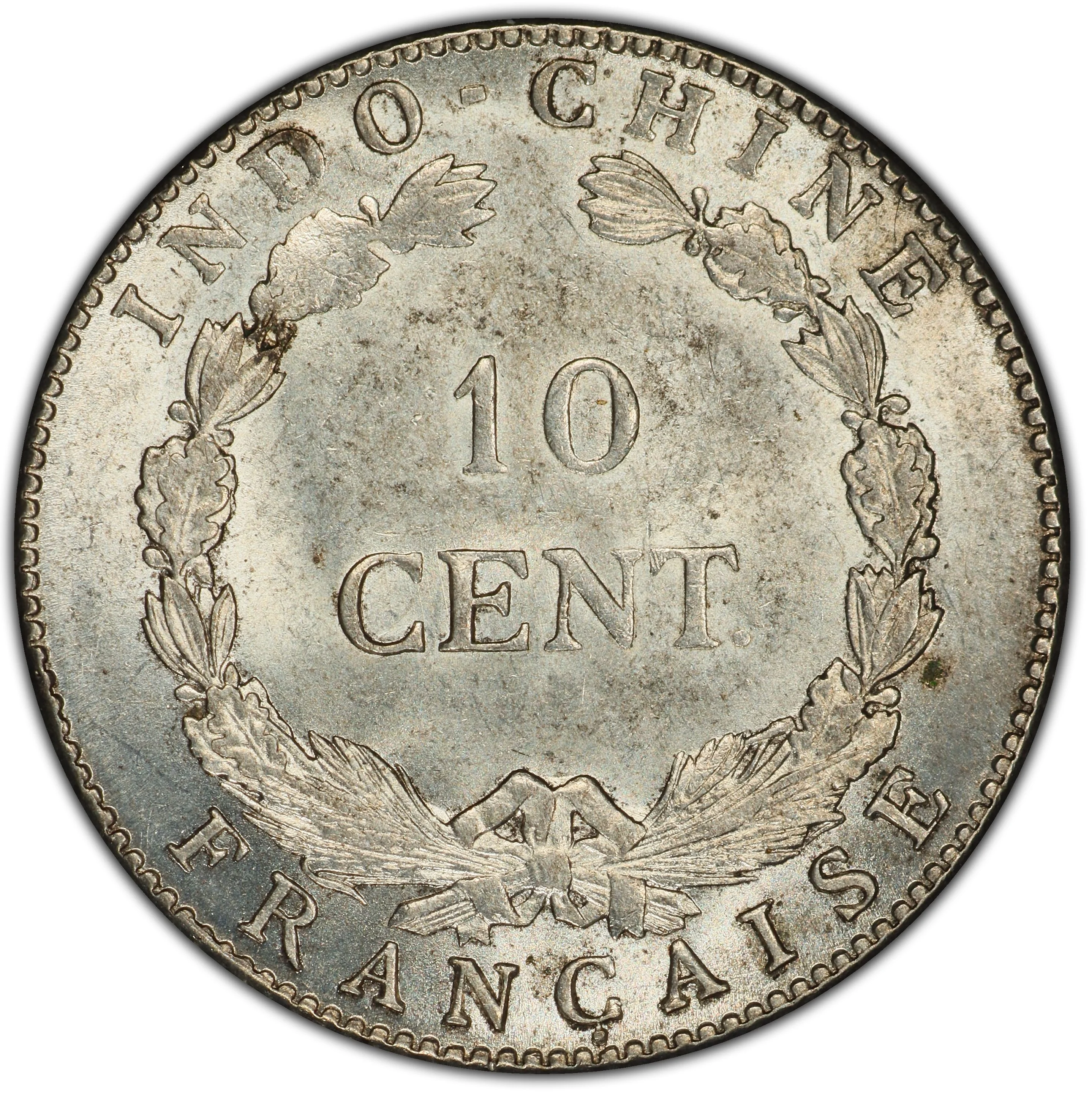
Reverse
Description:
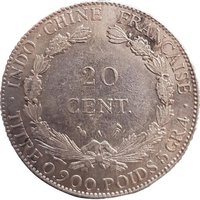
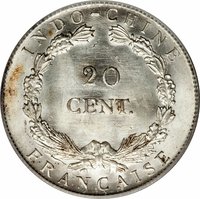
Wreath denomination. No fineness or mintmark.
Inscription:
INDO·CHINE
10
CENT.
FRANÇAISE
10
CENT.
FRANÇAISE
Translation:
French Indo-China
10
Cents.
10
Cents.
Script: Latin
Language: French
Engraver: Jean-Auguste Barre
Edge
Reeded
Mints
| Name | Mark |
|---|---|
| United States Mint of San Francisco | — |
Mintings
| Year | Mint Mark | Mintage | Quality | Collection |
|---|---|---|---|---|
| 1920 | — | 10,000,000 |
Historical background
In 1920, the currency situation in French Indochina was defined by the exclusive use of the Piastre de Commerce, a silver-based currency issued by the Banque de l'Indochine. Established in the late 19th century, this system was designed to stabilize trade and separate the colony from the monetary fluctuations of metropolitan France. The piastre was pegged to silver at a fixed rate, which gave it a high intrinsic value and made it a strong, trusted currency for regional commerce across Southeast Asia and Southern China. This stability, however, came at the cost of tying the colony's economy to global silver prices rather than to the French franc.
This monetary independence created a persistent and contentious economic phenomenon: a significant disparity between the piastre's value and that of the French franc. Throughout the early 20th century, the piastre was valued at a substantial premium, officially set at 2.5 francs in 1920 but often trading at an even higher market rate. This overvaluation was fiercely defended by the Banque de l'Indochine and colonial interests, such as rubber and rice exporters, as it made imports from France cheaper and facilitated the repatriation of profits. For the local population and smaller businesses, however, it made exports less competitive and was seen as a mechanism that enriched a small elite at the colony's broader economic expense.
Consequently, the currency regime was a source of major political tension. Nationalists and critics in both Indochina and the French parliament denounced the piastre's high fixed rate as a "colonial pact" that drained the local economy. They argued it served the interests of the bank's shareholders and large concessionary companies while hindering industrial development and placing a heavy burden on Vietnamese taxpayers. Thus, in 1920, the piastre was not merely a medium of exchange but a powerful symbol and instrument of colonial economic control, setting the stage for decades of continued debate and eventual reform.
This monetary independence created a persistent and contentious economic phenomenon: a significant disparity between the piastre's value and that of the French franc. Throughout the early 20th century, the piastre was valued at a substantial premium, officially set at 2.5 francs in 1920 but often trading at an even higher market rate. This overvaluation was fiercely defended by the Banque de l'Indochine and colonial interests, such as rubber and rice exporters, as it made imports from France cheaper and facilitated the repatriation of profits. For the local population and smaller businesses, however, it made exports less competitive and was seen as a mechanism that enriched a small elite at the colony's broader economic expense.
Consequently, the currency regime was a source of major political tension. Nationalists and critics in both Indochina and the French parliament denounced the piastre's high fixed rate as a "colonial pact" that drained the local economy. They argued it served the interests of the bank's shareholders and large concessionary companies while hindering industrial development and placing a heavy burden on Vietnamese taxpayers. Thus, in 1920, the piastre was not merely a medium of exchange but a powerful symbol and instrument of colonial economic control, setting the stage for decades of continued debate and eventual reform.
⭐ Somewhat Rare