

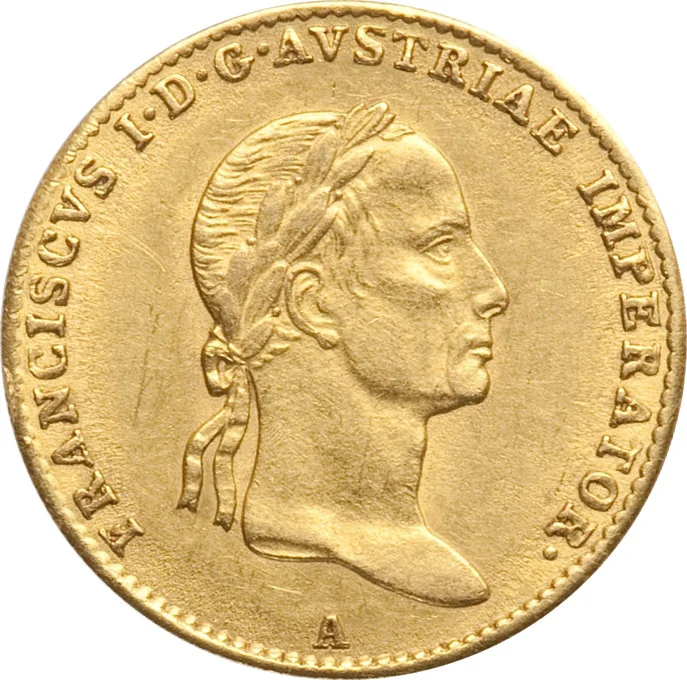
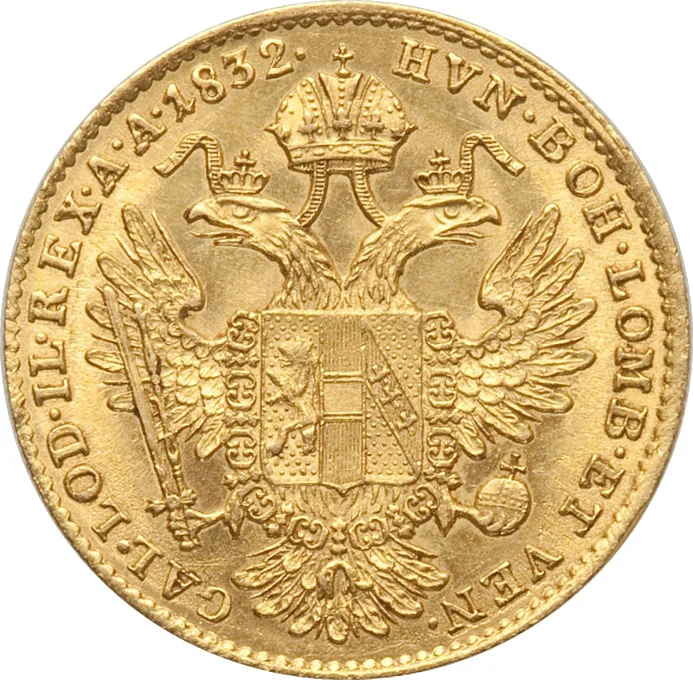
1 ducat – Austrian Empire
Add to wishlist
Austria
Context
Years: 1831–1835
Country: Austria
Issuer: Austrian Empire
Ruler: Francis I of Austria
Currency:
(1754—1857)
Demonetized: Yes
Material
References
KM: #
Numista: #33729
Value
Bullion value: $532.89
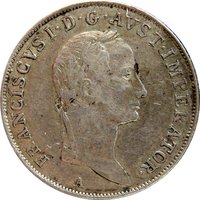
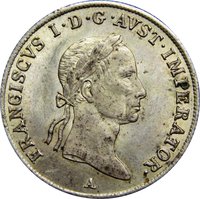
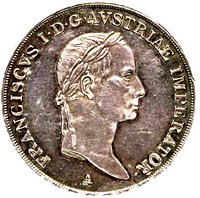
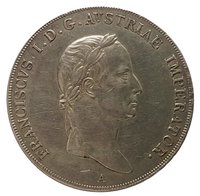
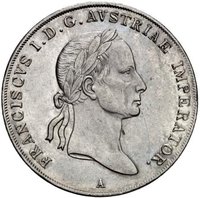
Obverse
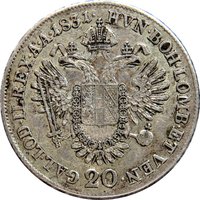
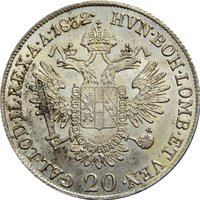
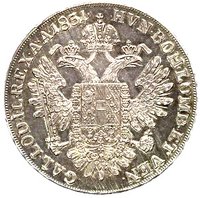
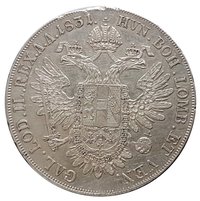
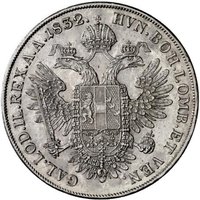
Reverse
Inscription:
HVN. BOH. LOMB. ET. VEN. GAL. LOD. IL. REX. A. A.
Script: Latin
Edge
Reeded
Mints
| Name | Mark |
|---|---|
| Münze Österreich | A |
| Kremnica | B |
| Alba Iulia | E |
Mintings
Historical background
In 1831, the Austrian Empire's currency situation was characterized by a fragile and complex system still reeling from the state bankruptcy of 1811 and the subsequent currency reforms. The official currency was the Conventionsthaler, a large silver coin, but the everyday monetary reality for most subjects was dominated by paper banknotes issued by the Privileged Austrian National Bank. These notes, known as Einlösungsscheine (redemption notes), were not fully convertible to silver, leading to a persistent disparity between their face value and their actual market value in metal. This created a de facto dual system where transactions often had to account for the agio—a premium paid for silver over paper.
The root of this instability lay in the state's chronic budget deficits, largely financed by compelling the National Bank to print money. This practice, intensified during the Napoleonic Wars, led to severe inflation and the aforementioned bankruptcy. While the 1811 and 1816 reforms had stabilized the currency from complete collapse, confidence in paper money remained low. By 1831, the Austrian gulden (florin), divided into 60 kreuzer in the paper standard, traded at a significant discount compared to the theoretical silver gulden (divided into 20 kreuzer in the Convention standard). This cumbersome system of "conventional" (silver) and "current" (paper) gulden created confusion and hindered both domestic commerce and international trade.
Consequently, the year 1831 fell within a prolonged period of monetary stagnation and cautious management. The government, under Chancellor Metternich, prioritized fiscal austerity and gradual deflation to slowly restore the value of paper notes towards parity with silver, a policy that would take decades. This environment restricted economic growth and credit, placing a burden on merchants and the emerging industrial sector. The currency situation thus reflected the broader challenges of the Vormärz period: an empire struggling to modernize its financial structures while maintaining conservative political control.
The root of this instability lay in the state's chronic budget deficits, largely financed by compelling the National Bank to print money. This practice, intensified during the Napoleonic Wars, led to severe inflation and the aforementioned bankruptcy. While the 1811 and 1816 reforms had stabilized the currency from complete collapse, confidence in paper money remained low. By 1831, the Austrian gulden (florin), divided into 60 kreuzer in the paper standard, traded at a significant discount compared to the theoretical silver gulden (divided into 20 kreuzer in the Convention standard). This cumbersome system of "conventional" (silver) and "current" (paper) gulden created confusion and hindered both domestic commerce and international trade.
Consequently, the year 1831 fell within a prolonged period of monetary stagnation and cautious management. The government, under Chancellor Metternich, prioritized fiscal austerity and gradual deflation to slowly restore the value of paper notes towards parity with silver, a policy that would take decades. This environment restricted economic growth and credit, placing a burden on merchants and the emerging industrial sector. The currency situation thus reflected the broader challenges of the Vormärz period: an empire struggling to modernize its financial structures while maintaining conservative political control.

💎 Extremely Rare