

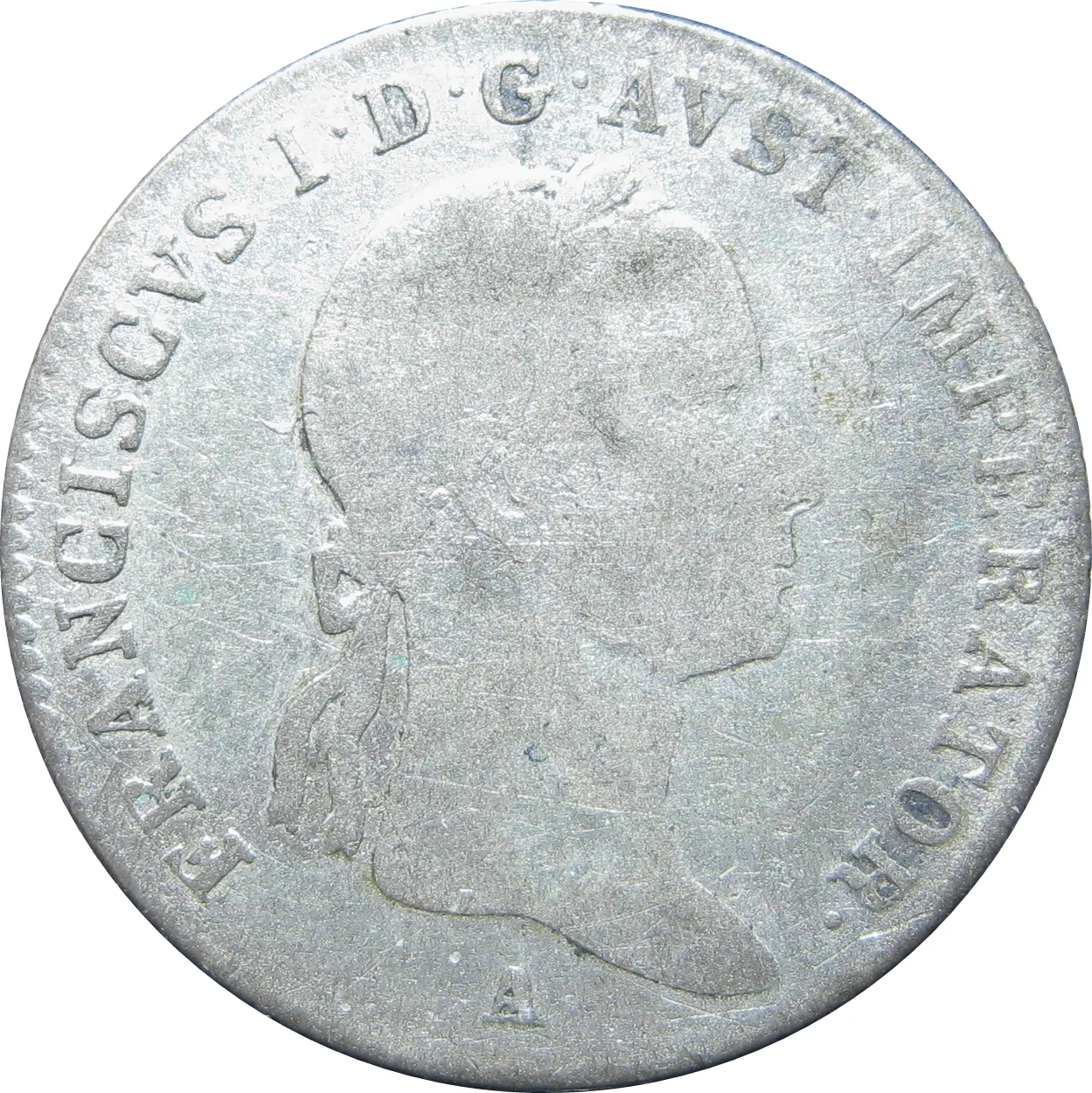
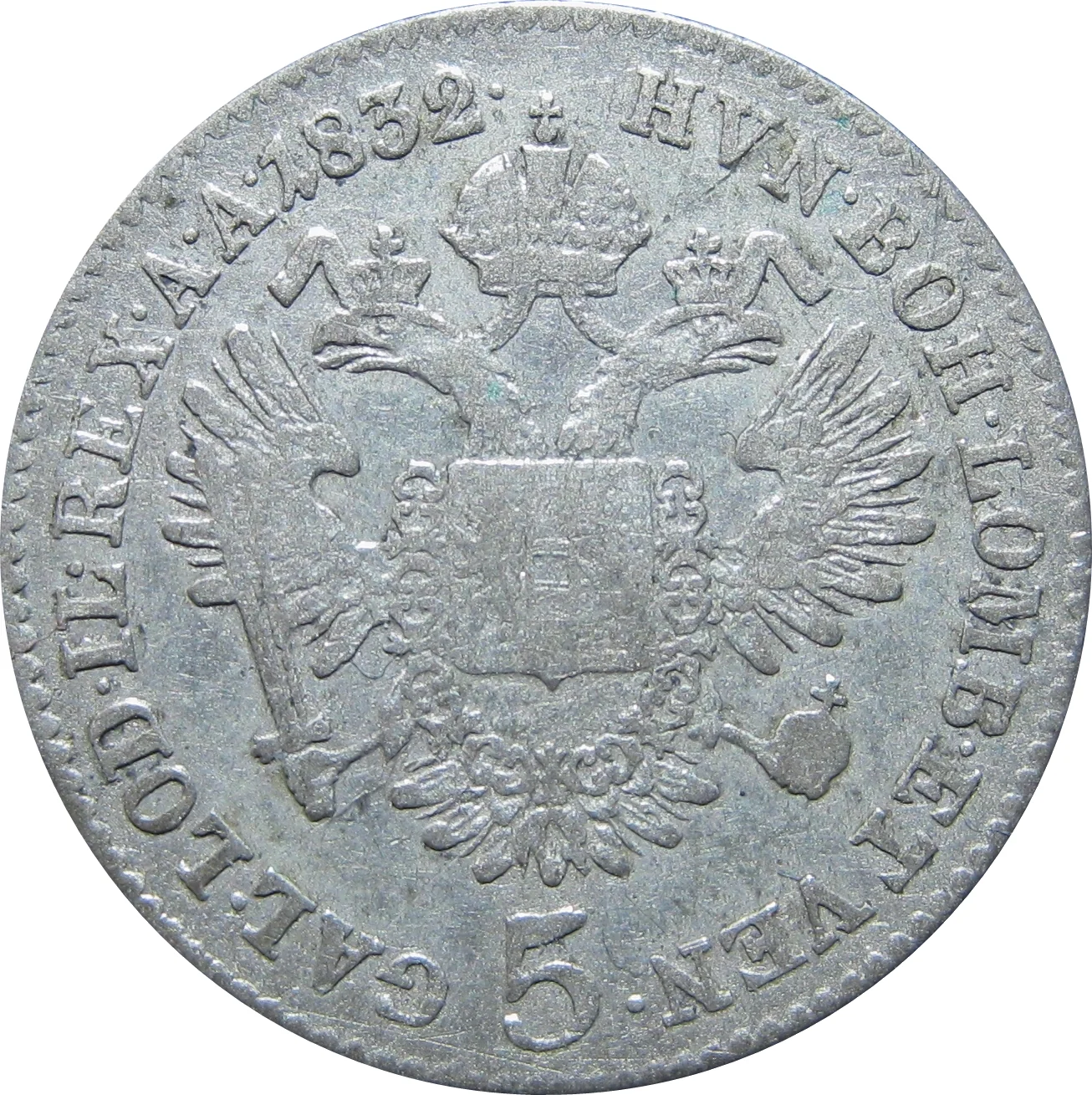
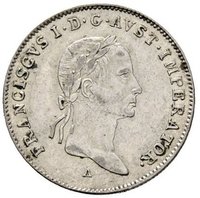
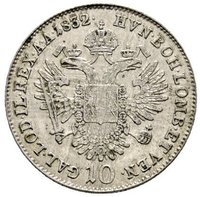
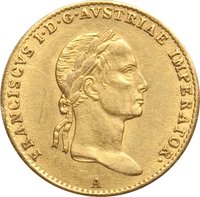
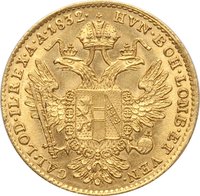
5 kreuzer – Austrian Empire
Add to wishlist
Austria
Context
Years: 1832–1835
Country: Austria
Issuer: Austrian Empire
Ruler: Francis I of Austria
Currency:
(1754—1857)
Demonetized: Yes
Total mintage: 60,000
Material
References
KM: #
Numista: #33666
Mints
| Name | Mark |
|---|---|
| Münze Österreich | A |
Historical background
In 1832, the Austrian Empire's currency situation was characterized by a fragile and complex system still recovering from the state bankruptcy of 1811. The official currency was the Conventionsthaler, a large silver coin, but the everyday monetary landscape was dominated by paper banknotes issued by the Privileged Austrian National Bank. These notes, known as Einlösungsscheine (redemption notes), were not fully convertible to silver, leading to a persistent gap between their face value and their actual market value in silver. This created a de facto system of two parallel values: one for silver coin and a lower one for paper, causing confusion and hampering trade.
The root of this instability lay in the Napoleonic Wars, which had forced the Habsburg monarchy to finance conflicts through excessive paper money issuance, leading to hyperinflation and the aforementioned bankruptcy. The subsequent Vienna Currency Convention of 1857 was still a quarter-century away, so the Empire in 1832 operated on the Convention monetary standard established in 1753, which tied the Gulden (or Florin) to a specific silver content. However, chronic state budget deficits and the costs of maintaining the empire's conservative order under Chancellor Metternich meant the government repeatedly relied on the National Bank for loans, undermining confidence in the paper currency's stability.
Consequently, the economy suffered from a lack of uniform, trusted money. Exchange rates between silver and paper fluctuated, and different regions of the heterogeneous empire also used various subsidiary coins. This monetary fragmentation increased transaction costs, discouraged investment, and acted as a brake on economic modernization and the growth of a unified national market. The currency situation of 1832 thus reflected the broader tensions within the Austrian Empire: a sprawling, multi-ethnic state struggling to reconcile its imperial finances with the demands of an emerging modern economy.
The root of this instability lay in the Napoleonic Wars, which had forced the Habsburg monarchy to finance conflicts through excessive paper money issuance, leading to hyperinflation and the aforementioned bankruptcy. The subsequent Vienna Currency Convention of 1857 was still a quarter-century away, so the Empire in 1832 operated on the Convention monetary standard established in 1753, which tied the Gulden (or Florin) to a specific silver content. However, chronic state budget deficits and the costs of maintaining the empire's conservative order under Chancellor Metternich meant the government repeatedly relied on the National Bank for loans, undermining confidence in the paper currency's stability.
Consequently, the economy suffered from a lack of uniform, trusted money. Exchange rates between silver and paper fluctuated, and different regions of the heterogeneous empire also used various subsidiary coins. This monetary fragmentation increased transaction costs, discouraged investment, and acted as a brake on economic modernization and the growth of a unified national market. The currency situation of 1832 thus reflected the broader tensions within the Austrian Empire: a sprawling, multi-ethnic state struggling to reconcile its imperial finances with the demands of an emerging modern economy.
💎 Extremely Rare