

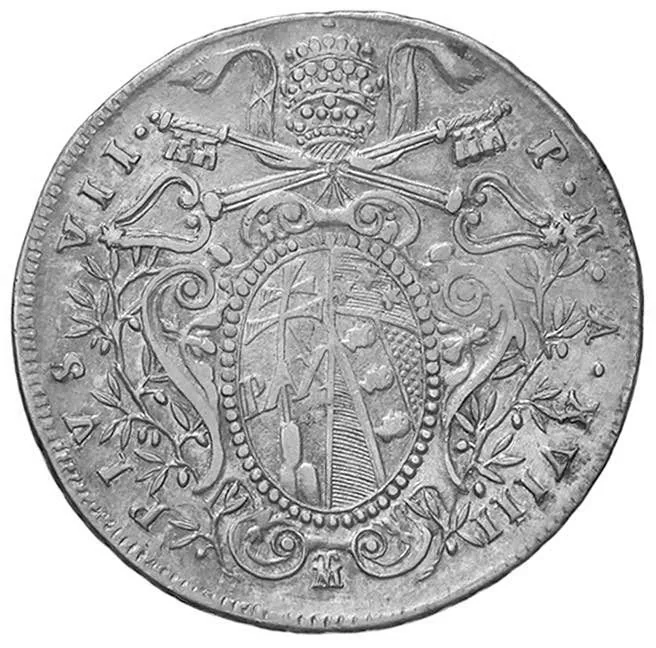
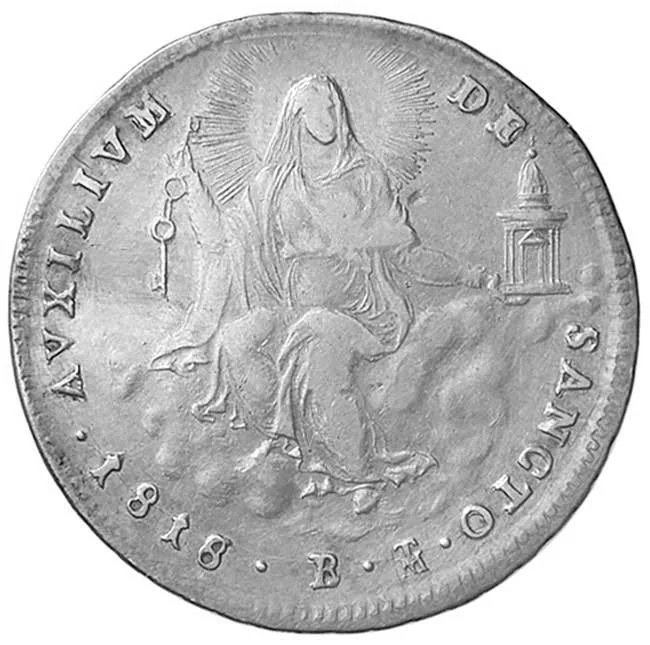
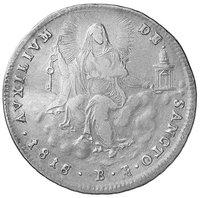
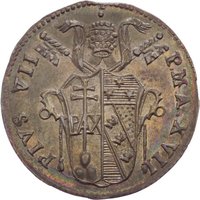
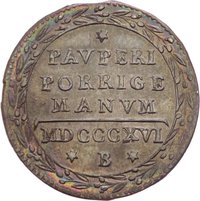
2 Giuli – Papal States
Vatican City
Context
Years: 1816–1818
Country: Vatican City 
Issuer: Papal States
Ruler: Pius VII
Currency:
(1534—1835)
Demonetized: Yes
Total mintage: 37,507
Material
References
KM: #Click to copy to clipboard1816
Numista: #336429
Value
Bullion value: $13.64
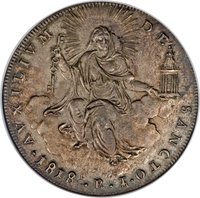
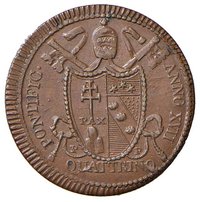
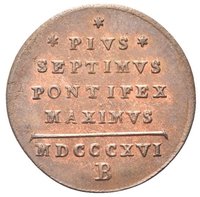
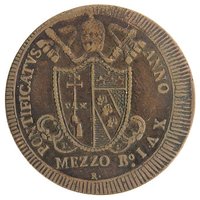
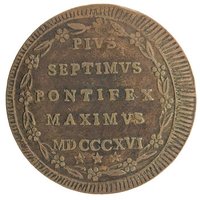
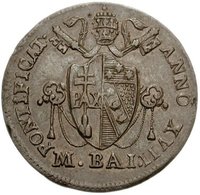
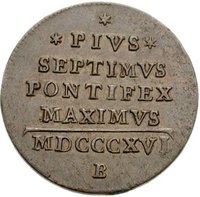
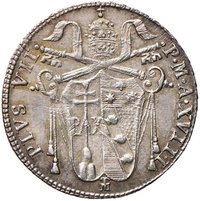
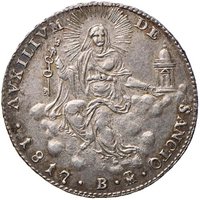
Obverse
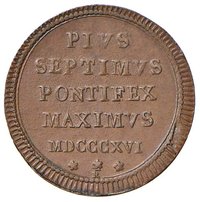
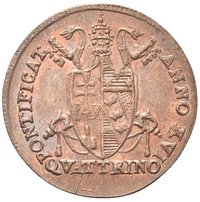
Reverse
Edge
Embossed leaves
Mints
| Name | Mark |
|---|---|
| Bologna | — |
Mintings
| Year | Mint Mark | Mintage | Quality | Collection |
|---|---|---|---|---|
| 1816 | B | 37,507 | ||
| 1818 | B | — |
Historical background
Following the Napoleonic Wars and the restoration of Papal authority in 1815, the Papal States faced a severe monetary crisis. The preceding French occupation had left a chaotic legacy of multiple circulating currencies, including French francs, local Roman scudi, and coins from various Italian regions. This fragmentation, combined with significant public debt and debased coinage, crippled economic activity and state finances, necessitating urgent and comprehensive reform.
In 1816, Pope Pius VII's administration, led by Cardinal Ercole Consalvi, enacted a sweeping monetary reform to unify and stabilize the currency. The cornerstone was the introduction of a new, decimalized Scudo Romano, divided into 100 bajocchi, each of 10 quattrini. This modern system replaced the old, complex lira-scudo-baiocco system. The state minted new silver scudi and subsidiary coins, while also issuing a landmark gold 20-scudo piece, the "Gregorina," to reinforce confidence and facilitate larger transactions.
The reform was a significant administrative achievement that successfully restored a single, recognizable currency across the Papal States, simplifying trade and taxation. However, its long-term stability was challenged by persistent budget deficits, which later led to inflationary paper money issues. Furthermore, the continued circulation of older coins alongside the new decimal currency for years highlighted the practical difficulties of completely transforming a pre-monetary economy, setting the stage for future financial pressures that would culminate in the complete loss of papal monetary sovereignty after Italian unification in 1870.
In 1816, Pope Pius VII's administration, led by Cardinal Ercole Consalvi, enacted a sweeping monetary reform to unify and stabilize the currency. The cornerstone was the introduction of a new, decimalized Scudo Romano, divided into 100 bajocchi, each of 10 quattrini. This modern system replaced the old, complex lira-scudo-baiocco system. The state minted new silver scudi and subsidiary coins, while also issuing a landmark gold 20-scudo piece, the "Gregorina," to reinforce confidence and facilitate larger transactions.
The reform was a significant administrative achievement that successfully restored a single, recognizable currency across the Papal States, simplifying trade and taxation. However, its long-term stability was challenged by persistent budget deficits, which later led to inflationary paper money issues. Furthermore, the continued circulation of older coins alongside the new decimal currency for years highlighted the practical difficulties of completely transforming a pre-monetary economy, setting the stage for future financial pressures that would culminate in the complete loss of papal monetary sovereignty after Italian unification in 1870.
✨ Legendary