

1 ducat (Coronation of King Franz Joseph I) – Austrian Empire
Add to wishlist
Circulating commemorative coins
Commemoration: 50th Anniversary of the Coronation of King Franz Joseph I
Austria
Context
Year: 1898
Country: Austria
Issuer: Austrian Empire
Ruler: Francis Joseph I
Currency:
(1892—1918)
Demonetized: Yes
Total mintage: 26,358
Material
References
KM: #
Numista: #33409
Value
Bullion value: $528.66
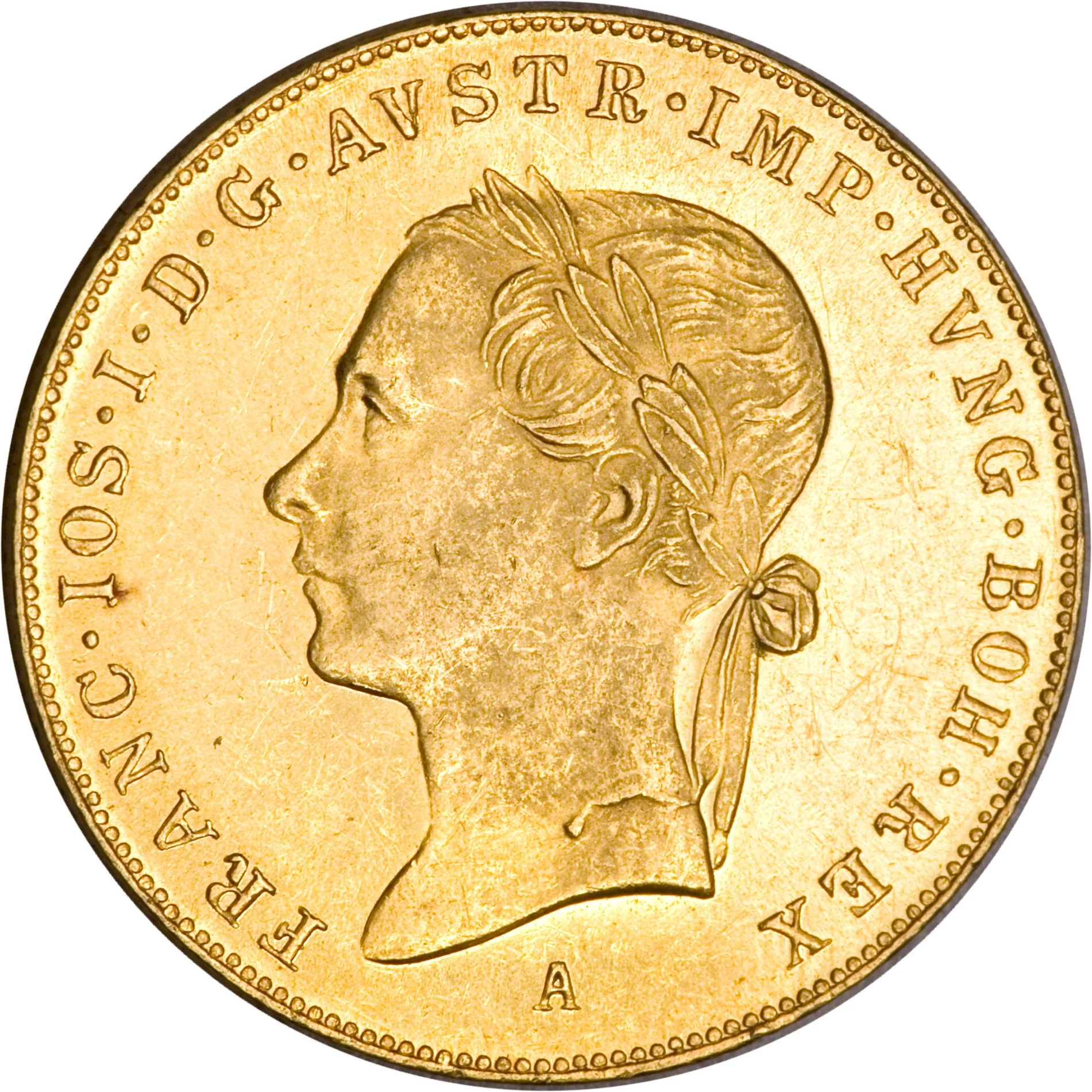
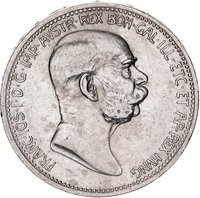
Obverse
Inscription:
FRANC.IOS.I.D.G.AVSTR.IMP.HVNG.BOH.REX
A
A
Translation:
FRANCIS I BY THE GRACE OF GOD EMPEROR OF AUSTRIA, KING OF HUNGARY AND BOHEMIA
Script: Latin
Language: Latin
Engraver: Franz Gaul
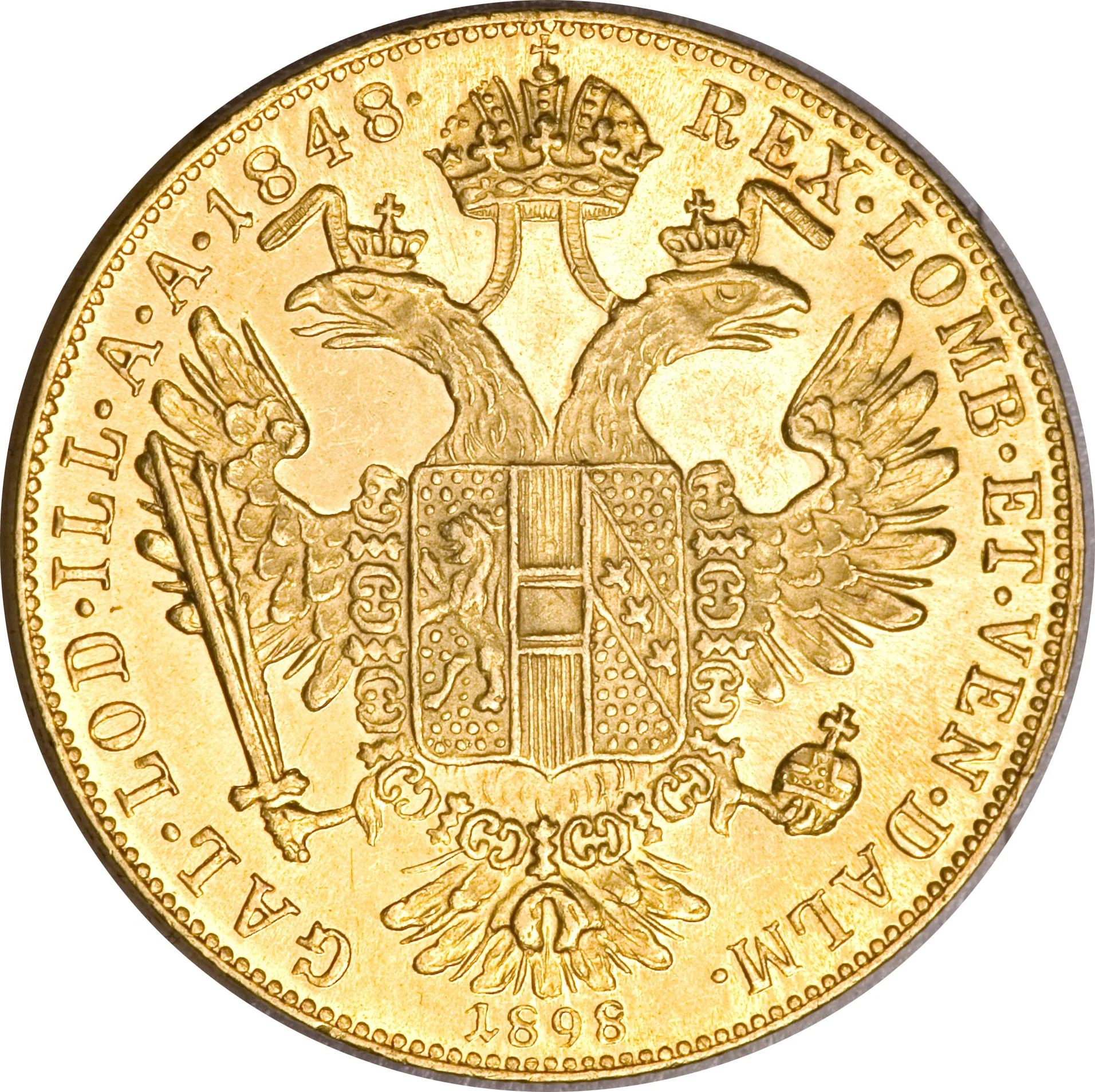
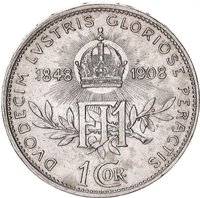
Reverse
Edge
Reeded
Categories
| Event> Coronation |
Mintings
| Year | Mint Mark | Mintage | Quality | Collection |
|---|---|---|---|---|
| 1898 | A | 26,358 |
Historical background
By 1898, the currency situation in the Austro-Hungarian Empire was defined by a prolonged and complex transition towards a modern, stable monetary system. The empire operated under the Austro-Hungarian Gulden (or Florin), which was nominally on a silver standard. However, decades of state debt, fiscal pressures, and the global shift away from bimetallism had effectively placed the currency on a shaky paper standard. The value of the Gulden was not firmly tied to a specific amount of precious metal, leading to fluctuations and a lack of international confidence, which hampered trade and investment.
Recognizing these economic handicaps, the Austro-Hungarian government had already embarked on a major reform. The pivotal 1892 Currency Act laid the legal groundwork to replace the Gulden with a new gold-standard currency, the Krone (or Korona), divided into 100 Heller. The year 1898 fell in the middle of a lengthy transition period where both currencies were legal tender. While new gold coins were minted and accounting increasingly shifted to Kronen, the older Gulden notes and coins remained in widespread circulation, creating a dual-system that was often confusing for the public and commerce.
Therefore, the background of 1898 is one of cautious implementation rather than crisis. The state was actively building gold reserves and gradually withdrawing old silver Gulden from circulation, but the process was slow and deliberate to avoid economic disruption. The ultimate goal was to achieve convertibility, where paper banknotes could be reliably exchanged for gold, thereby integrating the empire into the global gold standard and signaling its financial maturity. The situation was thus characterized by an official commitment to monetary modernization, yet the everyday reality still involved navigating the lingering old system.
Recognizing these economic handicaps, the Austro-Hungarian government had already embarked on a major reform. The pivotal 1892 Currency Act laid the legal groundwork to replace the Gulden with a new gold-standard currency, the Krone (or Korona), divided into 100 Heller. The year 1898 fell in the middle of a lengthy transition period where both currencies were legal tender. While new gold coins were minted and accounting increasingly shifted to Kronen, the older Gulden notes and coins remained in widespread circulation, creating a dual-system that was often confusing for the public and commerce.
Therefore, the background of 1898 is one of cautious implementation rather than crisis. The state was actively building gold reserves and gradually withdrawing old silver Gulden from circulation, but the process was slow and deliberate to avoid economic disruption. The ultimate goal was to achieve convertibility, where paper banknotes could be reliably exchanged for gold, thereby integrating the empire into the global gold standard and signaling its financial maturity. The situation was thus characterized by an official commitment to monetary modernization, yet the everyday reality still involved navigating the lingering old system.
💎 Extremely Rare