

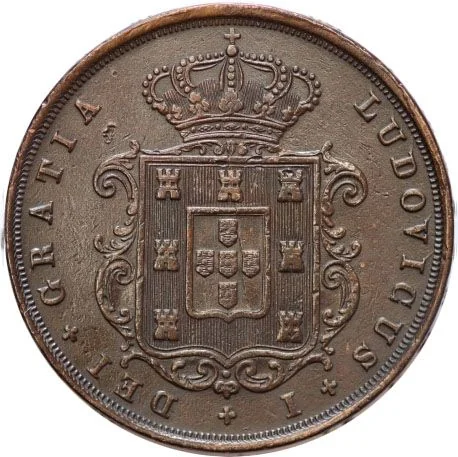
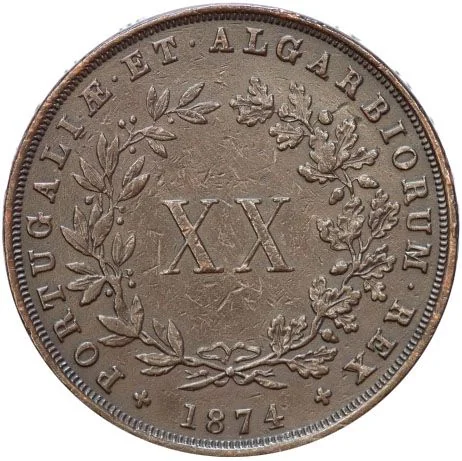
20 réis – Angola
Add to wishlist
Angola
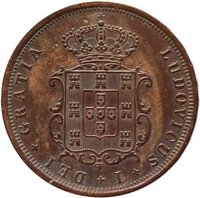
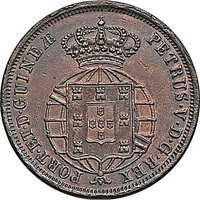
Obverse
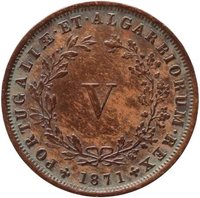
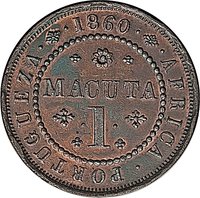
Reverse
Edge
Plain
Mints
| Name | Mark |
|---|---|
| Imprensa Nacional - Casa da Moeda | — |
Mintings
| Year | Mint Mark | Mintage | Quality | Collection |
|---|---|---|---|---|
| 1871 | — | 310,000 | ||
| 1873 | — | 2,500,000 | ||
| 1874 | — | 1,575,000 |
Historical background
In 1871, Angola, as a Portuguese colony, operated within a complex and often chaotic monetary landscape dominated by a severe shortage of official currency. The Portuguese colonial administration struggled to supply sufficient quantities of its own metallic currency (réis) to the local economy. This scarcity was a chronic issue, stemming from Lisbon's broader financial difficulties and the low priority given to the economic integration of its African territories. As a result, the day-to-day transactions for most Angolans, especially in the interior, relied heavily on traditional and informal systems of barter for goods like cloth, salt, and alcohol.
To fill the void, a diverse array of foreign coins circulated as de facto legal tender, creating a multi-currency system. Most prominent were Brazilian gold milréis and older Portuguese coins from Brazil, a legacy of the historical trade links across the South Atlantic. British sterling silver, particularly shillings and crowns from trade with other African regions, also held significant value and trust. This reliance on foreign specie highlighted Angola's integration into broader Atlantic trade networks rather than a controlled colonial economy, and it posed constant challenges for merchants and the administration in establishing stable exchange rates.
Furthermore, the currency situation was inextricably linked to the colony's most infamous economic activity: the slave trade. Although officially abolished by Portugal in 1836, a clandestine export of enslaved people persisted into the 1870s, and the wealth generated from it was often measured and stored in gold coin. The planned transition to a "legitimate" economy based on commodities like coffee, cotton, and palm oil was in its infancy, and the inadequate monetary system reflected this period of uncertain economic reorientation. Thus, the currency of 1871 Angola was not just a medium of exchange but a tangible symbol of its colonial neglect, its embeddedness in illicit commerce, and its struggle to define a new economic future.
To fill the void, a diverse array of foreign coins circulated as de facto legal tender, creating a multi-currency system. Most prominent were Brazilian gold milréis and older Portuguese coins from Brazil, a legacy of the historical trade links across the South Atlantic. British sterling silver, particularly shillings and crowns from trade with other African regions, also held significant value and trust. This reliance on foreign specie highlighted Angola's integration into broader Atlantic trade networks rather than a controlled colonial economy, and it posed constant challenges for merchants and the administration in establishing stable exchange rates.
Furthermore, the currency situation was inextricably linked to the colony's most infamous economic activity: the slave trade. Although officially abolished by Portugal in 1836, a clandestine export of enslaved people persisted into the 1870s, and the wealth generated from it was often measured and stored in gold coin. The planned transition to a "legitimate" economy based on commodities like coffee, cotton, and palm oil was in its infancy, and the inadequate monetary system reflected this period of uncertain economic reorientation. Thus, the currency of 1871 Angola was not just a medium of exchange but a tangible symbol of its colonial neglect, its embeddedness in illicit commerce, and its struggle to define a new economic future.
💎 Extremely Rare