

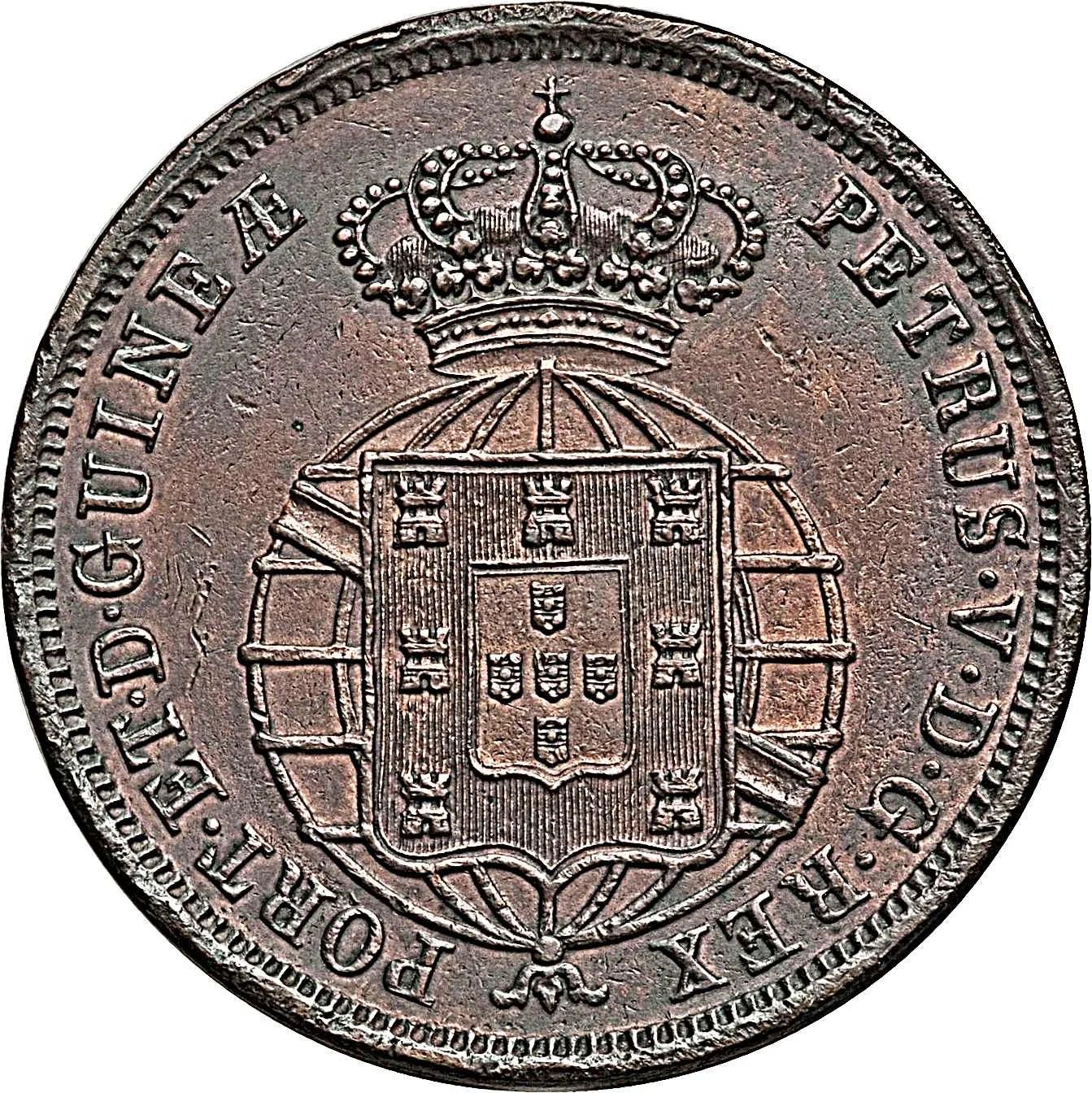
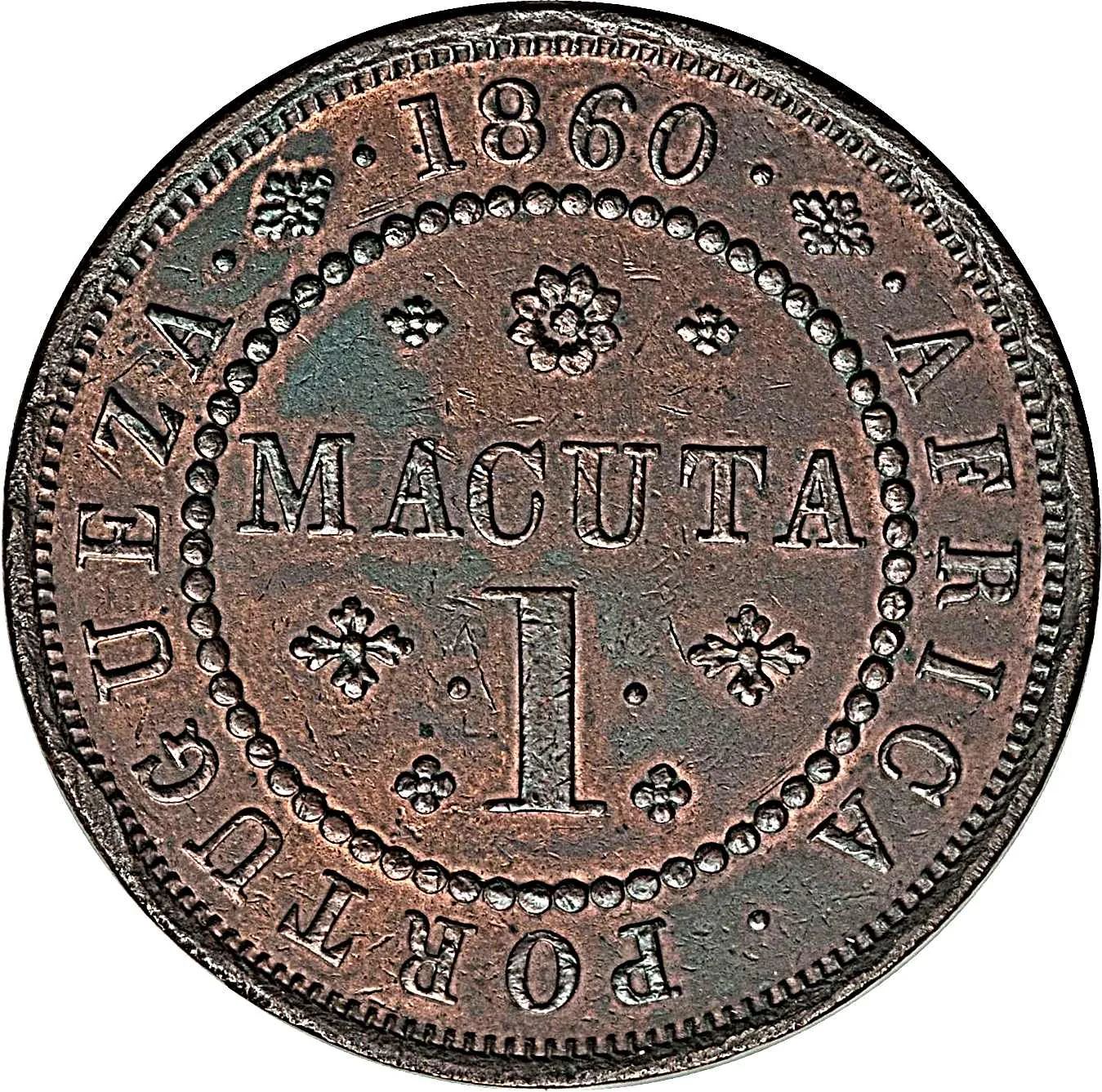
1 Macuta – Angola
Angola
Mintings
| Year | Mint Mark | Mintage | Quality | Collection |
|---|---|---|---|---|
| 1860 | — | 194,000 |
Historical background
In 1860, Angola was a Portuguese colony, and its currency situation was intrinsically tied to the economic and political control of Lisbon. The official currency was the Portuguese real, which circulated alongside a variety of other mediums of exchange, reflecting the colony's complex economic base. The slave trade, though in its final decades of legal operation, remained a dominant force, and transactions were often conducted in goods (like cloth, alcohol, and firearms) or in human beings themselves, making a standardized monetary economy limited primarily to coastal administrative and trading centers.
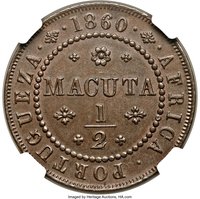
Beyond the official real, the economy operated on a practical system of multiple currencies. Historically, shell currencies, particularly nzimbu shells from the island of Luanda, had been used as a traditional unit of account and means of payment, though their use was in decline by this period. More significantly, a major circulating medium was the Macuta, a copper coin originally minted for local use. The Macuta was valued at 50 réis, and its widespread acceptance made it a de facto currency for everyday transactions among the local population, despite Portugal's attempts to impose its own monetary system.
This fragmented monetary landscape was a direct result of Portugal's limited effective control beyond fortified settlements (presídios) and the coast. The interior's economy was largely based on subsistence and barter, while long-distance trade caravans into the interior often relied on commodity money. Furthermore, Portugal's own economic weakness meant it struggled to supply sufficient coinage to the colony, leading to chronic shortages of official currency. Thus, the currency situation in 1860 Angola was one of duality: a nominal Portuguese system overshadowed by local practical solutions, mirroring the colony's transitional and exploitative phase between the declining slave economy and the nascent era of "legitimate trade" in commodities like coffee and palm oil.
Beyond the official real, the economy operated on a practical system of multiple currencies. Historically, shell currencies, particularly nzimbu shells from the island of Luanda, had been used as a traditional unit of account and means of payment, though their use was in decline by this period. More significantly, a major circulating medium was the Macuta, a copper coin originally minted for local use. The Macuta was valued at 50 réis, and its widespread acceptance made it a de facto currency for everyday transactions among the local population, despite Portugal's attempts to impose its own monetary system.
This fragmented monetary landscape was a direct result of Portugal's limited effective control beyond fortified settlements (presídios) and the coast. The interior's economy was largely based on subsistence and barter, while long-distance trade caravans into the interior often relied on commodity money. Furthermore, Portugal's own economic weakness meant it struggled to supply sufficient coinage to the colony, leading to chronic shortages of official currency. Thus, the currency situation in 1860 Angola was one of duality: a nominal Portuguese system overshadowed by local practical solutions, mirroring the colony's transitional and exploitative phase between the declining slave economy and the nascent era of "legitimate trade" in commodities like coffee and palm oil.
⭐ Rare