

¼ gulden – Curaçao
Add to wishlist
Netherlands
Context
Year: 1900
Country: Netherlands
Issuer: Curaçao
Ruler: Wilhelmina
Currency:
(since 1828)
Demonetized: Yes
Total mintage: 480,040
Material
References
KM: #
Numista: #32984
Value
Exchange value: ¼ ANG
Bullion value: $5.85
Obverse
Description:
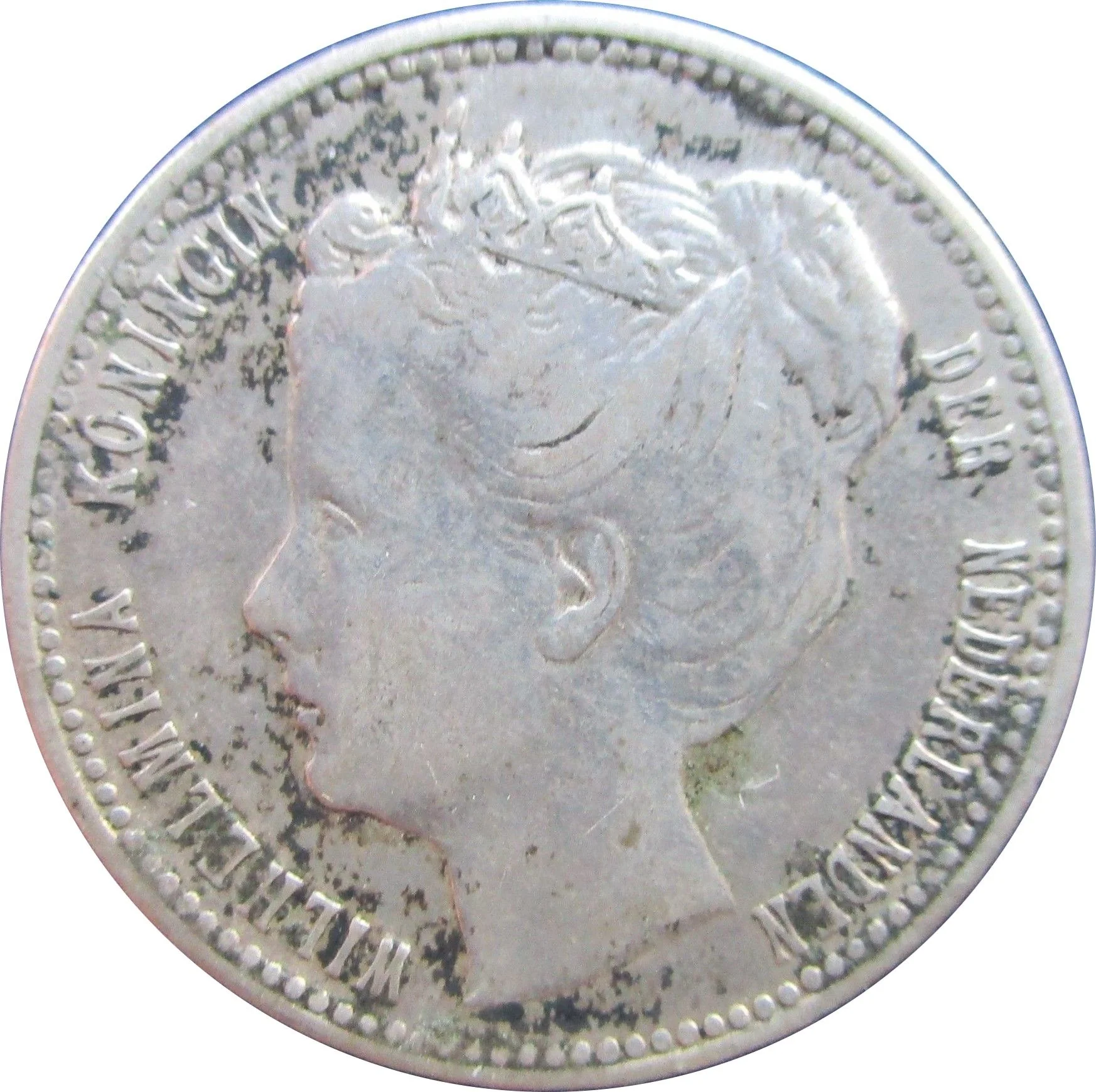
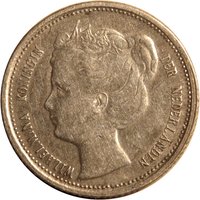
Portrait of Queen Wilhelmina facing left with Dutch text.
Inscription:
WILHELMINA KONINGIN DER NEDERLANDEN
Translation:
Wilhelmina Queen of the Netherlands
Script: Latin
Language: Dutch
Designer: Pier Pander
Reverse
Description:
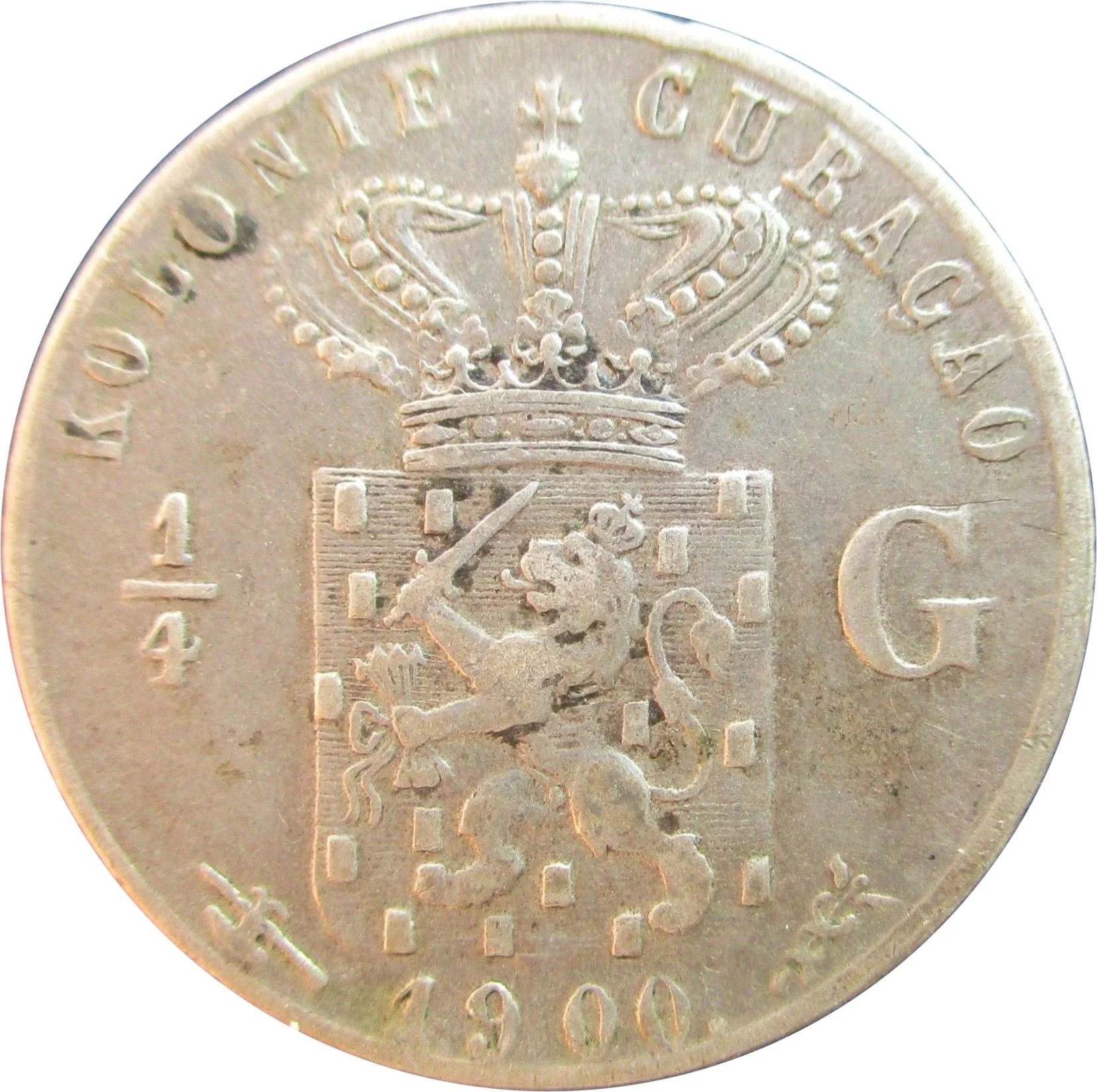
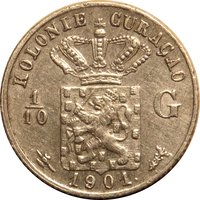
Dutch legend above. Arms divide value. Mint marks below.
Inscription:
KOLONIE CURAÇAO
¼ G
1900
¼ G
1900
Translation:
Colony Curaçao
Quarter Gulden
1900
Quarter Gulden
1900
Script: Latin
Languages: Papiamento, Dutch
Designer: Pier Pander
Edge
Reeded
Categories
| Symbols> Coat of Arms |
Mints
| Name | Mark |
|---|---|
| Royal Dutch Mint | — |
Mintings
| Year | Mint Mark | Mintage | Quality | Collection |
|---|---|---|---|---|
| 1900 | — | 480,000 | ||
| 1900 | — | 40 | Proof |
Historical background
At the turn of the 20th century, Curaçao’s currency situation was a direct reflection of its colonial status within the Dutch Empire. The official currency was the Dutch guilder, divided into 100 cents, which provided a stable and internationally recognized monetary standard. This system was administered by the Curaçaosche Bank, a privately-owned bank that held the exclusive right of note-issuance since 1828. However, the island's economy, heavily reliant on trade, shipping, and the burgeoning oil industry following the opening of the Shell refinery in 1915, also saw the widespread circulation of foreign coins, particularly from neighboring Venezuela and other Caribbean territories.
Despite the official Dutch standard, a practical challenge existed due to a chronic shortage of small change in the local economy. To alleviate this, low-value coins from various nations, such as the Venezuelan venezolano and older Spanish-American pieces, circulated freely alongside Dutch coins. This de facto acceptance of foreign specie was a necessity for daily transactions, creating a somewhat informal bimetallic or even multi-currency environment on the ground, even as accounts were officially kept in Dutch guilders.
The period around 1900 was thus one of monetary stability at the official level but with operational fluidity in everyday commerce. The authority of the Curaçaosche Bank ensured a reliable paper currency and a link to the Dutch financial system, which facilitated international trade and investment. This framework would prove essential as the island's economic importance grew in the early 20th century, setting the stage for the eventual establishment of the Netherlands Antillean guilder in 1952, which succeeded the local Dutch guilder.
Despite the official Dutch standard, a practical challenge existed due to a chronic shortage of small change in the local economy. To alleviate this, low-value coins from various nations, such as the Venezuelan venezolano and older Spanish-American pieces, circulated freely alongside Dutch coins. This de facto acceptance of foreign specie was a necessity for daily transactions, creating a somewhat informal bimetallic or even multi-currency environment on the ground, even as accounts were officially kept in Dutch guilders.
The period around 1900 was thus one of monetary stability at the official level but with operational fluidity in everyday commerce. The authority of the Curaçaosche Bank ensured a reliable paper currency and a link to the Dutch financial system, which facilitated international trade and investment. This framework would prove essential as the island's economic importance grew in the early 20th century, setting the stage for the eventual establishment of the Netherlands Antillean guilder in 1952, which succeeded the local Dutch guilder.
🌱 Common