

⅒ gulden – Curaçao
Add to wishlist
Netherlands
Context
Year: 1901
Country: Netherlands
Issuer: Curaçao
Ruler: Wilhelmina
Currency:
(since 1828)
Demonetized: Yes
Total mintage: 300,040
Material
References
KM: #
Numista: #23610
Value
Exchange value: 0.10 ANG
Bullion value: $2.18
Obverse
Description:
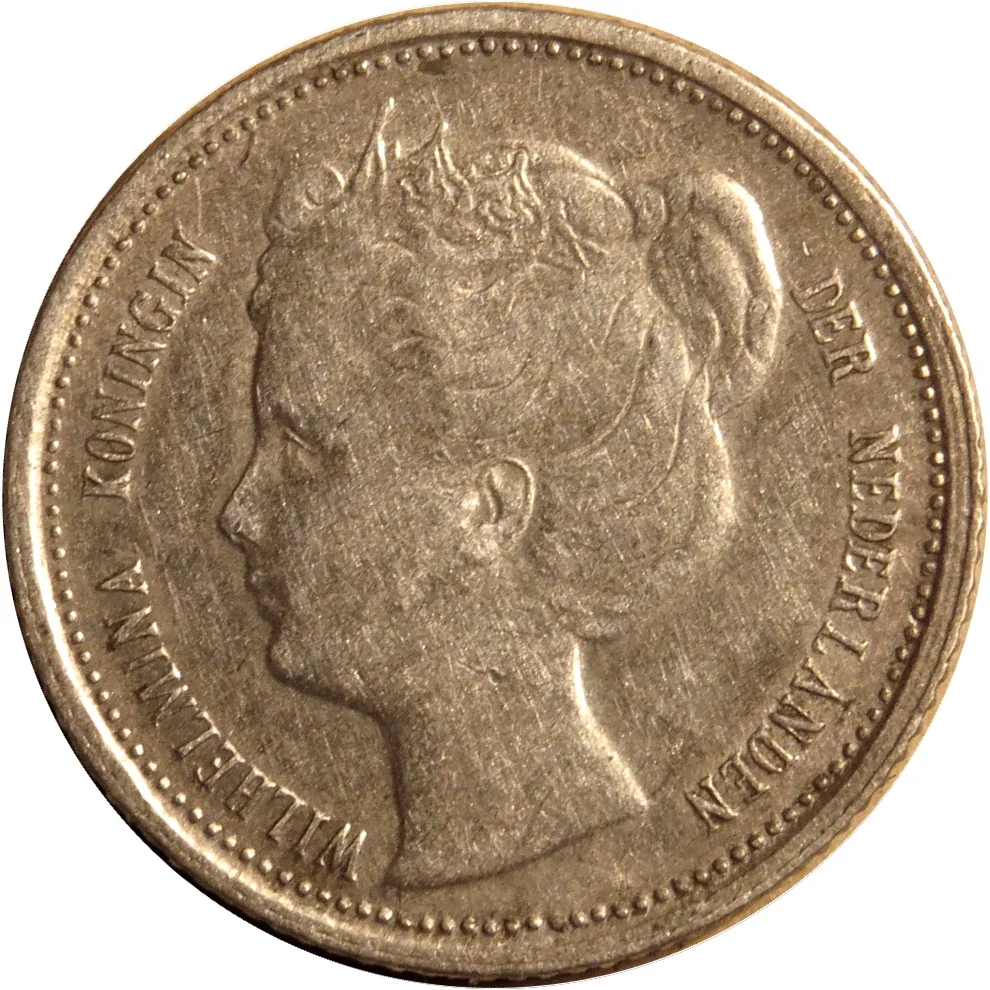
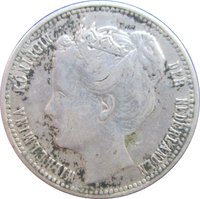
Queen Wilhelmina in left-facing portrait with diadem, encircled by Dutch text.
Inscription:
WILHELMINA KONINGIN DER NEDERLANDEN
Translation:
Wilhelmina Queen of the Netherlands
Script: Latin
Language: Dutch
Designer: Pier Pander
Reverse
Description:
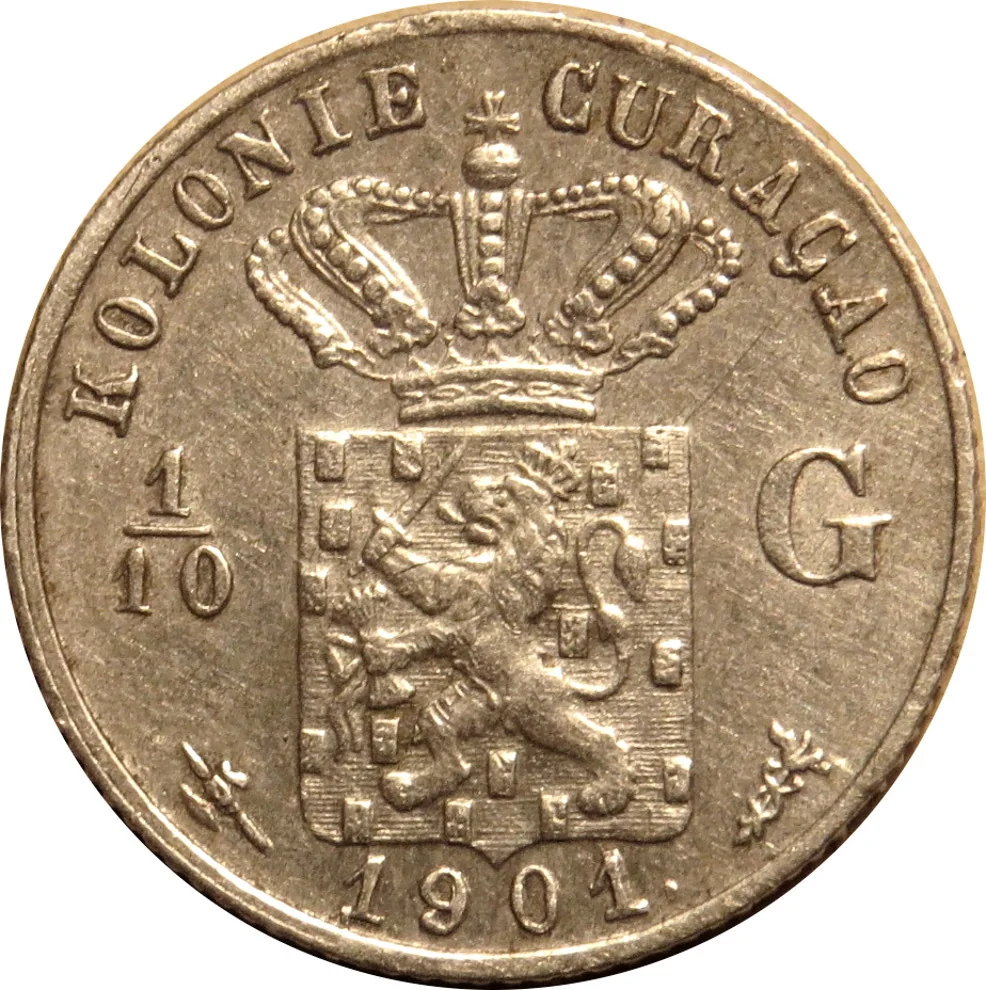
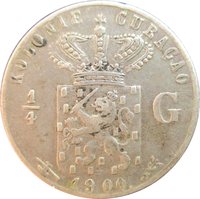
Dutch legend above, arms dividing value. Privy mark, date, and mint mark below.
Inscription:
KOLONIE CURAÇAO
1/10 G
1901
1/10 G
1901
Translation:
Colony Curaçao
1/10 Gulden
1901
1/10 Gulden
1901
Script: Latin
Designer: Pier Pander
Edge
Reeded
Categories
| Symbol> Crown |
| Symbols> Coat of Arms |
Mints
| Name | Mark |
|---|---|
| Royal Dutch Mint | — |
Mintings
| Year | Mint Mark | Mintage | Quality | Collection |
|---|---|---|---|---|
| 1901 | — | 300,000 | ||
| 1901 | — | 40 | Proof |
Historical background
In 1901, Curaçao was part of the Dutch colony of Curaçao and Dependencies, and its currency situation was complex and fragmented. The official currency was the Dutch guilder, but in practice, a wide variety of foreign coins circulated freely alongside it. Spanish-American pesos, Colombian and Venezuelan coins, U.S. dollars, and British sovereigns were all commonly used in daily commerce, reflecting the island's role as a regional trading hub. This monetary plurality created constant challenges for merchants and the colonial administration, requiring frequent calculations and conversions.
The primary issue was the fluctuating and often arbitrary value assigned to these foreign coins. Their worth was not strictly tied to their metallic content but was instead set by local proclamation and market demand, leading to instability and confusion. The colonial government periodically published official exchange rate lists, but these were difficult to enforce uniformly. This system was inefficient and hindered economic development, as it introduced uncertainty into every transaction and complicated government accounting and revenue collection.
Recognizing these problems, the colonial authorities were actively working toward monetary reform in this period. The goal was to standardize the currency solely on the Dutch guilder and eliminate the circulation of foreign specie. This effort would culminate in the Currency Ordinance of 1904, which formally demonetized foreign gold coins and established a unified, Netherlands-based currency system. Thus, the situation in 1901 was one of transition, marked by a cumbersome multi-currency reality but with clear legislative moves underway to impose order and solidify Dutch monetary control.
The primary issue was the fluctuating and often arbitrary value assigned to these foreign coins. Their worth was not strictly tied to their metallic content but was instead set by local proclamation and market demand, leading to instability and confusion. The colonial government periodically published official exchange rate lists, but these were difficult to enforce uniformly. This system was inefficient and hindered economic development, as it introduced uncertainty into every transaction and complicated government accounting and revenue collection.
Recognizing these problems, the colonial authorities were actively working toward monetary reform in this period. The goal was to standardize the currency solely on the Dutch guilder and eliminate the circulation of foreign specie. This effort would culminate in the Currency Ordinance of 1904, which formally demonetized foreign gold coins and established a unified, Netherlands-based currency system. Thus, the situation in 1901 was one of transition, marked by a cumbersome multi-currency reality but with clear legislative moves underway to impose order and solidify Dutch monetary control.
🌟 Uncommon