

½ Penny – Ireland
Ireland
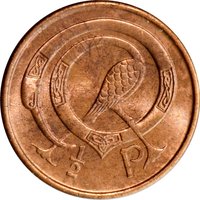
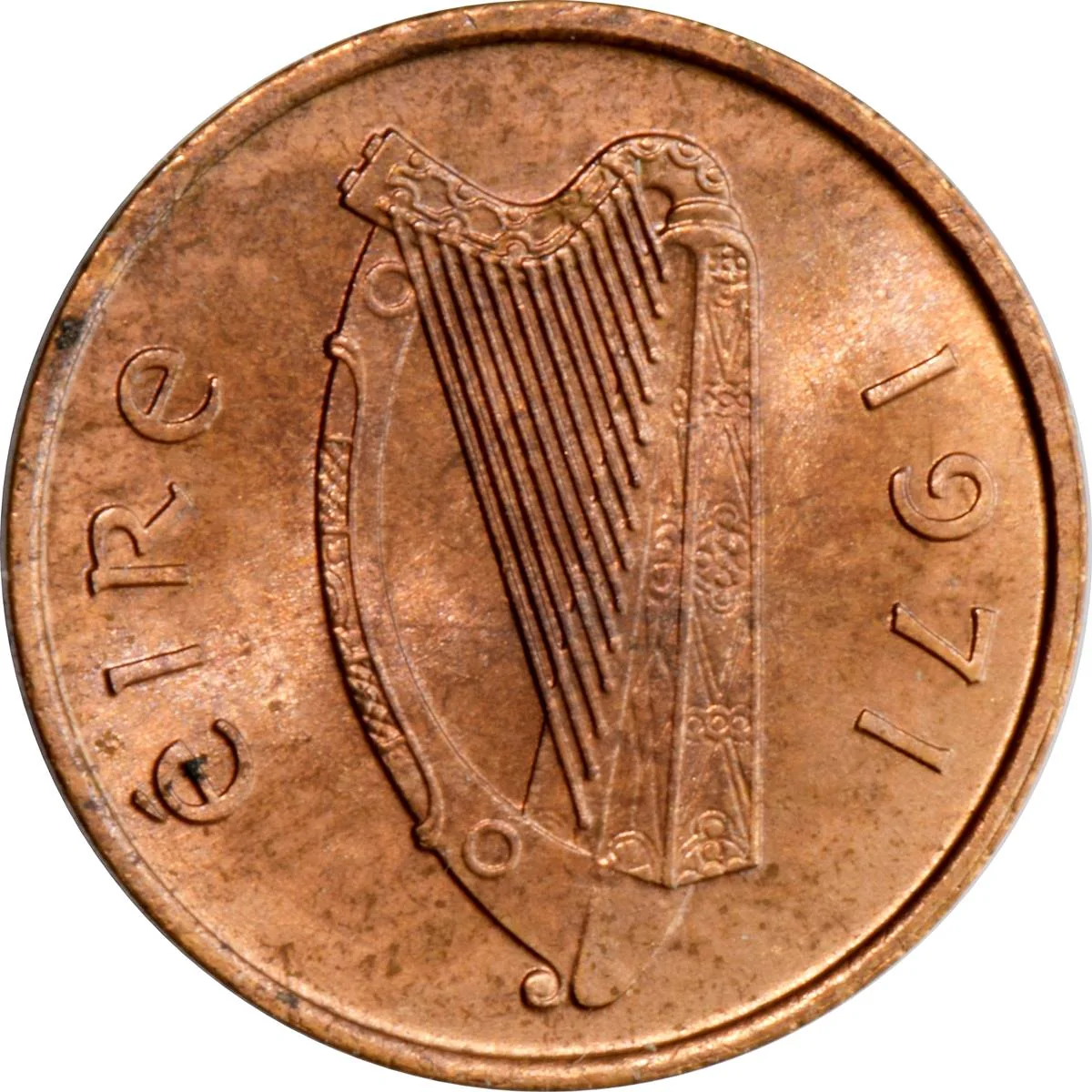
Obverse
Description:
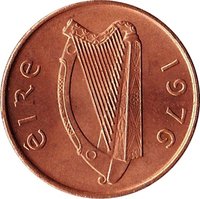
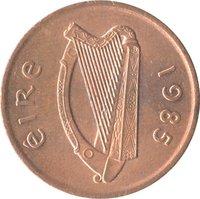
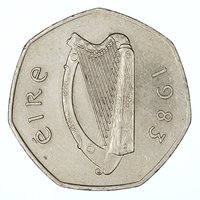
Irish harp, country name left, date right.
Inscription:
éIRe 1971
Translation:
Ireland 1971
Script: Latin (Gaelic)
Reverse
Description:
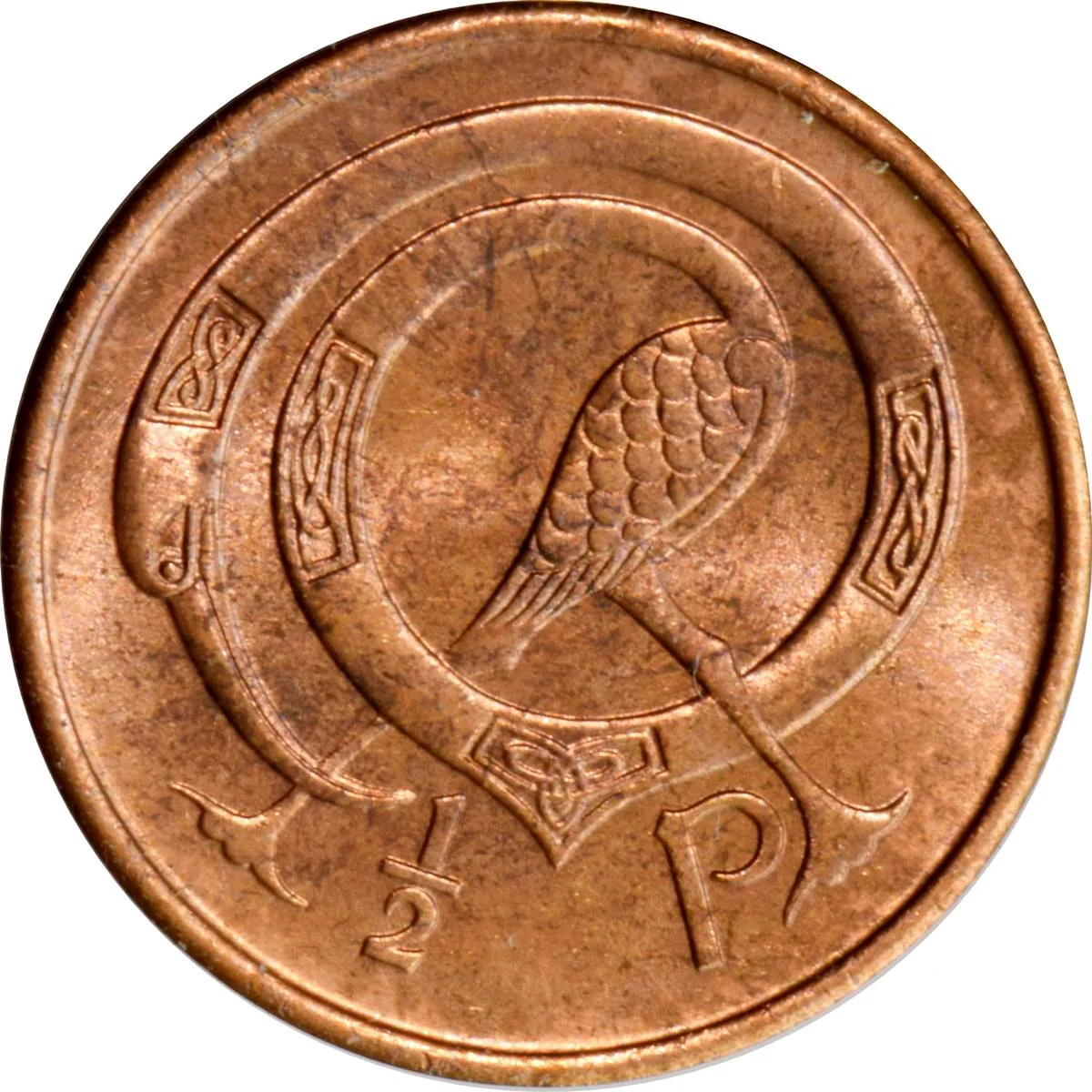
Bird-like "O" from the Book of Kells, with denomination below.
Inscription:
1/2 P
Translation:
One-half Pfenning
Script: Latin (Gaelic)
Language: German
Designer: Gabriel Hayes
Edge
Plain
Mints
| Name | Mark |
|---|---|
| Irish Mint | — |
| Royal Mint | — |
Mintings
| Year | Mint Mark | Mintage | Quality | Collection |
|---|---|---|---|---|
| 1971 | — | 100,500,000 | ||
| 1971 | — | 50,000 | Proof | |
| 1975 | — | 10,500,000 | ||
| 1976 | — | 5,464,000 | ||
| 1978 | — | 20,302,000 | ||
| 1980 | — | 20,615,000 | ||
| 1982 | — | 9,660,000 | ||
| 1985 | — | 2,784,000 | ||
| 1986 | — | 12,250 | ||
| 1986 | — | 6,750 | Proof |
Historical background
In 1971, Ireland’s currency situation was fundamentally defined by its membership in the sterling area and the global monetary upheaval of that year. The Irish pound (or punt) was pegged at par with British sterling, and the two currencies circulated interchangeably on the island. This meant Ireland’s monetary policy was effectively set by the Bank of England, and the Central Bank of Ireland had limited autonomy, managing the currency's external stability through this fixed link.
The year was dominated by the collapse of the Bretton Woods system and the Nixon Shock in August, when the US suspended the dollar's convertibility to gold. This triggered international currency turmoil, leading to the Smithsonian Agreement in December, which attempted to establish new fixed exchange rates. While these events primarily involved the US dollar and major European currencies, they indirectly pressured the sterling peg. Ireland, following Britain's lead, consequently saw its currency's value indirectly devalued against the US dollar and re-aligned within the new global framework.
Despite this international crisis, the immediate political focus in Ireland was on the looming decimalisation of its currency, scheduled for February 1971, which was a major logistical and public education undertaking. The deeper question of full monetary independence from sterling was not yet a mainstream political issue, though it was discussed in economic circles. The events of 1971, however, sowed seeds of future change, as the fragility of fixed exchange rate regimes became apparent, eventually contributing to Ireland's decision to break the sterling link and join the European Monetary System in 1979.
The year was dominated by the collapse of the Bretton Woods system and the Nixon Shock in August, when the US suspended the dollar's convertibility to gold. This triggered international currency turmoil, leading to the Smithsonian Agreement in December, which attempted to establish new fixed exchange rates. While these events primarily involved the US dollar and major European currencies, they indirectly pressured the sterling peg. Ireland, following Britain's lead, consequently saw its currency's value indirectly devalued against the US dollar and re-aligned within the new global framework.
Despite this international crisis, the immediate political focus in Ireland was on the looming decimalisation of its currency, scheduled for February 1971, which was a major logistical and public education undertaking. The deeper question of full monetary independence from sterling was not yet a mainstream political issue, though it was discussed in economic circles. The events of 1971, however, sowed seeds of future change, as the fragility of fixed exchange rate regimes became apparent, eventually contributing to Ireland's decision to break the sterling link and join the European Monetary System in 1979.
🌱 Very Common