

2 euro (Queen Elisabeth Music Competition) – Belgium
Add to wishlist
Circulating commemorative coins
Commemoration: 75th Anniversary of Queen Elisabeth Music Competition
Belgium
Obverse
Description:
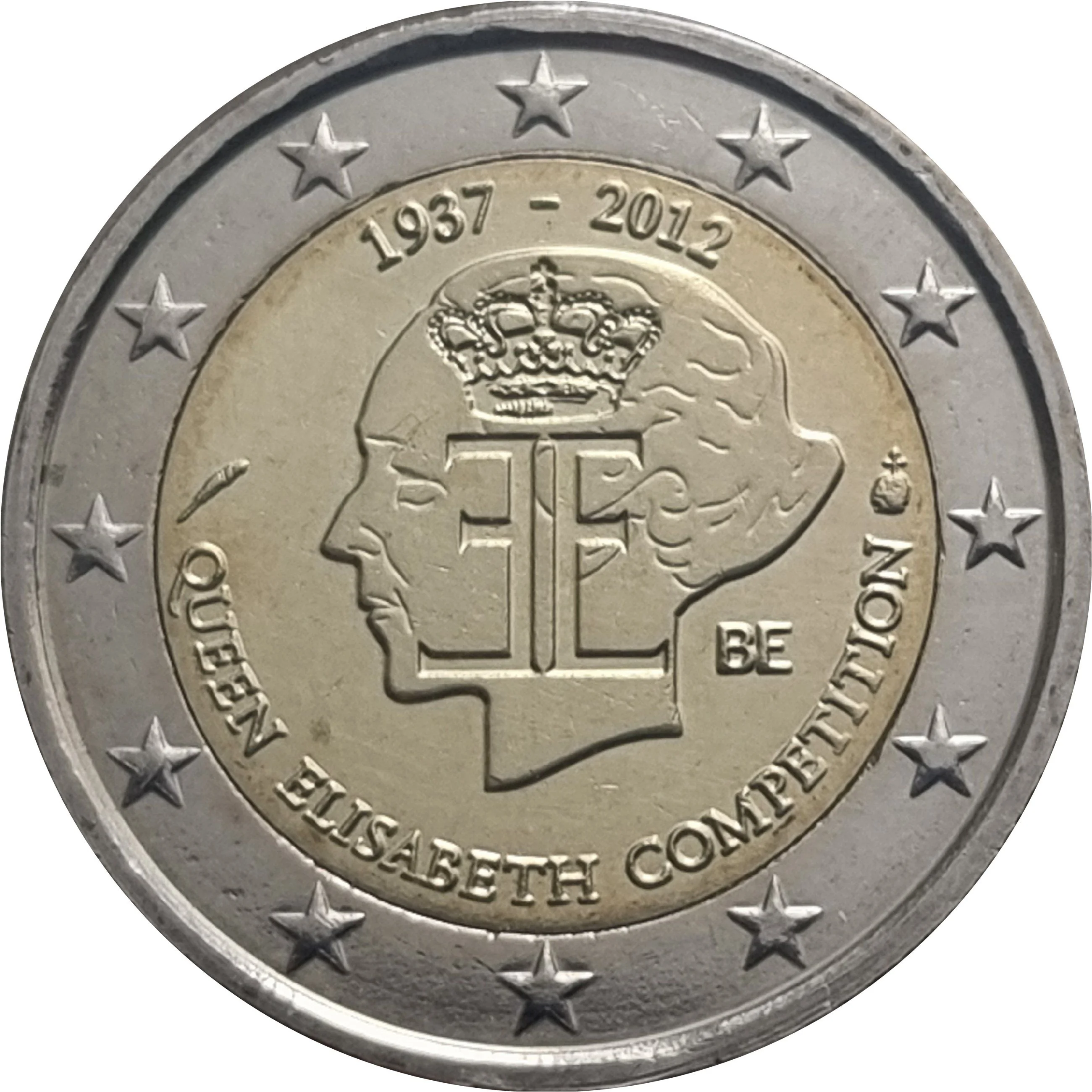
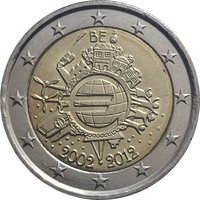
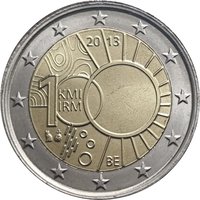
The inner part features the Queen Elisabeth Competition logo overlaid on her left profile, with the mintmaster's quill on the left and the Brussels mintmark on the right. "QUEEN ELISABETH COMPETITION" arcs along the bottom, with "1937 – 2012" along the top for the 75th anniversary. "BE" denotes the issuing country. The outer ring bears the 12 stars of the European Union.
Inscription:
1937 - 2012
EE
BE
QUEEN ELISABETH COMPETITION
EE
BE
QUEEN ELISABETH COMPETITION
Translation:
1937 - 2012
EE
BE
QUEEN ELISABETH COMPETITION
EE
BE
QUEEN ELISABETH COMPETITION
Script: Latin
Engraver: Luc Luycx
Reverse
Edge
Legend:
2 ★ ★ 2 ★ ★ 2 ★ ★ 2 ★ ★ 2 ★ ★ 2 ★ ★
Mints
| Name | Mark |
|---|---|
| Royal Mint of Belgium | — |
Mintings
| Year | Mint Mark | Mintage | Quality | Collection |
|---|---|---|---|---|
| 2012 | — | 5,000,000 | ||
| 2012 | — | 7,000 | Proof | |
| 2012 | — | 6,000 | BU |
Historical background
In 2012, Belgium was a fully integrated member of the Eurozone, having adopted the euro as its official currency in 2002. The country's monetary policy was entirely determined by the European Central Bank (ECB), which focused on price stability for the entire currency bloc. Domestically, Belgium's primary economic concerns were not about its currency per se, but about high public debt and political challenges in forming a stable government, which had implications for its fiscal policy and credit rating.
The broader Eurozone context, however, created significant indirect pressures. The year was dominated by the aftermath of the 2011 sovereign debt crisis, with fears of a euro breakup peaking. While Belgium was not among the most vulnerable "peripheral" nations like Greece or Portugal, it faced elevated borrowing costs due to its high public debt-to-GDP ratio, which hovered around 100%. Market scrutiny was intense, and Belgium's credit rating was downgraded by several agencies, reflecting concerns over both its debt burden and prolonged political instability.
Consequently, Belgium's currency situation in 2012 was one of passive vulnerability within the euro framework. The stability of its currency depended on the ECB's actions to preserve the Eurozone, notably President Mario Draghi's pivotal July 2012 pledge to do "whatever it takes" to save the euro. This intervention calmed financial markets and lowered sovereign bond yields across the bloc, including Belgium, effectively shielding the Belgian franc's successor from existential threat but leaving the country subject to collective Eurozone discipline and external monetary decisions.
The broader Eurozone context, however, created significant indirect pressures. The year was dominated by the aftermath of the 2011 sovereign debt crisis, with fears of a euro breakup peaking. While Belgium was not among the most vulnerable "peripheral" nations like Greece or Portugal, it faced elevated borrowing costs due to its high public debt-to-GDP ratio, which hovered around 100%. Market scrutiny was intense, and Belgium's credit rating was downgraded by several agencies, reflecting concerns over both its debt burden and prolonged political instability.
Consequently, Belgium's currency situation in 2012 was one of passive vulnerability within the euro framework. The stability of its currency depended on the ECB's actions to preserve the Eurozone, notably President Mario Draghi's pivotal July 2012 pledge to do "whatever it takes" to save the euro. This intervention calmed financial markets and lowered sovereign bond yields across the bloc, including Belgium, effectively shielding the Belgian franc's successor from existential threat but leaving the country subject to collective Eurozone discipline and external monetary decisions.
Series: Belgium 2 euro commemoratives
🌱 Very Common