

100 Francs CFA – Western African States
Context
Years: 1967–2005
Issuer: Western African States
Issuing organization: Central Bank of Western African States
Currency:
(since 1958)
Total mintage: 349,945,000
Material
References
KM: #Click to copy to clipboard4
Numista: #1372
Value
Exchange value: 100 XOF
Obverse
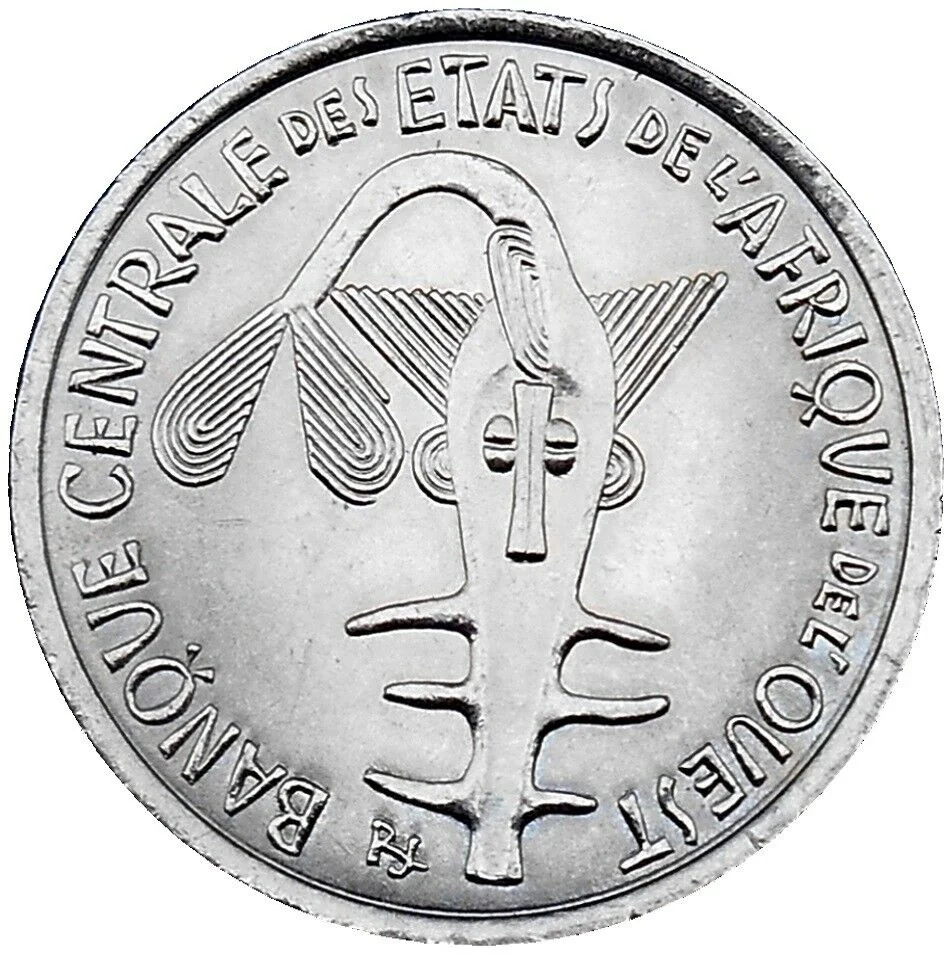
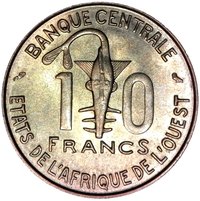
Description:
Central Bank of West African States emblem
Inscription:
BANQUE CENTRALE DES ETATS DE L'AFRIQUE DE L'OUEST
Translation:
CENTRAL BANK OF THE WEST AFRICAN STATES
Script: Latin
Language: French
Engraver: Raymond Joly
Reverse
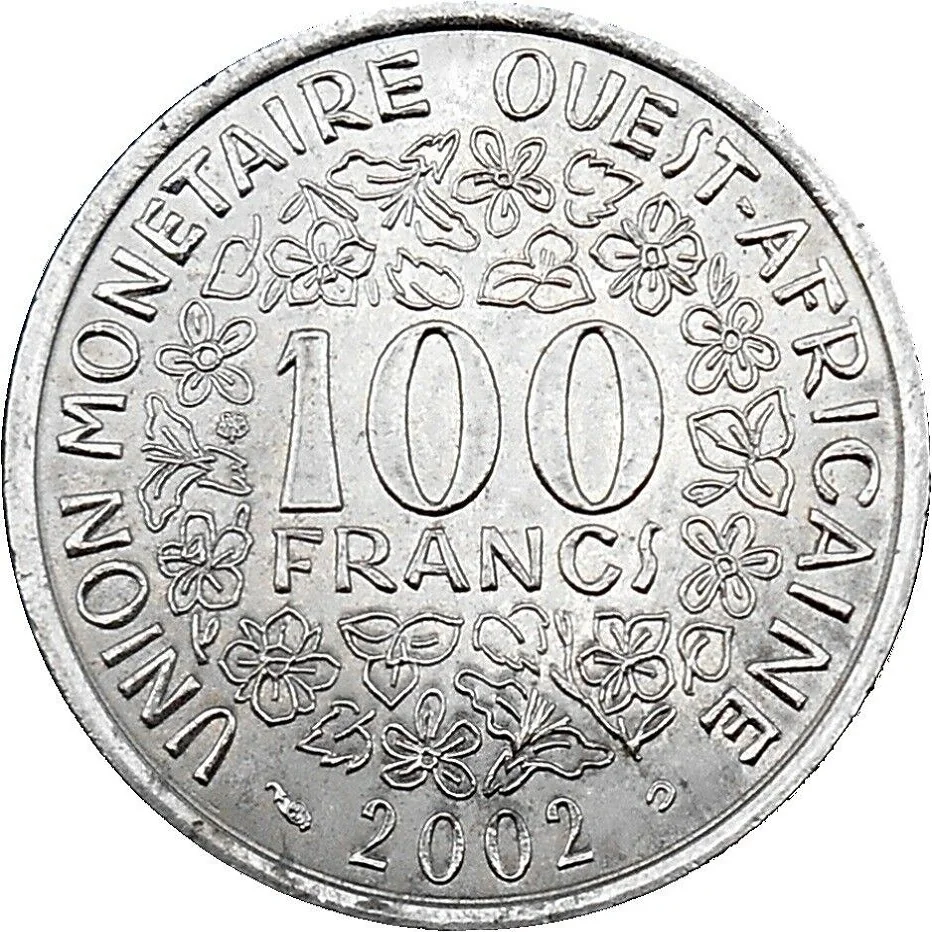
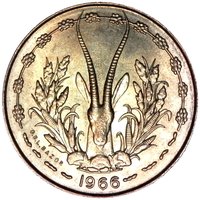
Description:
Flower types
Inscription:
100 FRANCS
UNION MONETAIRE OUEST-AFRICAINE
2002
UNION MONETAIRE OUEST-AFRICAINE
2002
Translation:
100 Francs
West African Monetary Union
2002
West African Monetary Union
2002
Script: Latin
Language: French
Engraver: Raymond Joly
Edge
Reeded
Mints
| Name | Mark |
|---|---|
| Monnaie de Paris | — |
Mintings
| Year | Mint Mark | Mintage | Quality | Collection |
|---|---|---|---|---|
| 1967 | — | — | ||
| 1968 | — | 25,000,000 | ||
| 1969 | — | 25,000,000 | ||
| 1970 | — | 4,510,000 | ||
| 1971 | — | 12,000,000 | ||
| 1972 | — | 5,000,000 | ||
| 1973 | — | 5,000,000 | ||
| 1974 | — | 8,500,000 | ||
| 1975 | — | 16,000,000 | ||
| 1976 | — | 11,575,000 | ||
| 1977 | — | 6,200,000 | ||
| 1978 | — | 12,000,000 | ||
| 1979 | — | 12,400,000 | ||
| 1980 | — | 13,000,000 | ||
| 1981 | — | 8,000,000 | ||
| 1982 | — | 18,000,000 | ||
| 1984 | — | 2,500,000 | ||
| 1985 | — | 1,460,000 | ||
| 1987 | — | 9,000,000 | ||
| 1989 | — | 16,500,000 | ||
| 1990 | — | 6,500,000 | ||
| 1991 | — | 1,000,000 | ||
| 1992 | — | 4,000,000 | ||
| 1996 | — | 24,000,000 | ||
| 1997 | — | 69,000,000 | ||
| 2000 | — | 1,800,000 | ||
| 2001 | — | 4,500,000 | ||
| 2002 | — | 18,500,000 | ||
| 2003 | — | 5,000,000 | ||
| 2004 | — | 4,000,000 | ||
| 2005 | — | — |
Historical background
In 1967, the currency landscape of West Africa was predominantly defined by the CFA franc, a colonial-era currency managed by France and divided into two distinct zones. The West African CFA franc (XOF) was used by seven former French colonies—Ivory Coast, Dahomey (now Benin), Upper Volta (now Burkina Faso), Niger, Senegal, Mauritania, and Togo—through the Banque Centrale des États de l'Afrique de l'Ouest (BCEAO). This arrangement guaranteed convertibility at a fixed parity with the French franc and required member states to deposit a significant portion of their foreign reserves with the French Treasury, ensuring monetary stability but limiting sovereign monetary policy.
This system existed alongside a variety of national currencies in the region's non-francophone states. Notably, Nigeria, following its independence in 1960, had introduced the Nigerian pound (pegged to the British pound sterling until 1973) and was by 1967 embroiled in the Biafran War, which caused severe economic disruption and attempts by the secessionist region to issue its own currency. Meanwhile, Ghana, under Kwame Nkrumah, had introduced the Ghanaian pound (later the cedi in 1965) and was experiencing significant inflation and economic challenges following a 1966 coup, reflecting the difficulties of independent monetary management.
Thus, the year 1967 highlighted a sharp contrast in West African monetary affairs. The francophone states operated within a stable, externally anchored but politically contentious framework that perpetuated economic dependence on France. In contrast, the larger anglophone nations like Nigeria and Ghana were navigating the turbulent early years of sovereign currency issuance amid political instability and conflict, setting the stage for divergent economic trajectories in the decades to come.
This system existed alongside a variety of national currencies in the region's non-francophone states. Notably, Nigeria, following its independence in 1960, had introduced the Nigerian pound (pegged to the British pound sterling until 1973) and was by 1967 embroiled in the Biafran War, which caused severe economic disruption and attempts by the secessionist region to issue its own currency. Meanwhile, Ghana, under Kwame Nkrumah, had introduced the Ghanaian pound (later the cedi in 1965) and was experiencing significant inflation and economic challenges following a 1966 coup, reflecting the difficulties of independent monetary management.
Thus, the year 1967 highlighted a sharp contrast in West African monetary affairs. The francophone states operated within a stable, externally anchored but politically contentious framework that perpetuated economic dependence on France. In contrast, the larger anglophone nations like Nigeria and Ghana were navigating the turbulent early years of sovereign currency issuance amid political instability and conflict, setting the stage for divergent economic trajectories in the decades to come.
🌱 Very Common