

2 mark – German Democratic Republic
Add to wishlist
Germany
Context
Year: 1957
Country: Germany
Issuer: German Democratic Republic
Period:
(1949—1990)
Currency:
(1948—1990)
Demonetization: 30 June 1990
Total mintage: 77,960,942
Material
References
KM: #
Numista: #10235
Value
Exchange value: 2 DDM
Inflation-adjusted value: 11.93 DDM
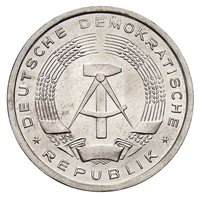
Obverse
Description:
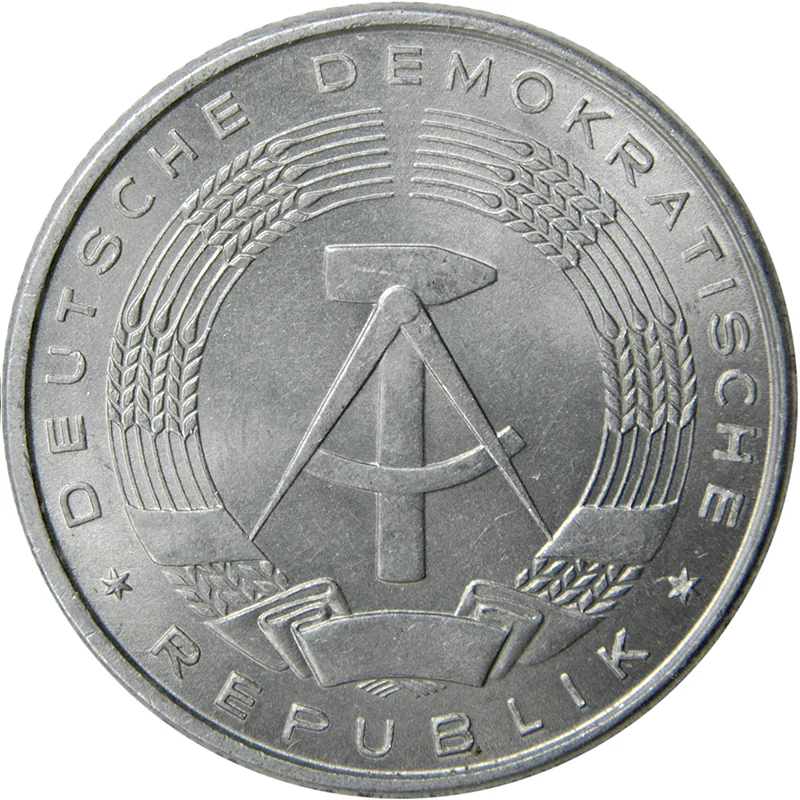
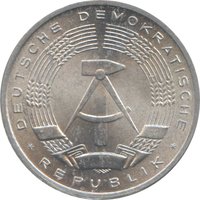
Hammer and compass crowned with wheat.
Inscription:
DEUTSCHE DEMOKRATISCHE * REPUBLIK *
Translation:
GERMAN DEMOCRATIC * REPUBLIC *
Script: Latin
Language: German
Engravers: Rudi Högner, Axel Bertram
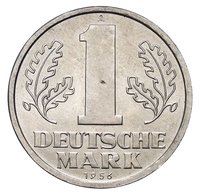
Reverse
Description:
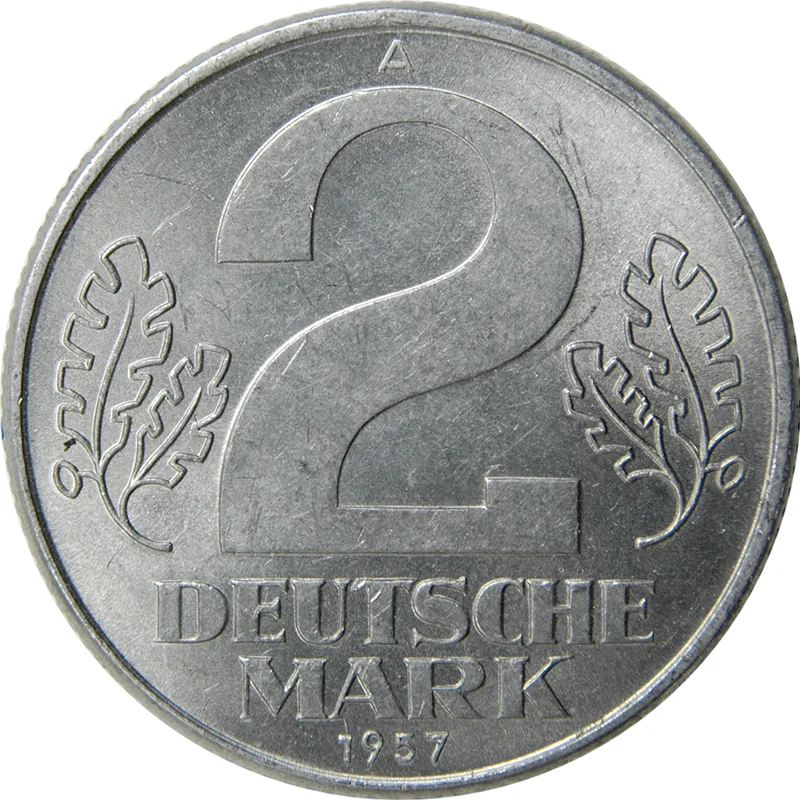
Oaks have lobed leaves.
Inscription:
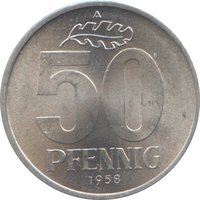
2 DEUTSCHE MARK 1957 A
Script: Latin
Engravers: Rudi Högner, Axel Bertram
Edge
Reeded
Mints
| Name | Mark |
|---|---|
| Berlin | A |
Mintings
| Year | Mint Mark | Mintage | Quality | Collection |
|---|---|---|---|---|
| 1957 | A | 77,960,942 |
Historical background
In 1957, the currency situation in the German Democratic Republic (GDR) was defined by the rigid separation of its monetary system from that of West Germany and the ongoing challenge of securing economic stability. The core currency was the East German Mark (Mark der Deutschen Notenbank, or MDN), which was artificially maintained by the state and not freely convertible. Its value was purely administrative, set by the government and the Deutsche Notenbank, rather than being determined by market forces or international exchange. This isolation was a direct consequence of the political division of Germany, as the GDR sought to prevent capital flight to the more prosperous West and to control all aspects of its planned economy.
Economically, 1957 fell within a period of consolidation following the major uprising of 1953, which had been sparked in part by economic hardship. The state continued to enforce a system of multiple exchange rates and special currency zones to extract maximum value from foreign trade and to control the limited access to Western goods. For the average citizen, this meant a stark disparity between the official value of their currency and its practical purchasing power, especially for imported or high-quality items. The cherished Westmark (Deutsche Mark) from the Federal Republic of Germany held a significant black-market premium, circulating unofficially and providing access to goods in Intershops or from Western packages, thereby undermining the state's monetary authority.
Internationally, the GDR mark was not recognized outside the Eastern Bloc. Trade with Western countries required complex, state-managed barter agreements or the use of hard currency reserves. Domestically, the currency system functioned as a key tool for the planned economy, directing resources to state-prioritized heavy industry and collectivized agriculture. However, it also reflected the systemic weaknesses of that economy, including hidden inflation, persistent shortages of consumer goods, and a growing reliance on political repression to maintain monetary control, setting the stage for the more severe crises that would emerge in the following decades.
Economically, 1957 fell within a period of consolidation following the major uprising of 1953, which had been sparked in part by economic hardship. The state continued to enforce a system of multiple exchange rates and special currency zones to extract maximum value from foreign trade and to control the limited access to Western goods. For the average citizen, this meant a stark disparity between the official value of their currency and its practical purchasing power, especially for imported or high-quality items. The cherished Westmark (Deutsche Mark) from the Federal Republic of Germany held a significant black-market premium, circulating unofficially and providing access to goods in Intershops or from Western packages, thereby undermining the state's monetary authority.
Internationally, the GDR mark was not recognized outside the Eastern Bloc. Trade with Western countries required complex, state-managed barter agreements or the use of hard currency reserves. Domestically, the currency system functioned as a key tool for the planned economy, directing resources to state-prioritized heavy industry and collectivized agriculture. However, it also reflected the systemic weaknesses of that economy, including hidden inflation, persistent shortages of consumer goods, and a growing reliance on political repression to maintain monetary control, setting the stage for the more severe crises that would emerge in the following decades.
🌱 Very Common