

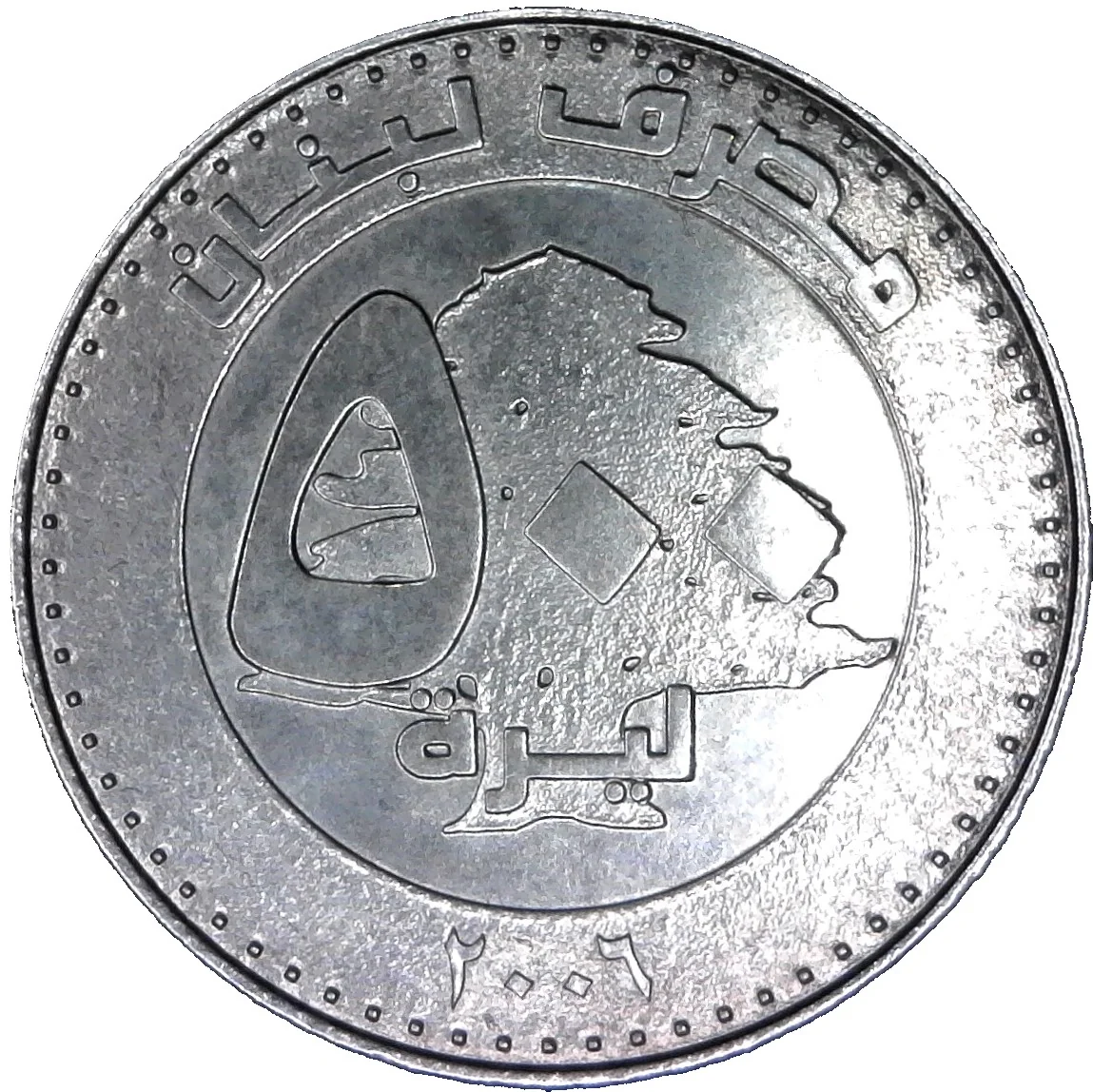
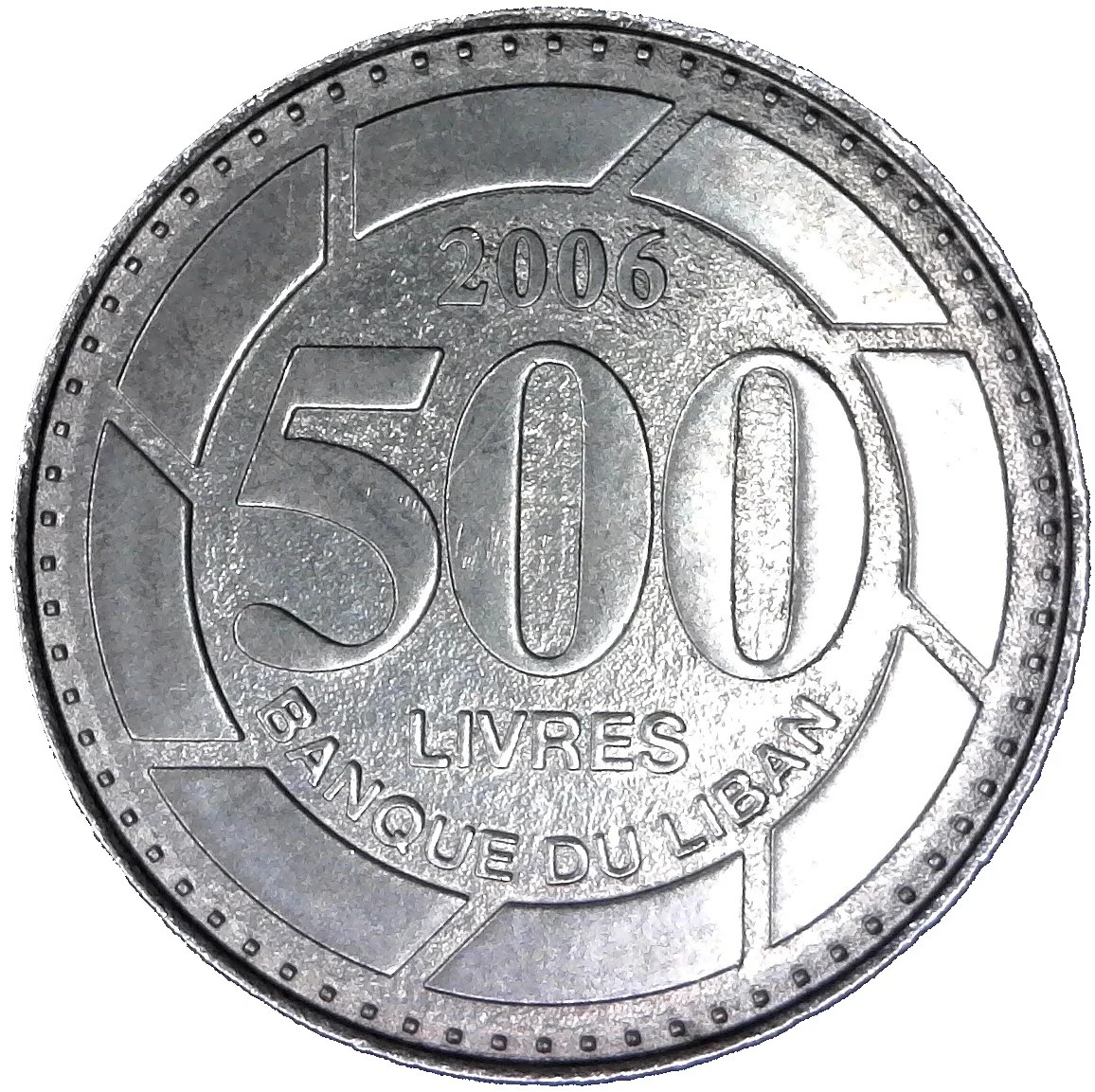
500 Livres – Lebanon
Lebanon

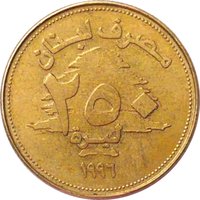
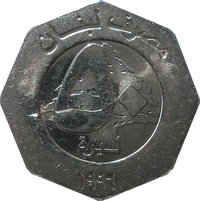
Obverse
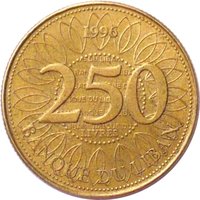
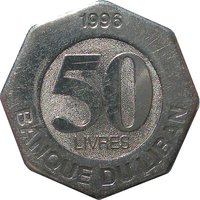
Reverse
Edge
Plain
Mintings
| Year | Mint Mark | Mintage | Quality | Collection |
|---|---|---|---|---|
| 1995 | — | — | Proof | |
| 1995 | — | — | ||
| 1996 | — | — | ||
| 1996 | — | — | ||
| 2000 | — | — | ||
| 2000 | — | — | Proof | |
| 2003 | — | — | ||
| 2006 | — | — | ||
| 2009 | — | 2,000 | BU | |
| 2009 | — | 1,000 |
Historical background
In 1995, Lebanon's currency, the Lebanese pound (LBP), was in a period of remarkable but artificial stability, a direct result of a fixed exchange rate policy implemented by the central bank, Banque du Liban (BDL), in the aftermath of the civil war (1975-1990). Governor Riad Salameh, appointed in 1993, pegged the pound at 1,507.5 LBP to the US dollar, a rate that would become sacrosanct for nearly three decades. This peg was intended as a cornerstone for reconstruction and economic recovery, designed to curb hyperinflation, restore public confidence in the national currency, and attract crucial foreign investment and diaspora remittances.
This stability, however, was maintained through costly financial engineering. BDL offered exceptionally high interest rates on pound-denominated deposits to attract the dollars needed to back the peg, leading to a rapid increase in public debt as the state borrowed heavily from the local banking sector. The economy became increasingly dollarized in practice, with many major transactions and imports priced in US dollars, while the fixed peg created a growing imbalance between the official exchange rate and underlying economic fundamentals. The model relied on continuous inflows of foreign capital to sustain the country's large current account and budget deficits.
Consequently, 1995 represents a pivotal calm before the storm. The policies solidified that year successfully provided a decade of monetary stability, which fueled a post-war consumer and real estate boom in Beirut. However, they also entrenched the structural weaknesses—a bloated public sector, stagnant productive sectors, and a banking model overly reliant on sovereign debt—that would decades later culminate in a catastrophic financial collapse. The fixed rate of 1,507.5, a symbol of recovery in 1995, would eventually become a stark symbol of a broken economic system when the peg finally unraveled in 2019.
This stability, however, was maintained through costly financial engineering. BDL offered exceptionally high interest rates on pound-denominated deposits to attract the dollars needed to back the peg, leading to a rapid increase in public debt as the state borrowed heavily from the local banking sector. The economy became increasingly dollarized in practice, with many major transactions and imports priced in US dollars, while the fixed peg created a growing imbalance between the official exchange rate and underlying economic fundamentals. The model relied on continuous inflows of foreign capital to sustain the country's large current account and budget deficits.
Consequently, 1995 represents a pivotal calm before the storm. The policies solidified that year successfully provided a decade of monetary stability, which fueled a post-war consumer and real estate boom in Beirut. However, they also entrenched the structural weaknesses—a bloated public sector, stagnant productive sectors, and a banking model overly reliant on sovereign debt—that would decades later culminate in a catastrophic financial collapse. The fixed rate of 1,507.5, a symbol of recovery in 1995, would eventually become a stark symbol of a broken economic system when the peg finally unraveled in 2019.
Series: 1995 Lebanon circulation coins
🌱 Very Common