

Obverse
Description:
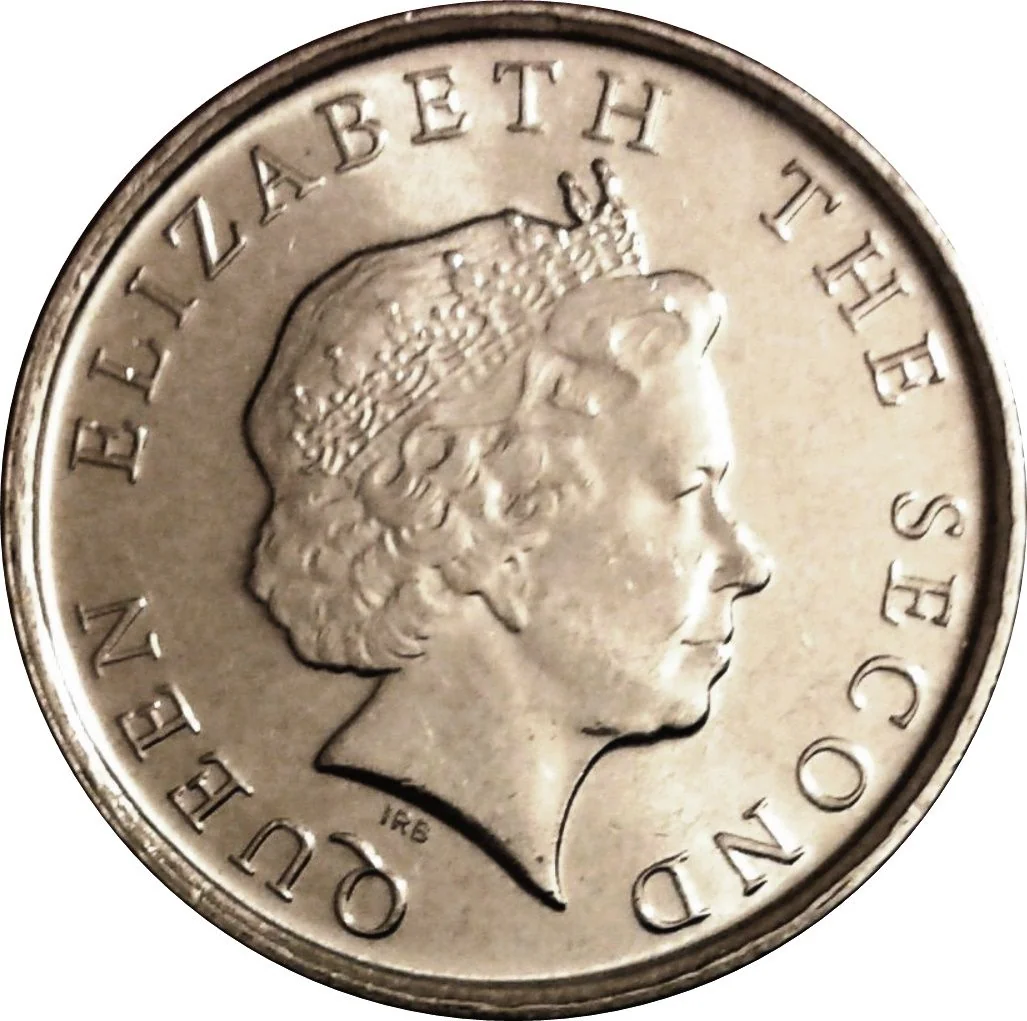
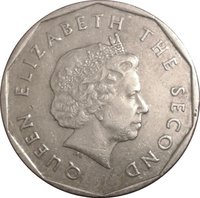
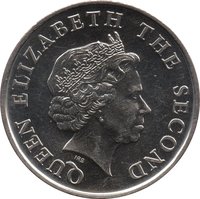
Portrait of Queen Elizabeth II in profile.
Inscription:
QUEEN ELIZABETH THE SECOND
IRB
IRB
Script: Latin
Engraver: Ian Rank-Broadley
Reverse
Description:
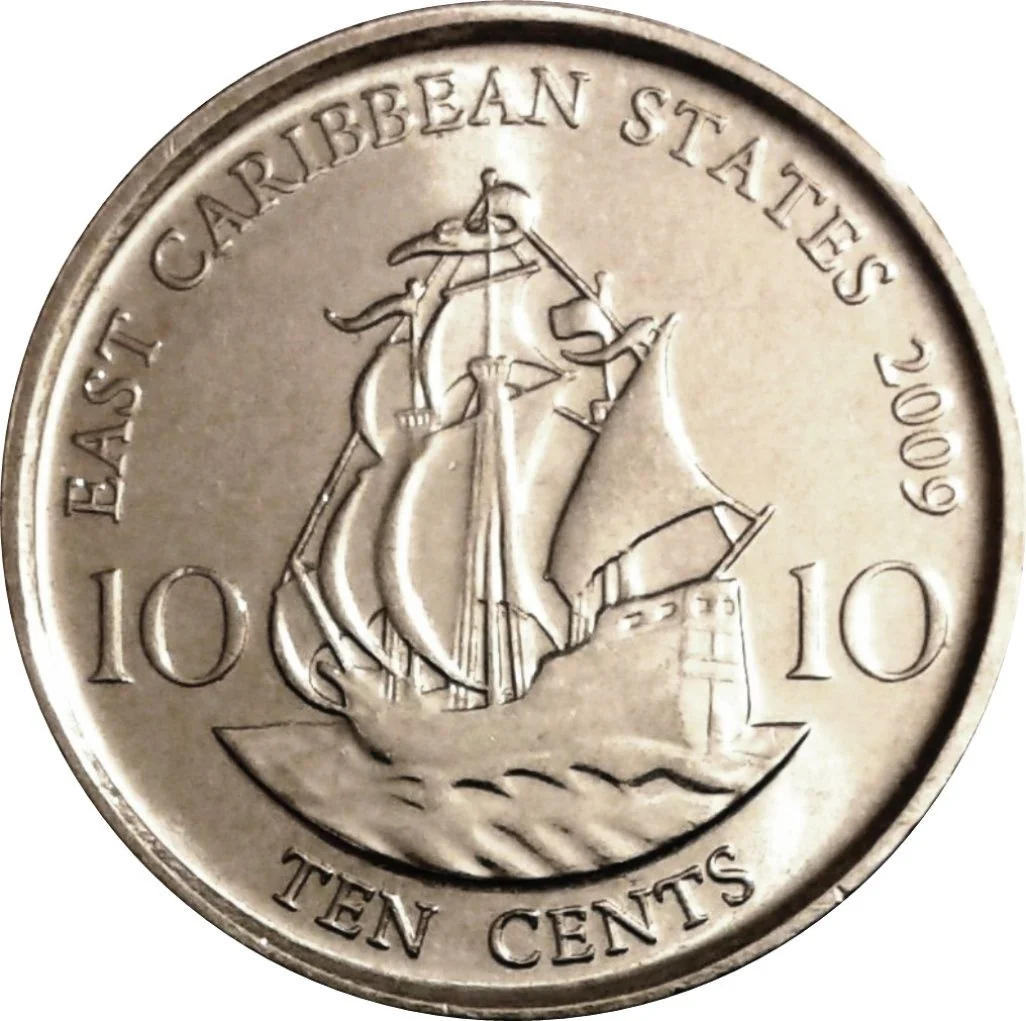
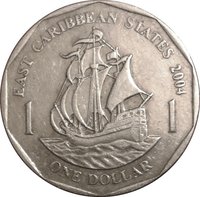
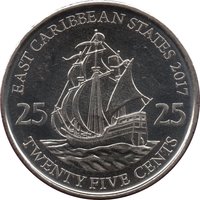
Denomination flanking the "Golden Hind," Sir Francis Drake's ship, with text below.
Inscription:
EAST CARIBBEAN STATES 2009
10 10
TEN CENTS
10 10
TEN CENTS
Script: Latin
Engraver: Thomas Humphrey Paget
Edge
Reeded
Categories
| Transportation> Watercraft |
Mints
| Name | Mark |
|---|---|
| Royal Canadian Mint of Winnipeg | — |
Mintings
| Year | Mint Mark | Mintage | Quality | Collection |
|---|---|---|---|---|
| 2009 | — | — | ||
| 2014 | — | — | ||
| 2018 | — | — | ||
| 2019 | — | — | ||
| 2022 | — | — |
Historical background
In 2009, the Eastern Caribbean Currency Union (ECCU) faced significant economic headwinds due to the global financial crisis, which precipitated a sharp downturn in its two vital economic pillars: tourism and foreign direct investment. The recession in key source markets like the United States and Europe led to a dramatic decline in tourist arrivals and stay-over visits, severely reducing foreign exchange earnings and government revenue from tourism-related taxes. Simultaneously, the global credit crunch stalled major construction and real estate projects, exacerbating unemployment and slowing economic activity across the eight member states.
Despite these severe external shocks, the bedrock of the region's financial stability—the Eastern Caribbean dollar (EC$)—remained firmly pegged to the US dollar at the fixed rate of EC$2.70 to US$1, a regime maintained since 1976. This stability was administered by the Eastern Caribbean Central Bank (ECCB), which held a high level of foreign reserves, exceeding the statutory requirement of 60% of demand liabilities. The fixed exchange rate provided a crucial anchor, preventing competitive devaluations and containing imported inflation, but it also limited traditional monetary policy tools, placing the burden of adjustment on fiscal policy and making the economies less flexible in responding to the downturn.
Consequently, the region experienced a deep economic contraction, with real GDP estimated to have declined by over 5% in 2009. The crisis exposed structural vulnerabilities, including high public debt levels—which rose as governments attempted counter-cyclical spending—and concerns over banking sector stability due to rising non-performing loans. The year underscored the profound challenge of maintaining monetary stability and external competitiveness within a rigid currency peg while navigating a severe and synchronized global recession, setting the stage for subsequent regional discussions on fiscal consolidation and economic diversification.
Despite these severe external shocks, the bedrock of the region's financial stability—the Eastern Caribbean dollar (EC$)—remained firmly pegged to the US dollar at the fixed rate of EC$2.70 to US$1, a regime maintained since 1976. This stability was administered by the Eastern Caribbean Central Bank (ECCB), which held a high level of foreign reserves, exceeding the statutory requirement of 60% of demand liabilities. The fixed exchange rate provided a crucial anchor, preventing competitive devaluations and containing imported inflation, but it also limited traditional monetary policy tools, placing the burden of adjustment on fiscal policy and making the economies less flexible in responding to the downturn.
Consequently, the region experienced a deep economic contraction, with real GDP estimated to have declined by over 5% in 2009. The crisis exposed structural vulnerabilities, including high public debt levels—which rose as governments attempted counter-cyclical spending—and concerns over banking sector stability due to rising non-performing loans. The year underscored the profound challenge of maintaining monetary stability and external competitiveness within a rigid currency peg while navigating a severe and synchronized global recession, setting the stage for subsequent regional discussions on fiscal consolidation and economic diversification.
🌱 Very Common