

1 cent – United States
Add to wishlist
United States
Context
Years: 1943–1944
Issuer: United States
Period:
(since 1776)
Currency:
(since 1785)
Total mintage: 876,178,707
Material
References
KM: #
Numista: #3173
Value
Exchange value: 0.01 USD = $0.01
Inflation-adjusted value: 0.20 USD
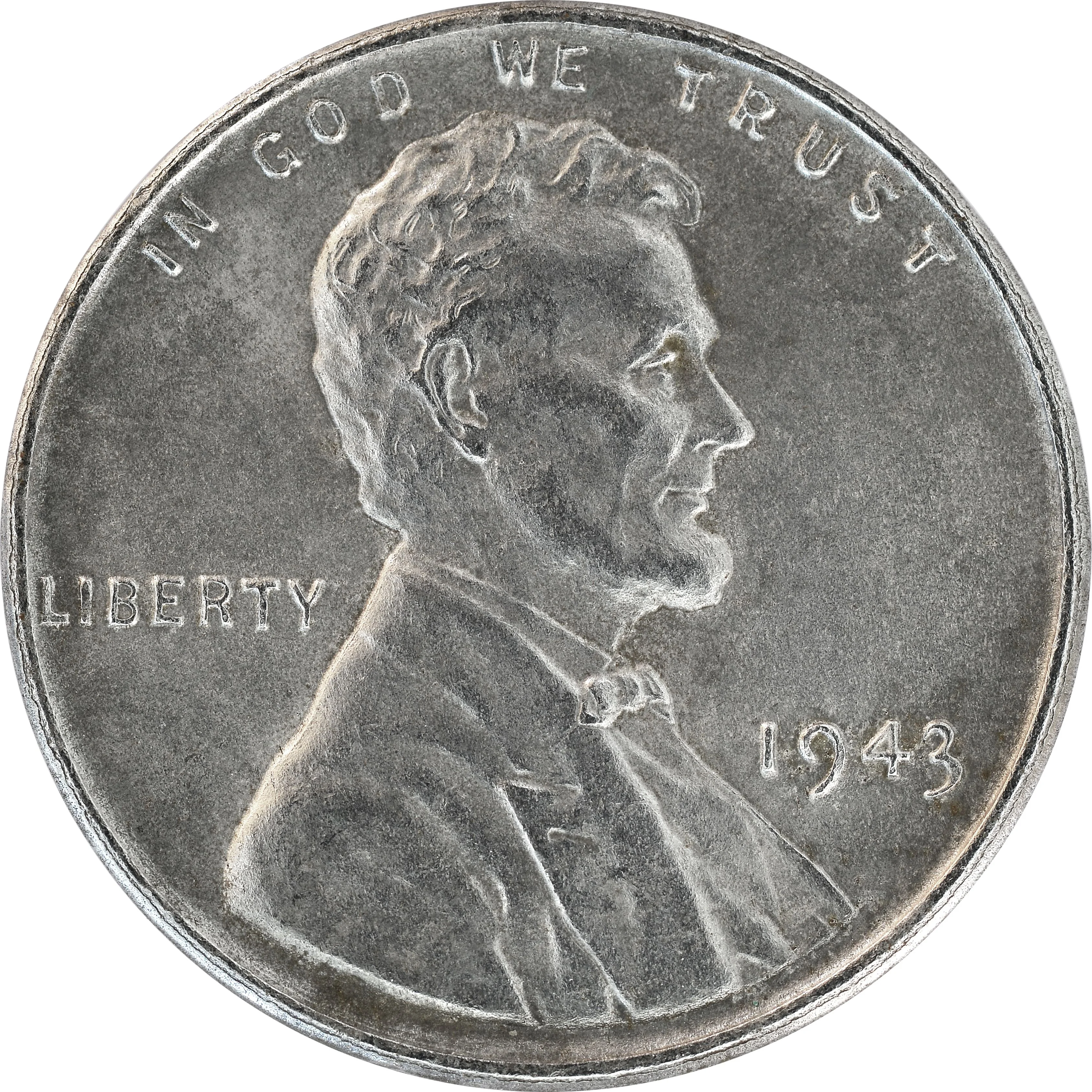
Obverse
Description:
Abraham Lincoln's biography.
Inscription:
IN GOD WE TRUST
LIBERTY
1943
VDB
LIBERTY
1943
VDB
Script: Latin
Engraver: Victor David Brenner
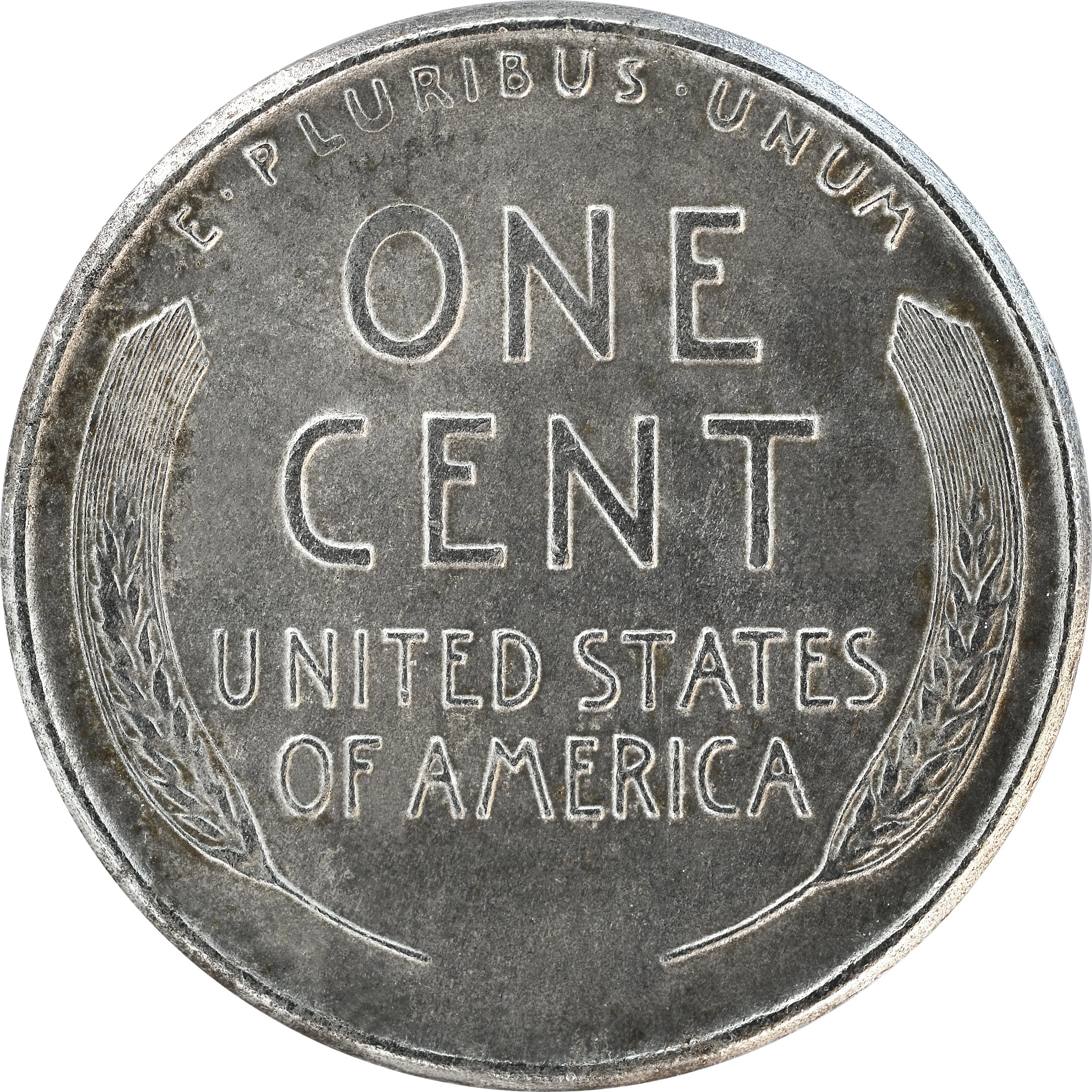
Reverse
Description:
Wheat ears
Inscription:
E·PLURIBUS·UNUM
ONE
CENT
UNITED STATES
OF AMERICA
ONE
CENT
UNITED STATES
OF AMERICA
Translation:
Out of Many, One
One
Cent
United States
of America
One
Cent
United States
of America
Script: Latin
Engraver: Victor David Brenner
Edge
Plain
Categories
| Person> Politician |
Mints
| Name | Mark |
|---|---|
| United States Mint of Philadelphia | — |
| United States Mint of Denver | D |
| United States Mint of San Francisco | S |
Mintings
Historical background
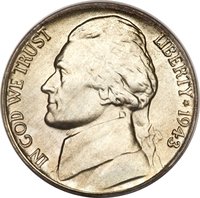
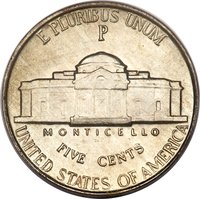
In 1943, the United States currency system was fundamentally shaped by the demands of World War II. The war effort drove significant material shortages, most notably in copper, which was essential for shell casings and other military equipment. This led to the most distinctive numismatic change of the year: the replacement of the standard one-cent copper coin with the 1943 steel cent. These zinc-coated steel pennies, which were magnetic and prone to rusting, were produced in massive quantities to conserve copper for the war. Simultaneously, nickel was also diverted for armor plating, resulting in the replacement of the five-cent nickel coin with the wartime "silver nickel," composed of 56% copper, 35% silver, and 9% manganese.
Beyond coinage, the broader monetary landscape was characterized by strict government controls and the financing of the enormous war debt. The Treasury, under Secretary Henry Morgenthau Jr., relied heavily on war bond campaigns—often featuring iconic posters and celebrity endorsements—to borrow from the public and curb inflationary consumer spending. Price controls and rationing were enforced to manage the economy and prevent the runaway inflation that had occurred during World War I. Furthermore, the design of U.S. paper currency saw a subtle but symbolic change with the introduction of the phrase "IN GOD WE TRUST" on the reverse of the one-dollar Silver Certificate in 1942, a feature that became more widespread on other denominations in the subsequent years.
The year 1943 also marked a pivotal moment in international monetary planning, even as domestic coins were altered for war. U.S. and Allied economists, led by Harry Dexter White of the U.S. Treasury and Britain's John Maynard Keynes, were deep in negotiations to establish a stable postwar financial order. These secretive talks, which would culminate in the 1944 Bretton Woods Conference, aimed to create a system of fixed exchange rates pegged to the U.S. dollar, which was in turn convertible to gold. Thus, while everyday pocket change reflected the immediate material sacrifices of war, the foundational plans were being laid for the U.S. dollar to emerge as the world's dominant reserve currency in the postwar era.
Beyond coinage, the broader monetary landscape was characterized by strict government controls and the financing of the enormous war debt. The Treasury, under Secretary Henry Morgenthau Jr., relied heavily on war bond campaigns—often featuring iconic posters and celebrity endorsements—to borrow from the public and curb inflationary consumer spending. Price controls and rationing were enforced to manage the economy and prevent the runaway inflation that had occurred during World War I. Furthermore, the design of U.S. paper currency saw a subtle but symbolic change with the introduction of the phrase "IN GOD WE TRUST" on the reverse of the one-dollar Silver Certificate in 1942, a feature that became more widespread on other denominations in the subsequent years.
The year 1943 also marked a pivotal moment in international monetary planning, even as domestic coins were altered for war. U.S. and Allied economists, led by Harry Dexter White of the U.S. Treasury and Britain's John Maynard Keynes, were deep in negotiations to establish a stable postwar financial order. These secretive talks, which would culminate in the 1944 Bretton Woods Conference, aimed to create a system of fixed exchange rates pegged to the U.S. dollar, which was in turn convertible to gold. Thus, while everyday pocket change reflected the immediate material sacrifices of war, the foundational plans were being laid for the U.S. dollar to emerge as the world's dominant reserve currency in the postwar era.
🌱 Very Common