

1 Cent – Netherlands
Netherlands
Context
Years: 1902–1907
Issuer: Netherlands 
Ruler: Wilhelmina
Currency:
(1817—2001)
Demonetized: Yes
Total mintage: 35,000,000
Material
References
KM: #Click to copy to clipboard132
Numista: #3171
Value
Exchange value: 0.01 NLG
Obverse
Description:
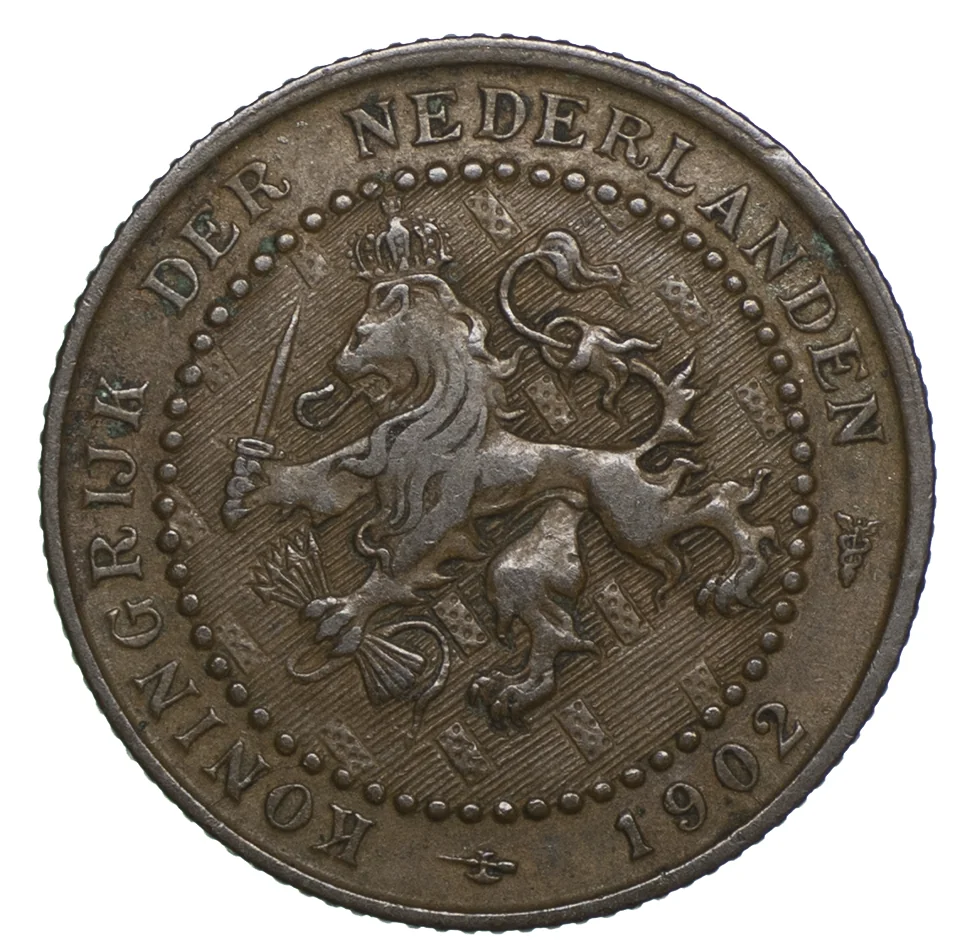
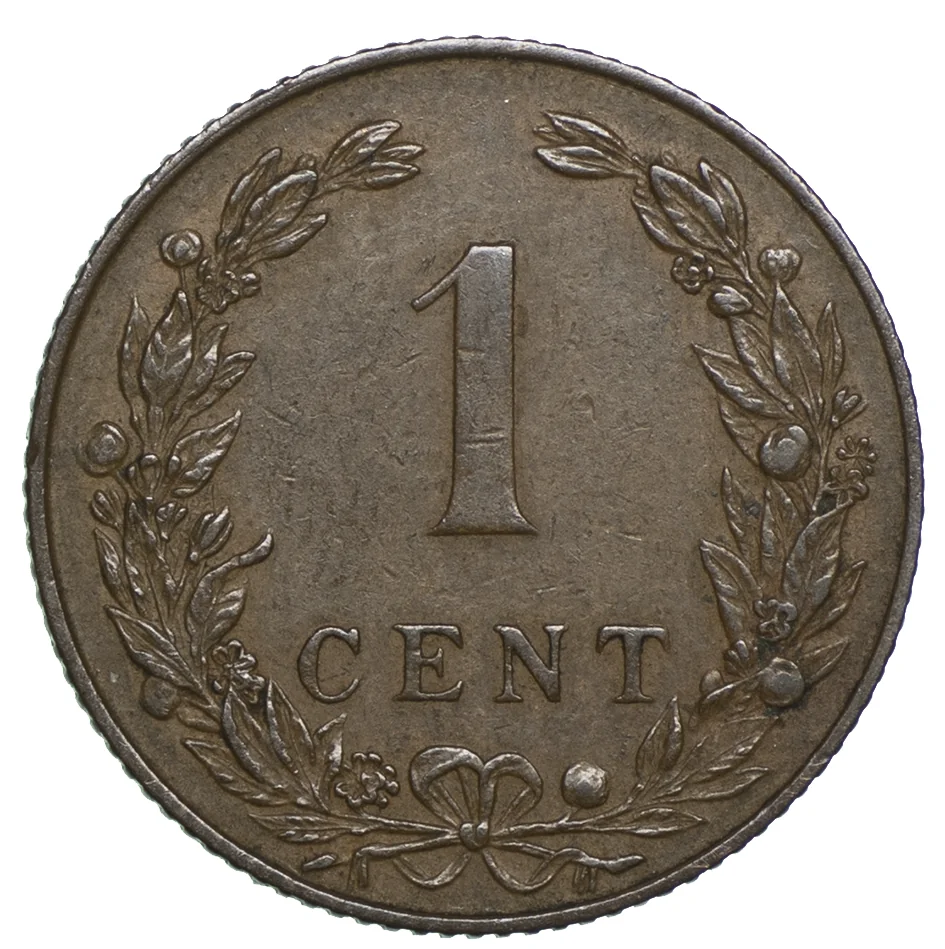
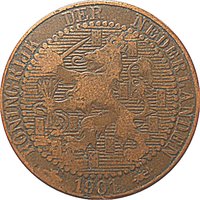
A crowned lion facing left, holding a sword and seven arrows, within a beaded circle of 15 blocks. Lettering above, date below, with privy and mint marks left of the date.
Inscription:
KONINGRIJK DER NEDERLANDEN
1904
1904
Translation:
Kingdom of the Netherlands
1904
1904
Script: Latin
Language: Dutch
Engraver: Johan Philip Matthias Menger
Reverse
Edge
Reeded or smooth
Mints
| Name | Mark |
|---|---|
| Royal Dutch Mint | — |
Mintings
| Year | Mint Mark | Mintage | Quality | Collection |
|---|---|---|---|---|
| 1902 | — | — | ||
| 1904 | — | 10,000,000 | ||
| 1905 | — | 10,000,000 | ||
| 1906 | — | 9,000,000 | ||
| 1906 | — | — | Proof | |
| 1907 | — | 6,000,000 |
Historical background
In 1902, the Netherlands operated under a well-established gold standard, a system it had adhered to since the 1870s. The official currency was the Dutch guilder (or gulden), which was legally defined as a fixed weight of gold. This provided significant monetary stability, both domestically and for international trade, as the value of the guilder was directly convertible and pegged to other gold-backed currencies like the British pound sterling and the US dollar. The central bank, De Nederlandsche Bank, was responsible for maintaining this convertibility, holding substantial gold reserves to back the currency in circulation.
The monetary landscape was primarily one of metallic coinage and banknotes. Gold coins (such as the 10-guilder piece) were in circulation alongside silver and bronze subsidiary coins. However, banknotes, issued by De Nederlandsche Bank, were gaining prominence as a more convenient medium for larger transactions. Importantly, these notes were not "fiat" money but represented a promise to pay the bearer in gold upon demand, a promise that underpinned public confidence in the paper currency.
Economically, the period around 1902 was one of steady growth and industrialization for the Netherlands. The fixed exchange rates of the gold standard facilitated the country's robust international commerce, particularly with its colonies in the Dutch East Indies. There were no major currency crises or devaluations that year; the system functioned as intended. The primary monetary discussions of the era were technical, focusing on maintaining sufficient gold reserves and managing credit, rather than on any fundamental instability in the currency itself. This stable and predictable monetary environment would persist until the global upheavals of World War I forced the Netherlands, like most nations, to suspend gold convertibility.
The monetary landscape was primarily one of metallic coinage and banknotes. Gold coins (such as the 10-guilder piece) were in circulation alongside silver and bronze subsidiary coins. However, banknotes, issued by De Nederlandsche Bank, were gaining prominence as a more convenient medium for larger transactions. Importantly, these notes were not "fiat" money but represented a promise to pay the bearer in gold upon demand, a promise that underpinned public confidence in the paper currency.
Economically, the period around 1902 was one of steady growth and industrialization for the Netherlands. The fixed exchange rates of the gold standard facilitated the country's robust international commerce, particularly with its colonies in the Dutch East Indies. There were no major currency crises or devaluations that year; the system functioned as intended. The primary monetary discussions of the era were technical, focusing on maintaining sufficient gold reserves and managing credit, rather than on any fundamental instability in the currency itself. This stable and predictable monetary environment would persist until the global upheavals of World War I forced the Netherlands, like most nations, to suspend gold convertibility.
🌱 Very Common