

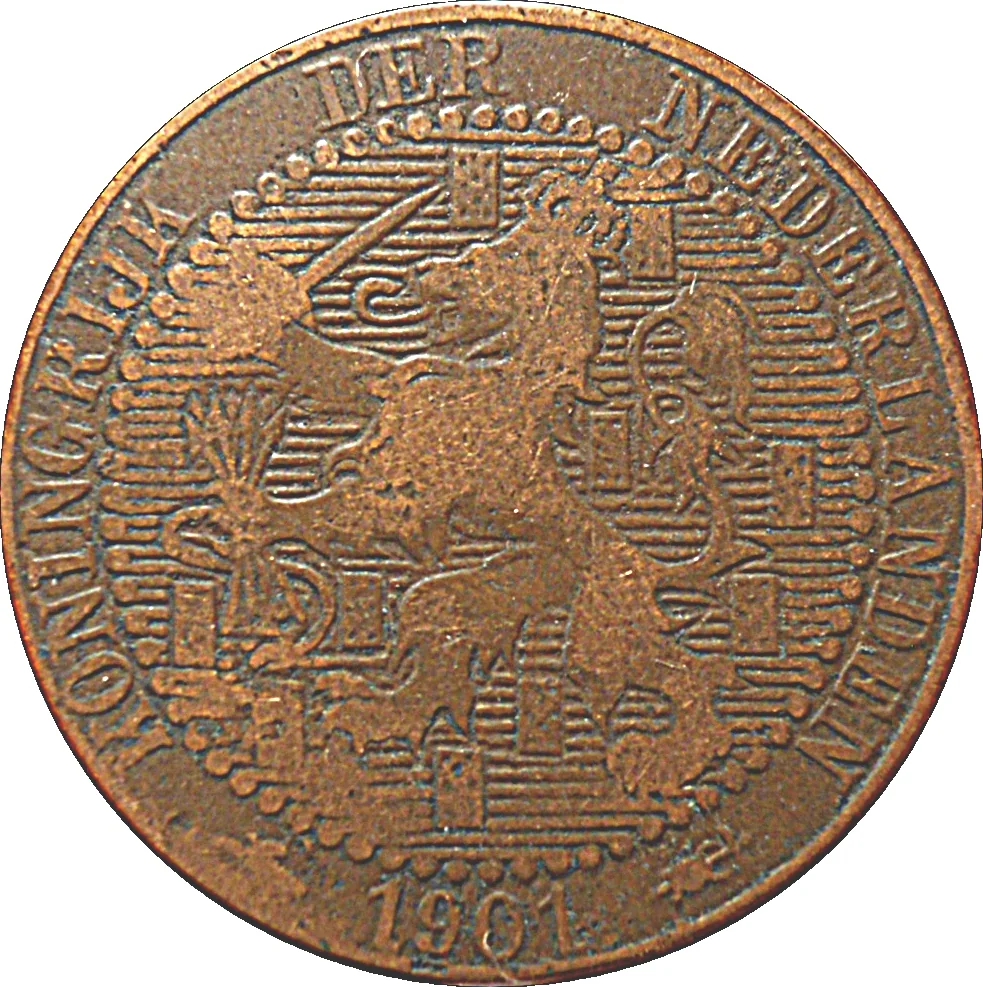
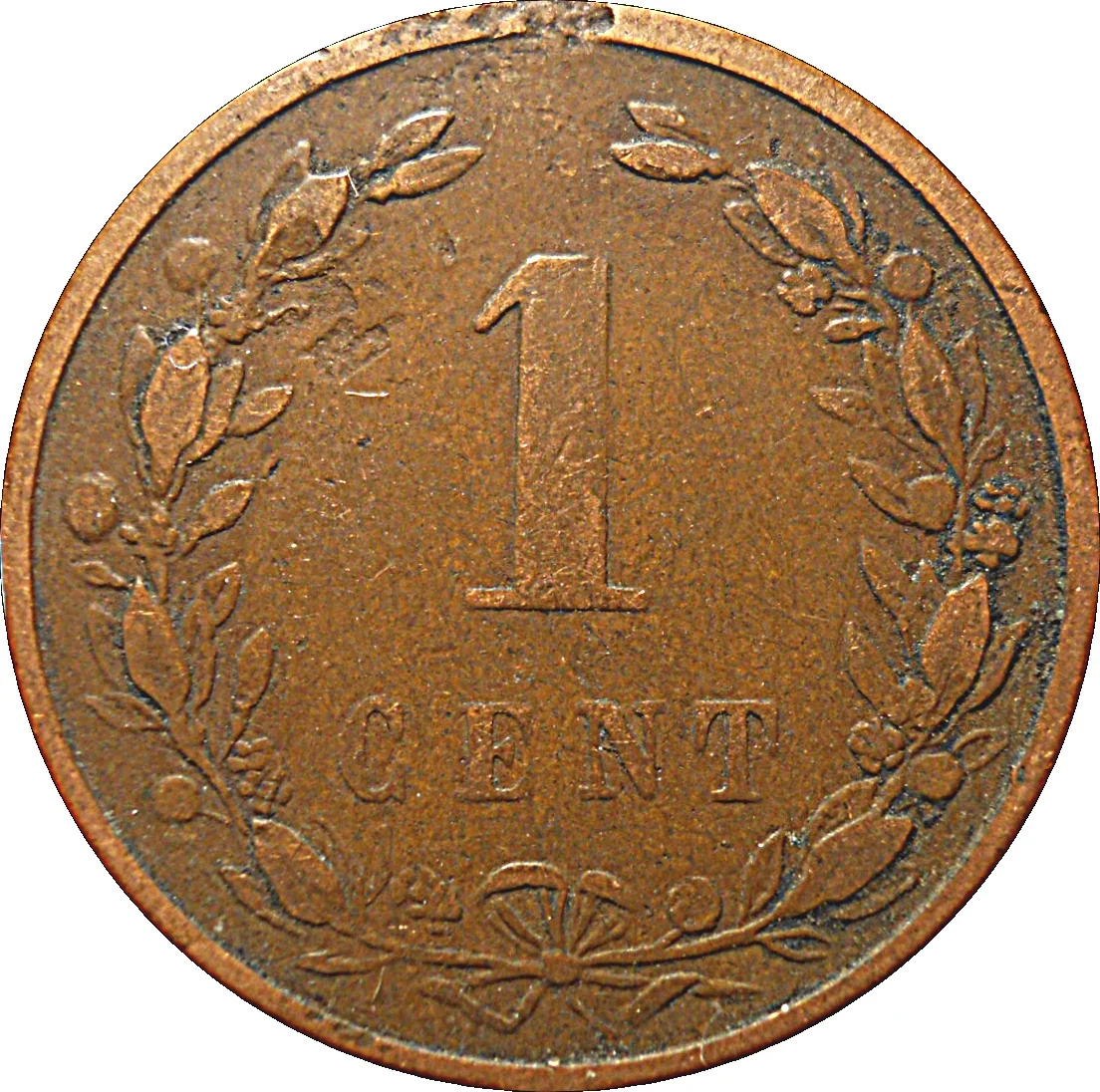
1 Cent – Netherlands
Netherlands
Context
Year: 1901
Issuer: Netherlands 
Ruler: Wilhelmina
Currency:
(1817—2001)
Demonetized: Yes
Total mintage: 10,000,000
Material
References
KM: #Click to copy to clipboard131
Numista: #3367
Value
Exchange value: 0.01 NLG
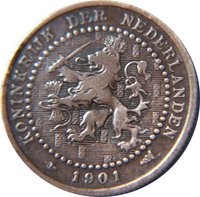
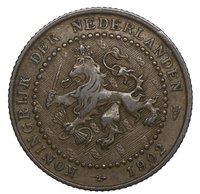
Obverse
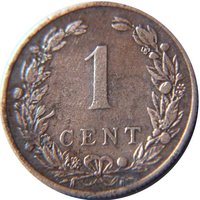
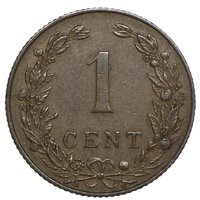
Reverse
Edge
Milled
Categories
| Symbols> Coat of Arms |
| Symbol> Wreath |
Mints
| Name | Mark |
|---|---|
| Royal Dutch Mint | — |
Mintings
| Year | Mint Mark | Mintage | Quality | Collection |
|---|---|---|---|---|
| 1901 | — | 10,000,000 |
Historical background
In 1901, the Netherlands operated under a well-established gold standard, with the gulden (or guilder, abbreviated ƒ) as its national currency. This system, formally adopted in 1875, guaranteed that paper banknotes could be freely converted into fixed amounts of gold, ensuring monetary stability and international confidence. The currency was managed by De Nederlandsche Bank (DNB), which held a monopoly on note issuance, though private banknotes from earlier decades were still in circulation but being gradually phased out.
The period around the turn of the century was one of economic consolidation rather than monetary upheaval. The late 19th century had seen the Latin Monetary Union's influence wane, and the Netherlands firmly anchored its gulden to gold alone. Consequently, the currency's value was stable, inflation was low, and the Netherlands was integrated into the global financial system. This stability facilitated the country's significant role in international trade and finance, particularly with its colonies in the Dutch East Indies, which had a linked currency system.
However, the monetary landscape was not without its discussions and subtle pressures. As major trading partners like Germany and the United States operated on gold, the system was logical, but there were ongoing debates about coinage, small change, and the practicalities of the metal standards for subsidiary coins. Furthermore, the costs of the ongoing Aceh War in the Dutch East Indies placed fiscal strains on the treasury, though these did not destabilize the core currency system. Thus, in 1901, the Dutch gulden was a symbol of conservative financial policy, providing a secure foundation for the nation's economy on the eve of the new century.
The period around the turn of the century was one of economic consolidation rather than monetary upheaval. The late 19th century had seen the Latin Monetary Union's influence wane, and the Netherlands firmly anchored its gulden to gold alone. Consequently, the currency's value was stable, inflation was low, and the Netherlands was integrated into the global financial system. This stability facilitated the country's significant role in international trade and finance, particularly with its colonies in the Dutch East Indies, which had a linked currency system.
However, the monetary landscape was not without its discussions and subtle pressures. As major trading partners like Germany and the United States operated on gold, the system was logical, but there were ongoing debates about coinage, small change, and the practicalities of the metal standards for subsidiary coins. Furthermore, the costs of the ongoing Aceh War in the Dutch East Indies placed fiscal strains on the treasury, though these did not destabilize the core currency system. Thus, in 1901, the Dutch gulden was a symbol of conservative financial policy, providing a secure foundation for the nation's economy on the eve of the new century.
🌱 Common