

¼ dinar – Libya
Add to wishlist
Libya
Context
Year: 2001
Islamic - Muhammad posthumous era Year:: 1369
Issuer: Libya
Period:
(1977—2011)
Currency:
(since 1971)
Demonetized: Yes
Material
Diameter: 29.36 mm
Weight: 11.24 g
Thickness: 2.44 mm
Shape: Decagonal
Composition: Nickel brass
Magnetic: No
Technique: Milled
Alignment: Medal alignment
flip
References
KM: #
Numista: #10225
Value
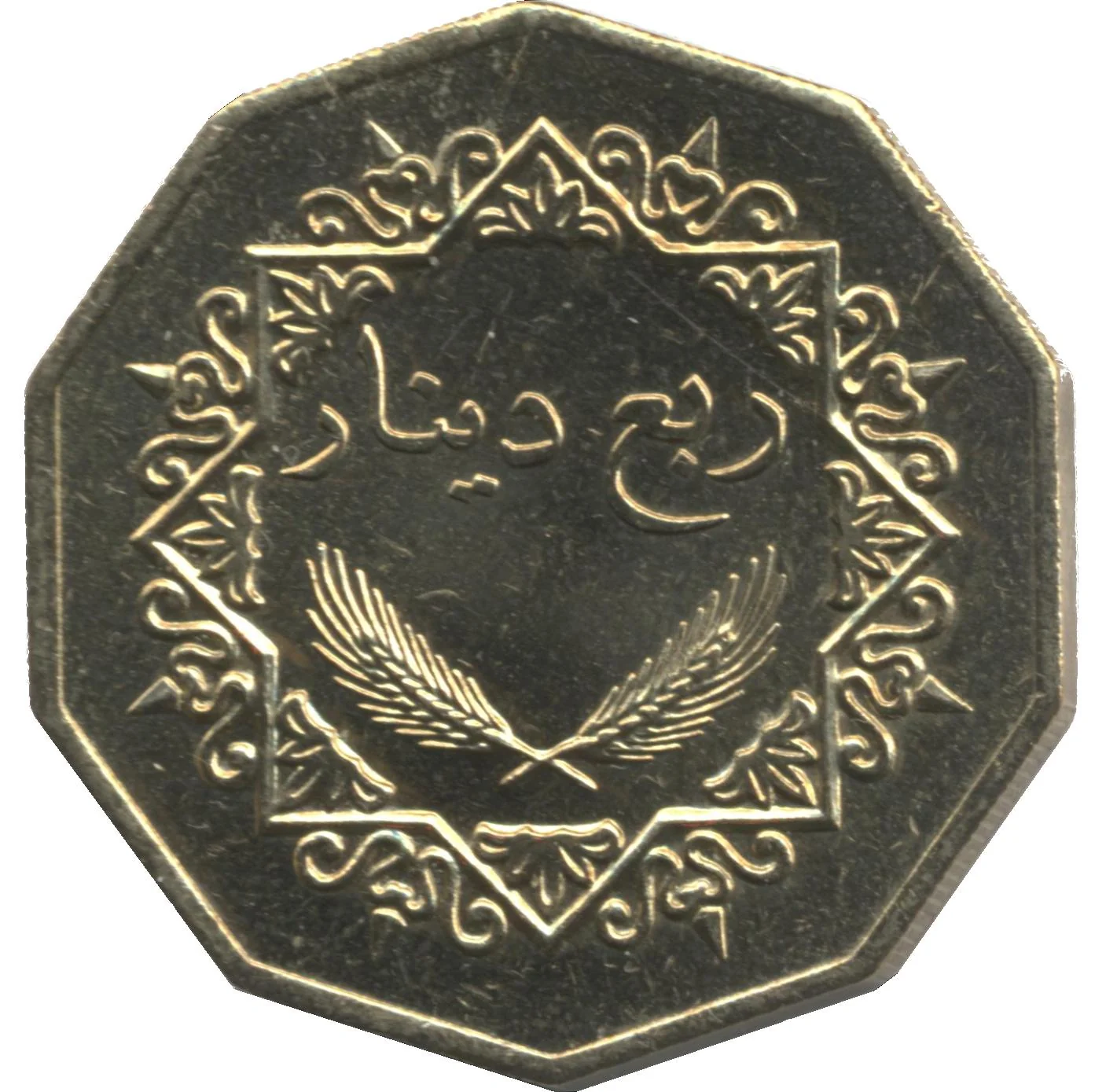
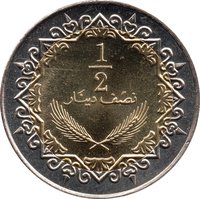
Exchange value: ¼ LYD
Obverse
Description:
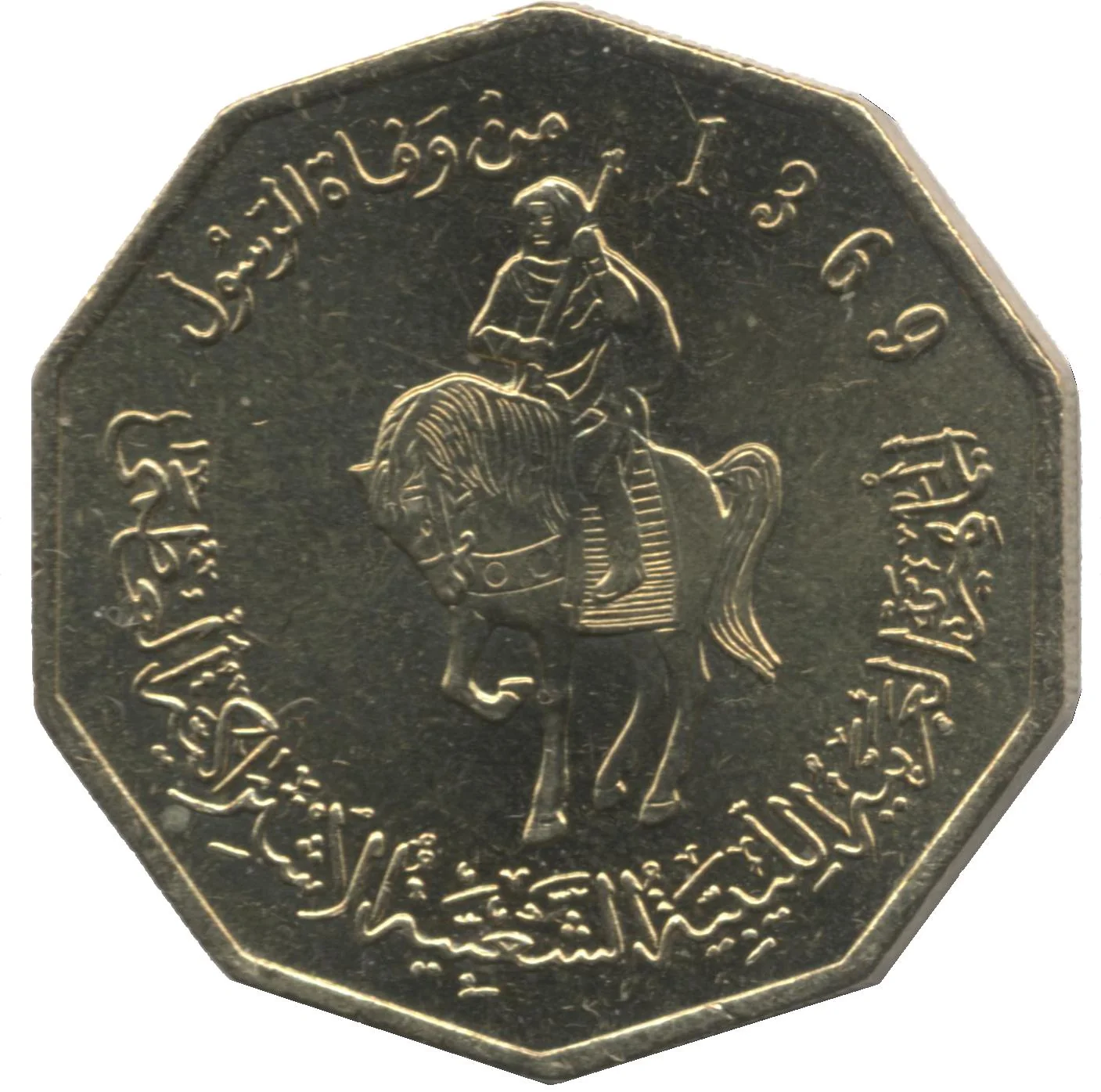
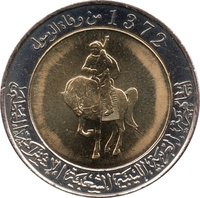
Libyan knight on horseback, facing left, holding a gun. Encircled by the ornamental name "Libyan Arab Jamahiriya" and date.
Inscription:
1369 من وفاة الرسول
الجماهيرية العربية الليبية الشعبية الإشتراكية العظمى
الجماهيرية العربية الليبية الشعبية الإشتراكية العظمى
Translation:
In the year 1369 from the death of the Prophet
The Great Socialist People's Libyan Arab Jamahiriya
The Great Socialist People's Libyan Arab Jamahiriya
Script: Arabic
Language: Arabic
Reverse
Edge
Alternate a plain segment and a reeded segment.
Mintings
| Year | Mint Mark | Mintage | Quality | Collection |
|---|---|---|---|---|
| 2001 | — | — |
Historical background
In 2001, Libya's currency situation was defined by strict state control, international isolation, and a significant disparity between official and black-market exchange rates. The country operated under a fixed exchange rate regime, where the Central Bank of Libya pegged the Libyan dinar (LYD) to the Special Drawing Right (SDR), a basket of international currencies. The official rate was set at approximately 1 USD = 0.45 LYD. However, this rate was largely artificial and inaccessible to most citizens and businesses due to stringent foreign exchange restrictions and a centralized allocation system that prioritized state imports.
The reality for the average Libyan and many businesses was a thriving black market for foreign currency, driven by limited access to official channels and high demand for imports. On this parallel market, the dinar traded at a fraction of its official value, with rates often exceeding 1 USD = 3.5 LYD. This wide gap reflected both the inefficiencies of the state-run economy and the impact of international sanctions, which had been in place since 1992. These sanctions, imposed by the United Nations over the Lockerbie bombing, severely restricted Libya's ability to engage in global trade and finance, putting pressure on its foreign reserves and contributing to the dinar's devaluation in practice.
Economically, this dual-rate system created significant distortions, encouraging corruption, smuggling, and rent-seeking behavior. It also made imported goods prohibitively expensive for those without government connections, contributing to economic hardship. Politically, the situation underscored the challenges of Colonel Muammar Gaddafi's regime, which maintained a command economy while seeking to navigate its pariah status on the world stage. The year 2001 fell within a period of gradual diplomatic overtures, but the full lifting of UN sanctions was still two years away, meaning the currency constraints remained a central feature of Libya's isolated economic landscape.
The reality for the average Libyan and many businesses was a thriving black market for foreign currency, driven by limited access to official channels and high demand for imports. On this parallel market, the dinar traded at a fraction of its official value, with rates often exceeding 1 USD = 3.5 LYD. This wide gap reflected both the inefficiencies of the state-run economy and the impact of international sanctions, which had been in place since 1992. These sanctions, imposed by the United Nations over the Lockerbie bombing, severely restricted Libya's ability to engage in global trade and finance, putting pressure on its foreign reserves and contributing to the dinar's devaluation in practice.
Economically, this dual-rate system created significant distortions, encouraging corruption, smuggling, and rent-seeking behavior. It also made imported goods prohibitively expensive for those without government connections, contributing to economic hardship. Politically, the situation underscored the challenges of Colonel Muammar Gaddafi's regime, which maintained a command economy while seeking to navigate its pariah status on the world stage. The year 2001 fell within a period of gradual diplomatic overtures, but the full lifting of UN sanctions was still two years away, meaning the currency constraints remained a central feature of Libya's isolated economic landscape.
🌱 Common