

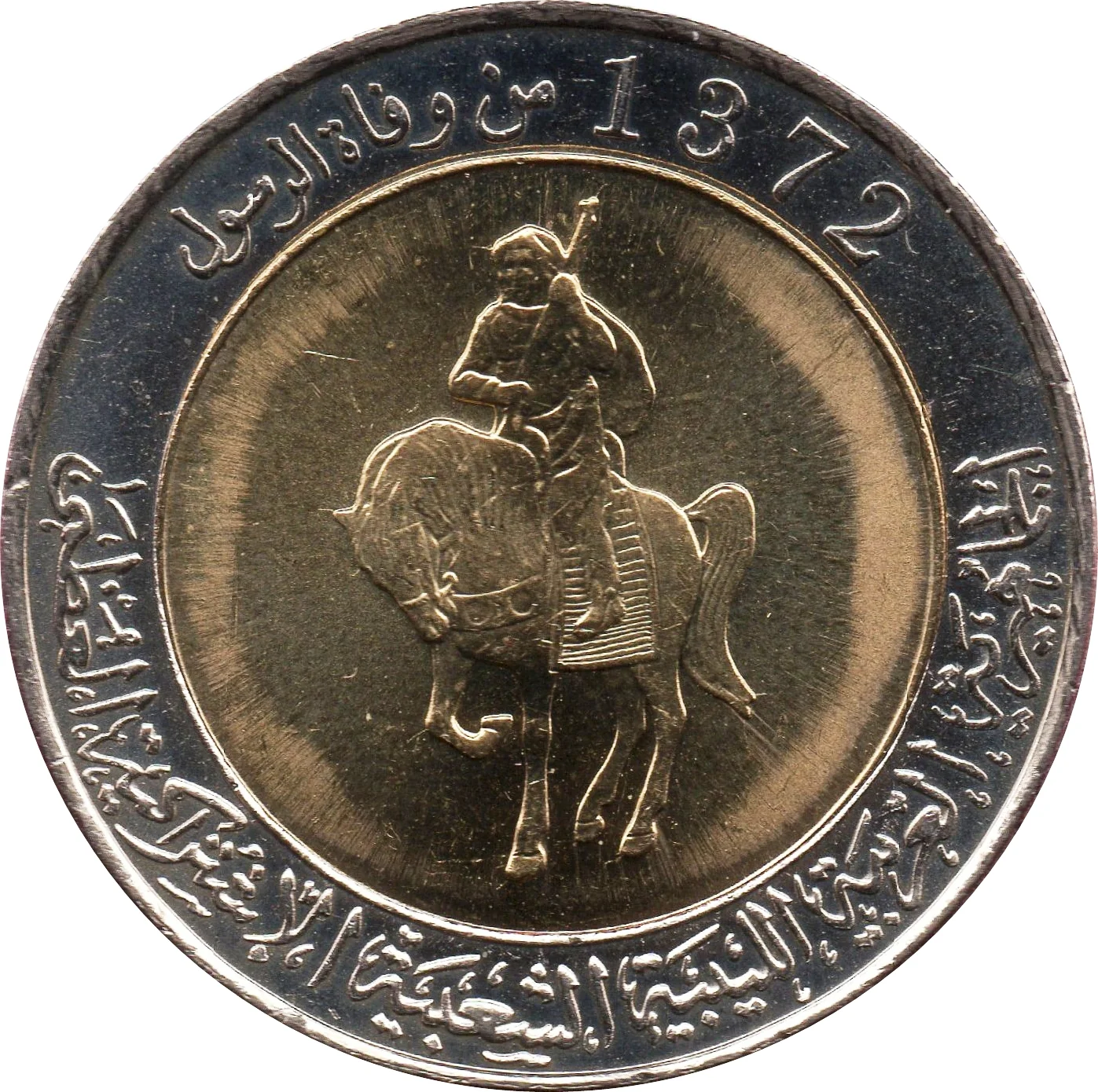
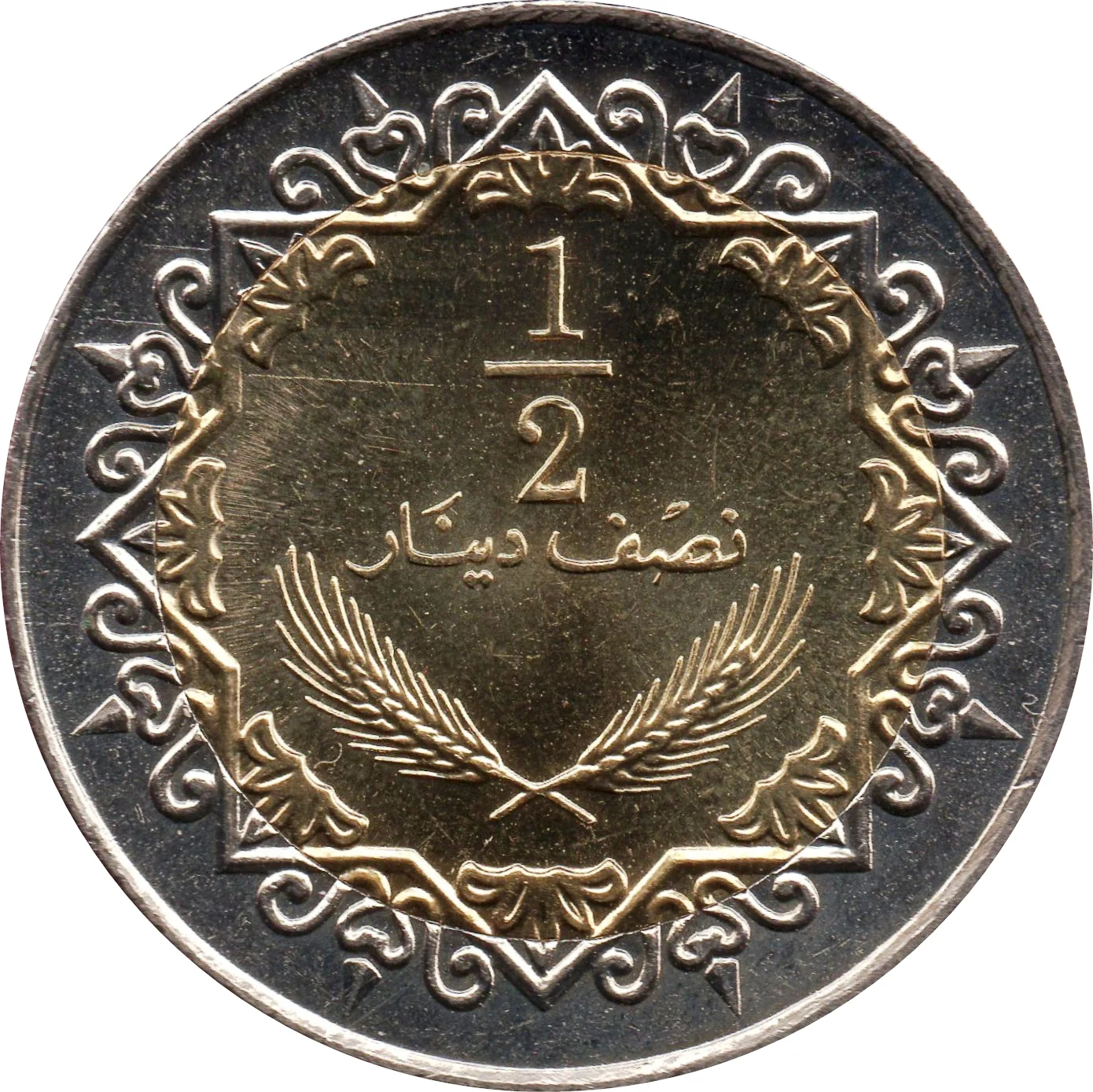
½ dinar – Libya
Add to wishlist
Libya
Context
Year: 2004
Islamic - Muhammad posthumous era Year:: 1372
Issuer: Libya
Period:
(1977—2011)
Currency:
(since 1971)
Demonetized: Yes
Material
References
KM: #
Numista: #12034
Value
Exchange value: ½ LYD
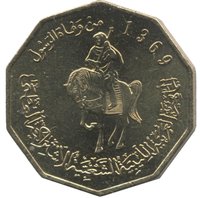
Obverse
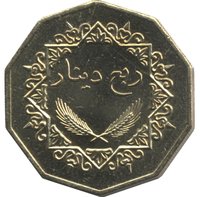
Reverse
Edge
Reeded
Mintings
| Year | Mint Mark | Mintage | Quality | Collection |
|---|---|---|---|---|
| 2004 | — | — |
Historical background
In 2004, Libya's currency situation was characterized by a tightly controlled and artificially valued official dinar, operating within a complex system of exchange rates. The country was emerging from over a decade of severe international sanctions, which had crippled its economy and isolated its financial system. The Central Bank of Libya maintained an official exchange rate pegged to the IMF's Special Drawing Rights (SDR), which translated to approximately 1.33 Libyan dinars (LYD) to the US dollar. However, this rate was largely inaccessible for most citizens and businesses, reserved primarily for government transactions and imports of essential goods like food and medicine.
Alongside this official rate, a more realistic and widely used black-market rate flourished, reflecting the dinar's true market value amid economic distortion and limited access to foreign currency. This parallel rate was significantly weaker, often trading between 3 to 4 LYD per dollar, highlighting the vast overvaluation of the official currency. This dual system created major economic inefficiencies, encouraged corruption, and posed a significant barrier to foreign investment, as international companies faced difficulties in repatriating profits or obtaining hard currency at a rational rate.
The year 2004 was a pivotal moment of transition, as the lifting of US sanctions in April and the gradual normalization of relations with the West began to unlock Libya's economy. There was growing discussion, both domestically and with international advisors, about the necessity of currency reform and a move towards a unified, market-driven exchange rate to stabilize the economy and encourage growth. However, the government, cautious of inflation and social unrest, moved slowly, leaving the problematic multi-tiered currency system largely intact as the country tentatively reopened to global trade.
Alongside this official rate, a more realistic and widely used black-market rate flourished, reflecting the dinar's true market value amid economic distortion and limited access to foreign currency. This parallel rate was significantly weaker, often trading between 3 to 4 LYD per dollar, highlighting the vast overvaluation of the official currency. This dual system created major economic inefficiencies, encouraged corruption, and posed a significant barrier to foreign investment, as international companies faced difficulties in repatriating profits or obtaining hard currency at a rational rate.
The year 2004 was a pivotal moment of transition, as the lifting of US sanctions in April and the gradual normalization of relations with the West began to unlock Libya's economy. There was growing discussion, both domestically and with international advisors, about the necessity of currency reform and a move towards a unified, market-driven exchange rate to stabilize the economy and encourage growth. However, the government, cautious of inflation and social unrest, moved slowly, leaving the problematic multi-tiered currency system largely intact as the country tentatively reopened to global trade.
🌱 Common