

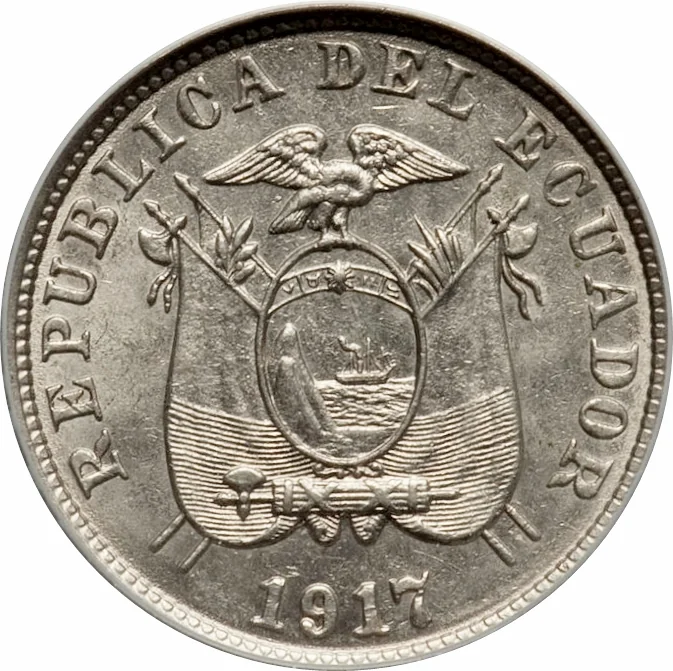
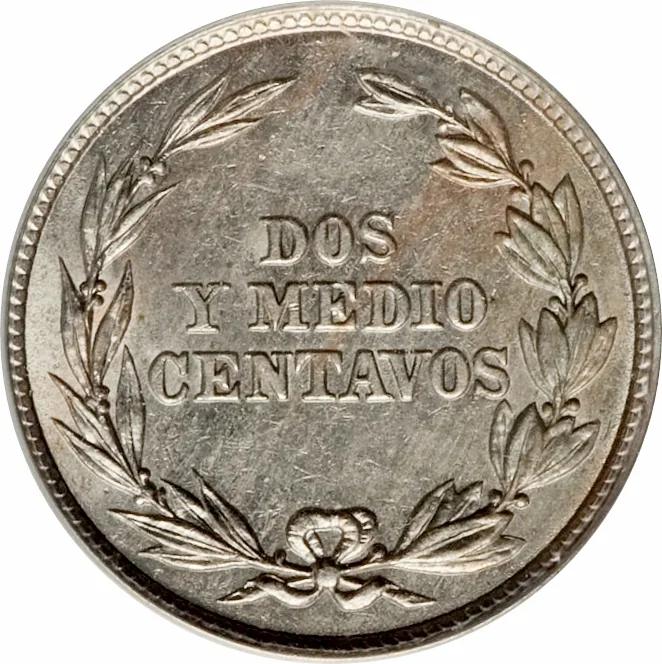
2½ centavos – Ecuador
Add to wishlist
Ecuador
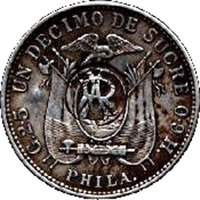
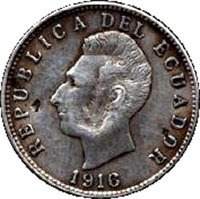
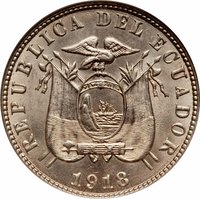
Obverse
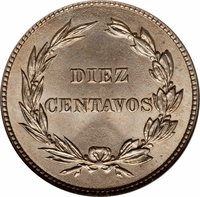
Reverse
Edge
Plain
Categories
| Symbols> Coat of Arms |
| Symbol> Wreath |
Mints
| Name | Mark |
|---|---|
| United States Mint of Philadelphia | — |
Mintings
| Year | Mint Mark | Mintage | Quality | Collection |
|---|---|---|---|---|
| 1917 | — | 1,600,000 |
Historical background
In 1917, Ecuador's currency situation was characterized by significant instability and fragmentation, a legacy of the late 19th century when the country abandoned the peso and failed to establish a unified national monetary system. The primary circulating currency was the Ecuadorian sucre, officially established in 1884 and theoretically on a silver standard. However, its value was highly volatile and its acceptance inconsistent, especially in remote regions. Crucially, the country lacked a central bank (the Banco Central del Ecuador would not be founded until 1927), meaning currency issuance was uncontrolled and undertaken by multiple private commercial banks, leading to a confusing mix of paper notes of varying credibility.
The period was further complicated by the global economic disruptions of World War I. While Ecuador remained neutral, the war severed international trade routes and caused a sharp decline in the export earnings from cocoa, the nation's primary commodity. This led to a severe shortage of foreign exchange (particularly British pounds and U.S. dollars) and a drain on precious metal reserves, undermining confidence in the paper sucre. Inflation became a pressing concern as the government, facing fiscal shortfalls, increasingly relied on borrowing from private banks that issued inconvertible banknotes to finance the deficits, further depreciating the currency's value.
Consequently, by 1917, Ecuador experienced a dual crisis of exchange rate depreciation and internal monetary chaos. In coastal commercial centers like Guayaquil, foreign coins and notes often circulated in preference to the suspect domestic paper. The lack of a central monetary authority meant there was no mechanism to stabilize the exchange rate or regulate credit. This entrenched financial instability hampered economic planning and foreign investment, creating a powerful impetus for the monetary reforms that would culminate in the creation of a central bank a decade later to impose order on the chaotic currency system.
The period was further complicated by the global economic disruptions of World War I. While Ecuador remained neutral, the war severed international trade routes and caused a sharp decline in the export earnings from cocoa, the nation's primary commodity. This led to a severe shortage of foreign exchange (particularly British pounds and U.S. dollars) and a drain on precious metal reserves, undermining confidence in the paper sucre. Inflation became a pressing concern as the government, facing fiscal shortfalls, increasingly relied on borrowing from private banks that issued inconvertible banknotes to finance the deficits, further depreciating the currency's value.
Consequently, by 1917, Ecuador experienced a dual crisis of exchange rate depreciation and internal monetary chaos. In coastal commercial centers like Guayaquil, foreign coins and notes often circulated in preference to the suspect domestic paper. The lack of a central monetary authority meant there was no mechanism to stabilize the exchange rate or regulate credit. This entrenched financial instability hampered economic planning and foreign investment, creating a powerful impetus for the monetary reforms that would culminate in the creation of a central bank a decade later to impose order on the chaotic currency system.
⭐ Rare