

1 décimo – Ecuador
Add to wishlist
Ecuador
Context
Material
Diameter: 18 mm
Weight: 2.5 g
Silver Weight:: 2.25 g
Thickness: 1.2 mm
Shape: Round
Composition: 90% Silver
Magnetic: No
Techniques: Milled, Counterstamped
Alignment: Coin alignment
flip
References
Numista: #160933
Value
Bullion value: $5.70
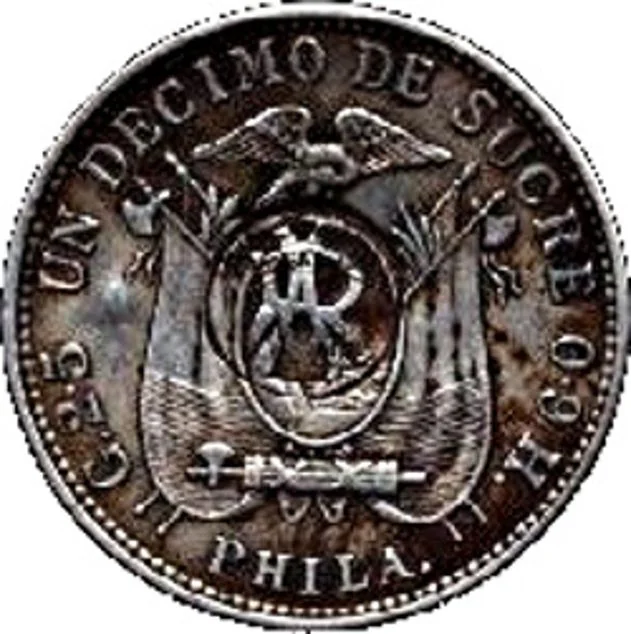
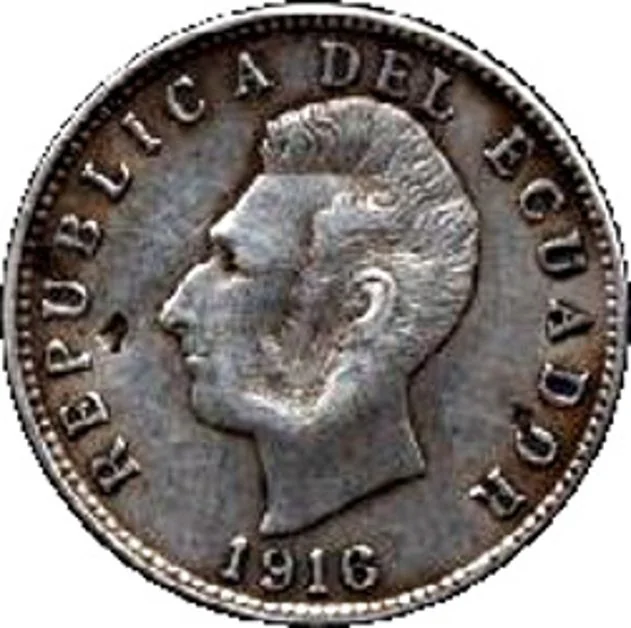
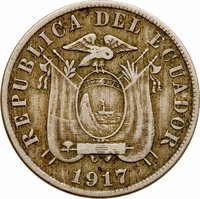
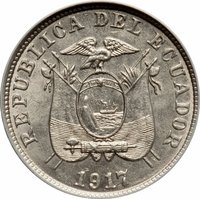
Obverse
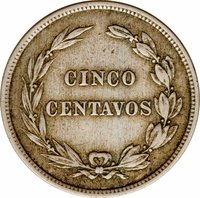
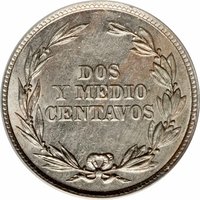
Reverse
Edge
Reeded
Categories
| Symbols> Coat of Arms |
Mints
| Name | Mark |
|---|---|
| United States Mint of Philadelphia | — |
Mintings
| Year | Mint Mark | Mintage | Quality | Collection |
|---|---|---|---|---|
| 1916 | Phila | — | BU |
Historical background
In 1916, Ecuador's currency situation was defined by the persistent instability of the sucre, which had been the national currency since 1884. The country operated on a de facto silver standard, but the value of the sucre was volatile and had been depreciating against major foreign currencies, particularly the British pound and the U.S. dollar, for decades. This depreciation was driven by chronic fiscal deficits, excessive money printing to finance government spending, and a reliance on volatile agricultural exports, primarily cacao. The early 20th century saw a cacao boom, which generated foreign exchange, but this wealth was unevenly distributed and did not lead to the establishment of a strong central monetary authority or substantial currency reserves.
The year itself fell within a period of significant political and economic transition. The powerful "Cacao Oligarchy" still held considerable sway, but its dominance was waning. Notably, 1916 was just two years after the establishment of the Banco Central del Ecuador in 1914, an institution created to bring order to the monetary system. However, in 1916, the new bank was still in its infancy and struggling to assert effective control. It had not yet issued its own banknotes, meaning a mix of private bank notes from various commercial banks, along with silver and gold coins, remained in circulation, leading to a complex and often confusing monetary landscape.
Consequently, Ecuador in 1916 was caught between an old, unstable system and a new, unproven one. The sucre's value was not firmly anchored, inflation was a concern, and the economy remained vulnerable to external shocks. This fragility would soon be tested, as the cacao boom was nearing its end; within a few years, the collapse of the cacao economy due to plant disease and the Great Depression would plunge the country into a deeper monetary crisis, forcing a dramatic shift to a gold standard in 1927.
The year itself fell within a period of significant political and economic transition. The powerful "Cacao Oligarchy" still held considerable sway, but its dominance was waning. Notably, 1916 was just two years after the establishment of the Banco Central del Ecuador in 1914, an institution created to bring order to the monetary system. However, in 1916, the new bank was still in its infancy and struggling to assert effective control. It had not yet issued its own banknotes, meaning a mix of private bank notes from various commercial banks, along with silver and gold coins, remained in circulation, leading to a complex and often confusing monetary landscape.
Consequently, Ecuador in 1916 was caught between an old, unstable system and a new, unproven one. The sucre's value was not firmly anchored, inflation was a concern, and the economy remained vulnerable to external shocks. This fragility would soon be tested, as the cacao boom was nearing its end; within a few years, the collapse of the cacao economy due to plant disease and the Great Depression would plunge the country into a deeper monetary crisis, forcing a dramatic shift to a gold standard in 1927.
💎 Extremely Rare