

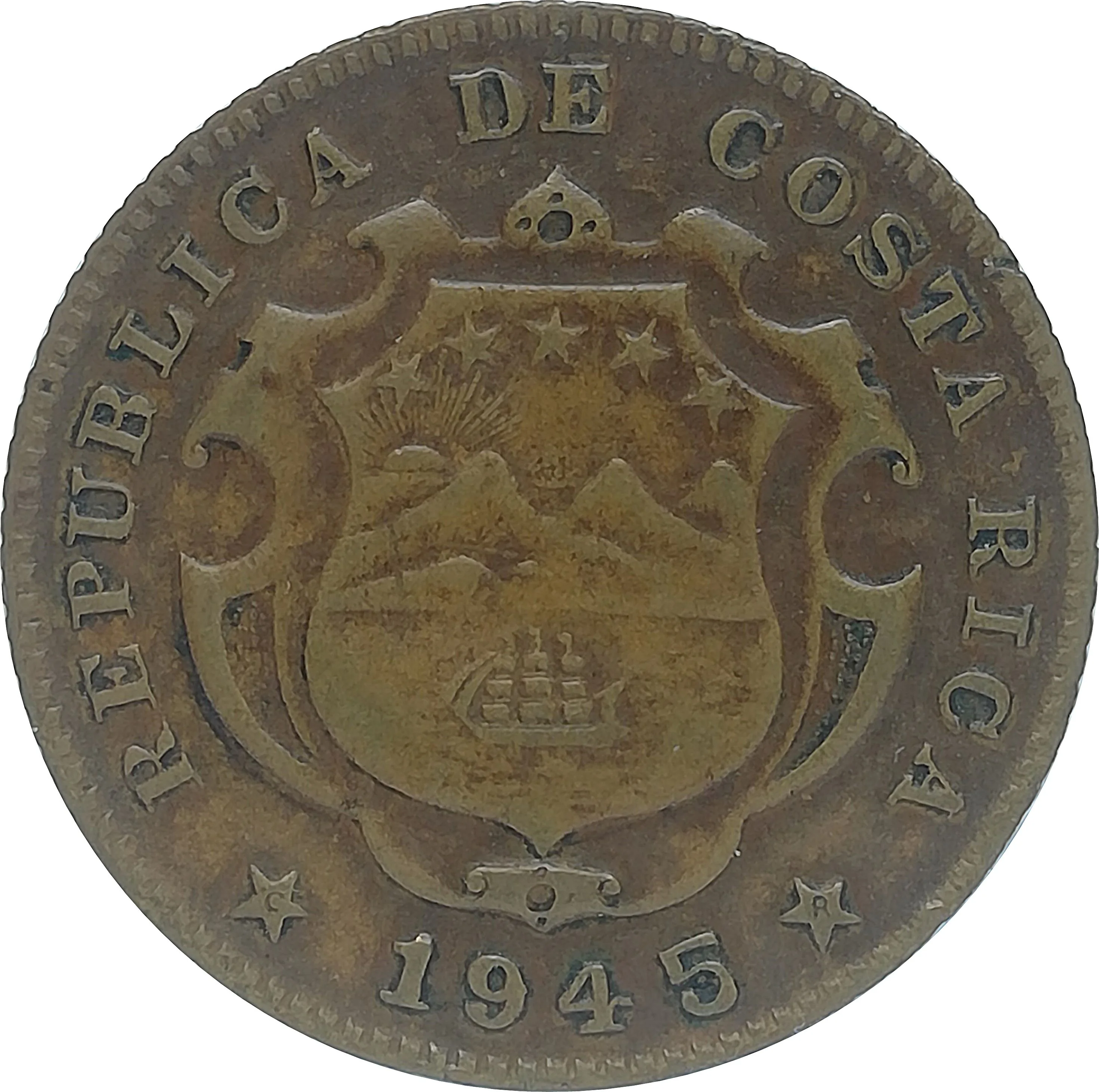
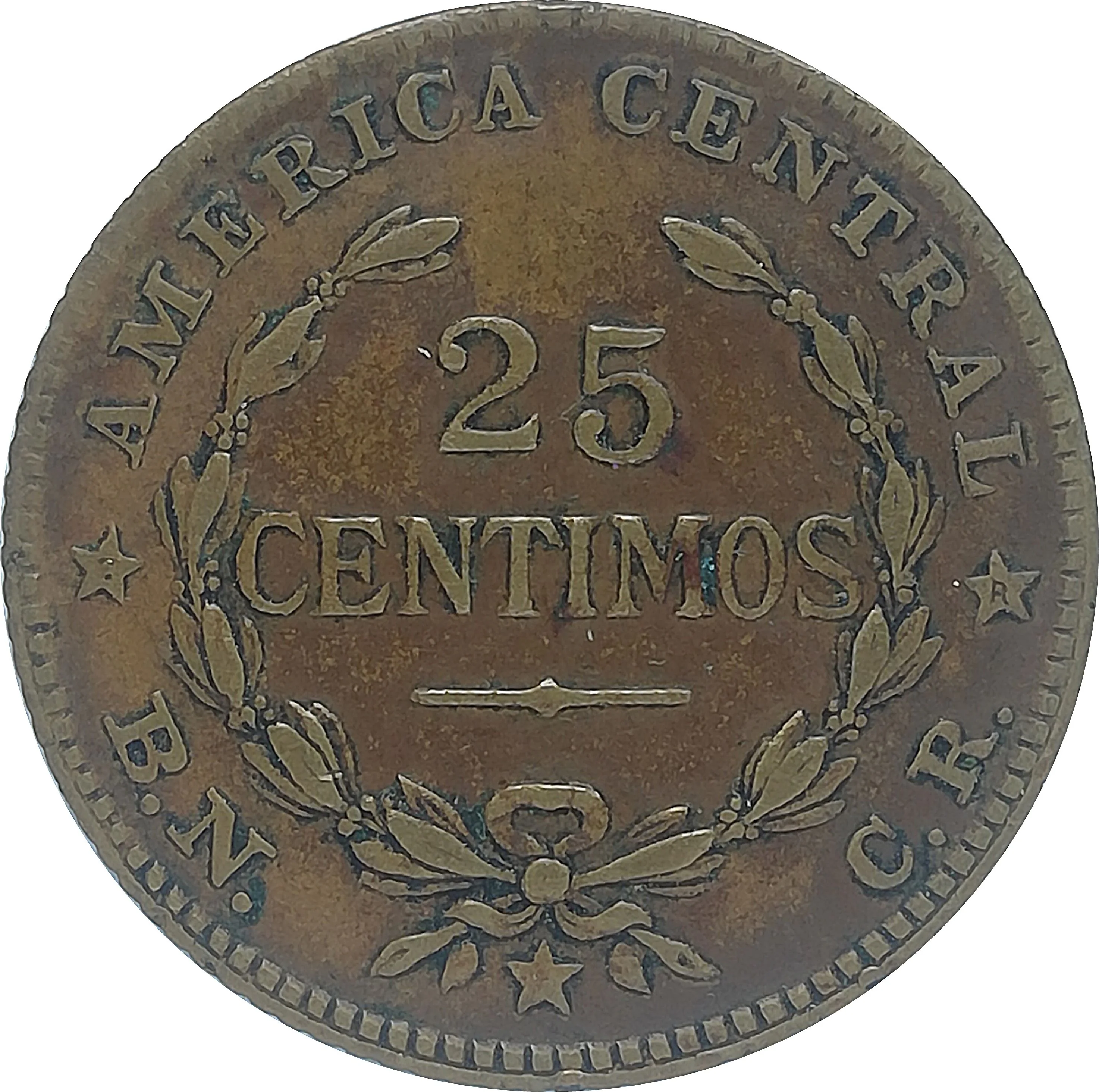
25 centimos – Costa Rica
Add to wishlist
Costa Rica
Context
Year: 1945
Issuer: Costa Rica
Issuing organization: Banco National de Costa Rica
Period:
(1848—1948)
Currency:
(since 1896)
Demonetized: Yes
Material
Diameter: 23 mm
Weight: 3.45 g
Thickness: 1 mm
Shape: Round
Composition: Gilding metal
Technique: Milled
Alignment: Coin alignment
flip
References
KM: #
Numista: #30956
Value
Exchange value: 0.25 CRC
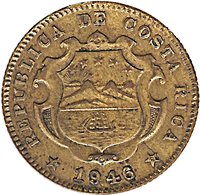
Obverse
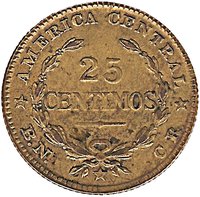
Reverse
Edge
Reeded
Categories
| Symbols> Coat of Arms |
| Symbol> Wreath |
Mints
| Name | Mark |
|---|---|
| Casa Nacional de Moneda de Costa Rica | — |
Mintings
| Year | Mint Mark | Mintage | Quality | Collection |
|---|---|---|---|---|
| 1945 | — | — |
Historical background
In 1945, Costa Rica's currency system was characterized by a period of relative stability under the gold standard, but one that was heavily influenced by the economic dislocations of World War II and preceding decades. The official currency was the Costa Rican colón, introduced in 1896 to replace the Costa Rican peso. It was pegged to the British pound sterling until 1932, after which it was pegged to the U.S. dollar at a rate of 5.60 colones to 1 dollar, a fixed parity established in 1936. This peg provided a crucial anchor, as the country's economy was deeply integrated with the United States, particularly through the export of coffee and bananas.
However, the wartime context of the early 1940s created significant pressures. While the fixed exchange rate was maintained, the global conflict disrupted traditional trade patterns and caused shortages of imported goods. This led to inflationary pressures domestically, as demand outstripped supply. Furthermore, Costa Rica, like much of Latin America, accumulated substantial foreign exchange reserves during the war due to strong Allied demand for its commodities, but it faced difficulties in converting these earnings into essential imports of machinery and manufactured goods, which were scarce due to wartime production priorities.
By the end of 1945, with the war concluded, Costa Rica stood on the brink of a significant economic transition. The fixed parity to the dollar, while still officially in place, was increasingly seen as unsustainable given the pent-up inflationary pressures and the need to finance post-war reconstruction and social programs. The stage was set for the monetary challenges of the late 1940s, which would eventually lead to a major devaluation in 1948 and the abandonment of the strict gold standard, moving the country toward a more managed currency system in the following decade.
However, the wartime context of the early 1940s created significant pressures. While the fixed exchange rate was maintained, the global conflict disrupted traditional trade patterns and caused shortages of imported goods. This led to inflationary pressures domestically, as demand outstripped supply. Furthermore, Costa Rica, like much of Latin America, accumulated substantial foreign exchange reserves during the war due to strong Allied demand for its commodities, but it faced difficulties in converting these earnings into essential imports of machinery and manufactured goods, which were scarce due to wartime production priorities.
By the end of 1945, with the war concluded, Costa Rica stood on the brink of a significant economic transition. The fixed parity to the dollar, while still officially in place, was increasingly seen as unsustainable given the pent-up inflationary pressures and the need to finance post-war reconstruction and social programs. The stage was set for the monetary challenges of the late 1940s, which would eventually lead to a major devaluation in 1948 and the abandonment of the strict gold standard, moving the country toward a more managed currency system in the following decade.
⭐ Rare