

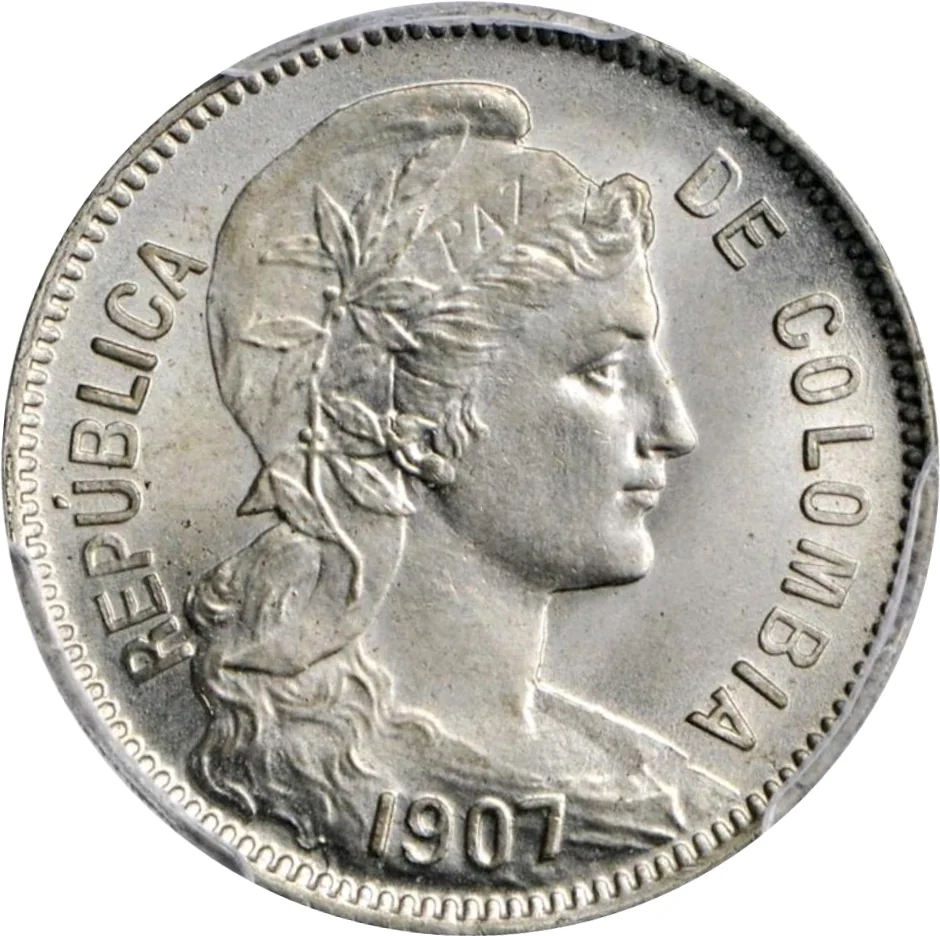
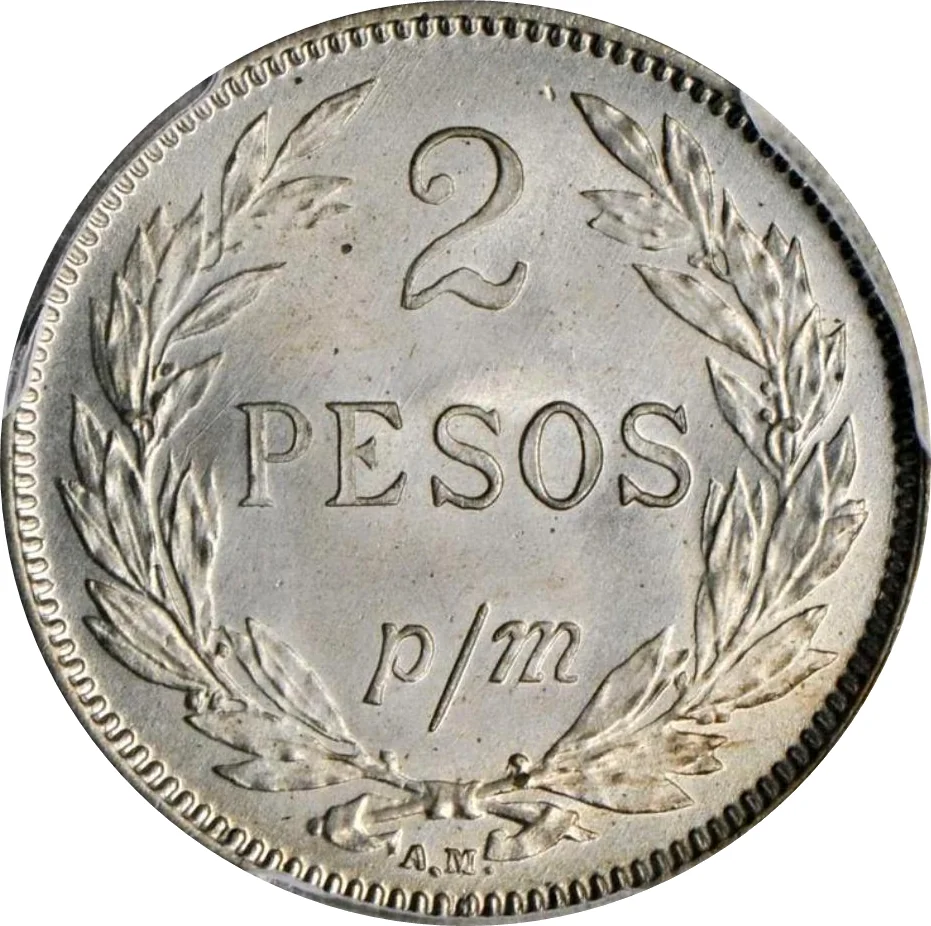
2 Pesos – Colombia
Colombia
Context
Years: 1907–1914
Issuer: Colombia 
Period:
(since 1886)
Currency:
(1872—1916)
Demonetized: Yes
Total mintage: 6,350,000
Material
References
KM: #Click to copy to clipboardB279
Numista: #30953
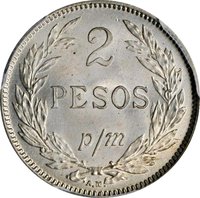
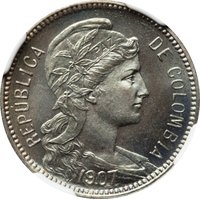
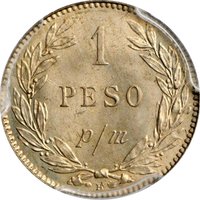
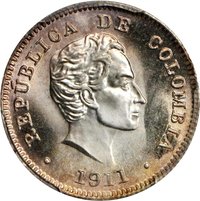
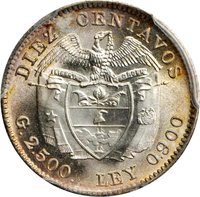
Obverse
Reverse
Edge
Plain
Mints
| Name | Mark |
|---|---|
| Heaton and Sons / The Mint Birmingham | — |
Mintings
| Year | Mint Mark | Mintage | Quality | Collection |
|---|---|---|---|---|
| 1907 | AM | — | Proof | |
| 1907 | AM | 4,161,000 | ||
| 1910 | AM | 1,189,000 | ||
| 1914 | AM | 1,000,000 |
Historical background
In 1907, Colombia's currency situation was characterized by profound instability and fragmentation, a direct legacy of the devastating Thousand Days' War (1899-1902) and the recent separation of Panama in 1903. The national treasury was bankrupt, and the monetary system was a chaotic patchwork. While the official currency was the paper peso moneda corriente, its value had collapsed due to massive over-issuance by both the central government and regional banks to finance the conflict. This resulted in severe inflation and a wide gulf between the discredited paper money and the still-trusted silver and gold coins, which circulated at a significant premium.
The government of President Rafael Reyes, who took power in 1904, pursued a policy of drastic monetary reform known as the "Reyes Reforms" to centralize authority and restore fiscal order. A key step was the creation of the Banco Central de Colombia in 1905, granted a monopoly on note issuance to end the anarchy of private and regional banknotes. By 1907, the process of withdrawing this heterogeneous paper money from circulation was underway, being replaced by new national banknotes. However, public confidence remained low, and the economy still operated with a dual system: the new central bank paper and various hard currencies.
Concurrently, the government was laying the groundwork for a more fundamental shift onto the gold standard, a goal of contemporary orthodox finance. In 1907, efforts were focused on stabilizing finances, building gold reserves, and defining the new peso's value in gold. This arduous process would culminate in the Law 33 of 1909, which formally established the gold-backed peso colombiano. Thus, 1907 represents a critical transitional year—the peak of the old monetary chaos was passing, but the promised stability of a unified, gold-convertible currency was still a work in progress, with the economy strained by the burdens of reconstruction and debt.
The government of President Rafael Reyes, who took power in 1904, pursued a policy of drastic monetary reform known as the "Reyes Reforms" to centralize authority and restore fiscal order. A key step was the creation of the Banco Central de Colombia in 1905, granted a monopoly on note issuance to end the anarchy of private and regional banknotes. By 1907, the process of withdrawing this heterogeneous paper money from circulation was underway, being replaced by new national banknotes. However, public confidence remained low, and the economy still operated with a dual system: the new central bank paper and various hard currencies.
Concurrently, the government was laying the groundwork for a more fundamental shift onto the gold standard, a goal of contemporary orthodox finance. In 1907, efforts were focused on stabilizing finances, building gold reserves, and defining the new peso's value in gold. This arduous process would culminate in the Law 33 of 1909, which formally established the gold-backed peso colombiano. Thus, 1907 represents a critical transitional year—the peak of the old monetary chaos was passing, but the promised stability of a unified, gold-convertible currency was still a work in progress, with the economy strained by the burdens of reconstruction and debt.
🌟 Uncommon