

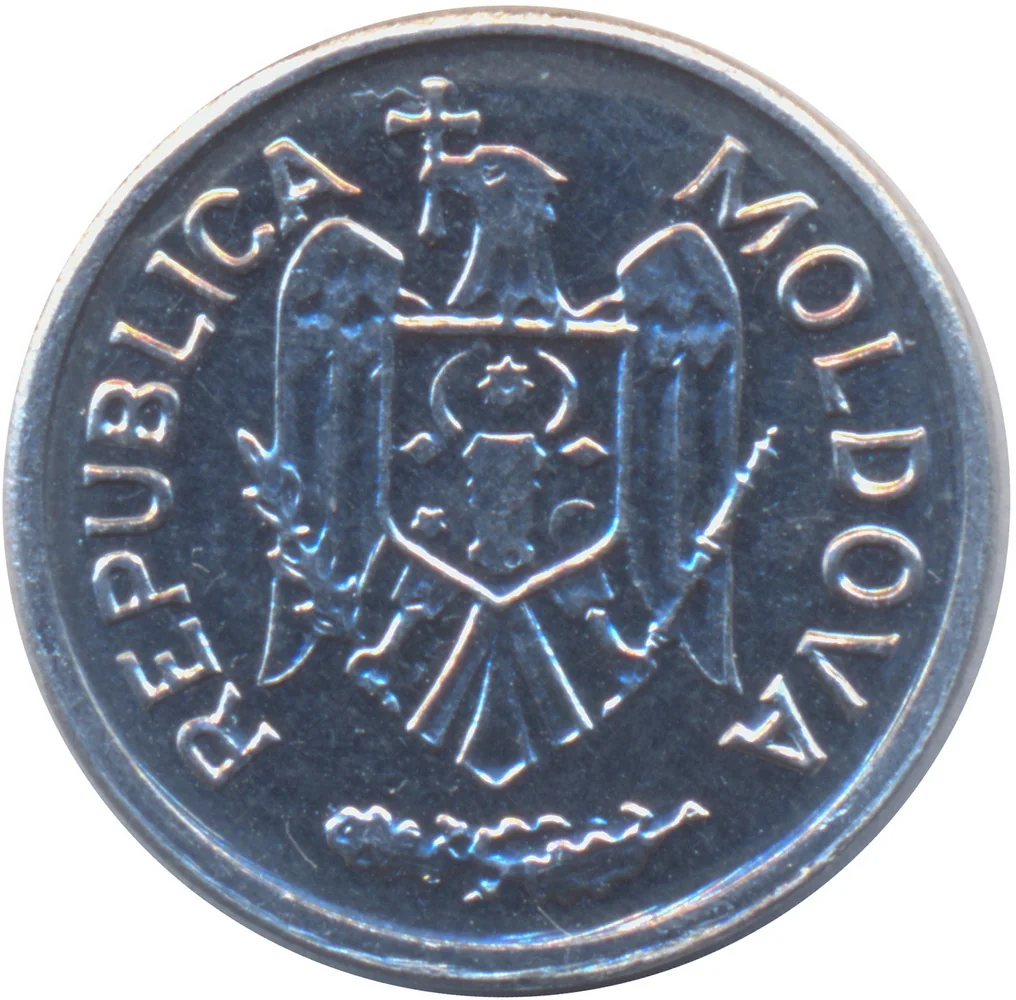
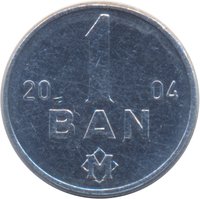
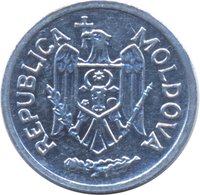
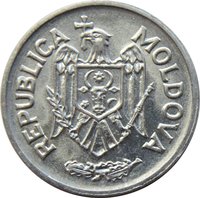
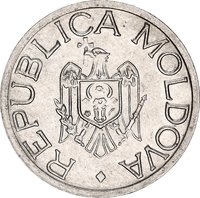
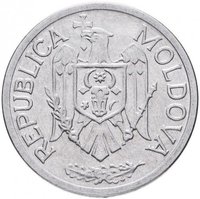
Obverse
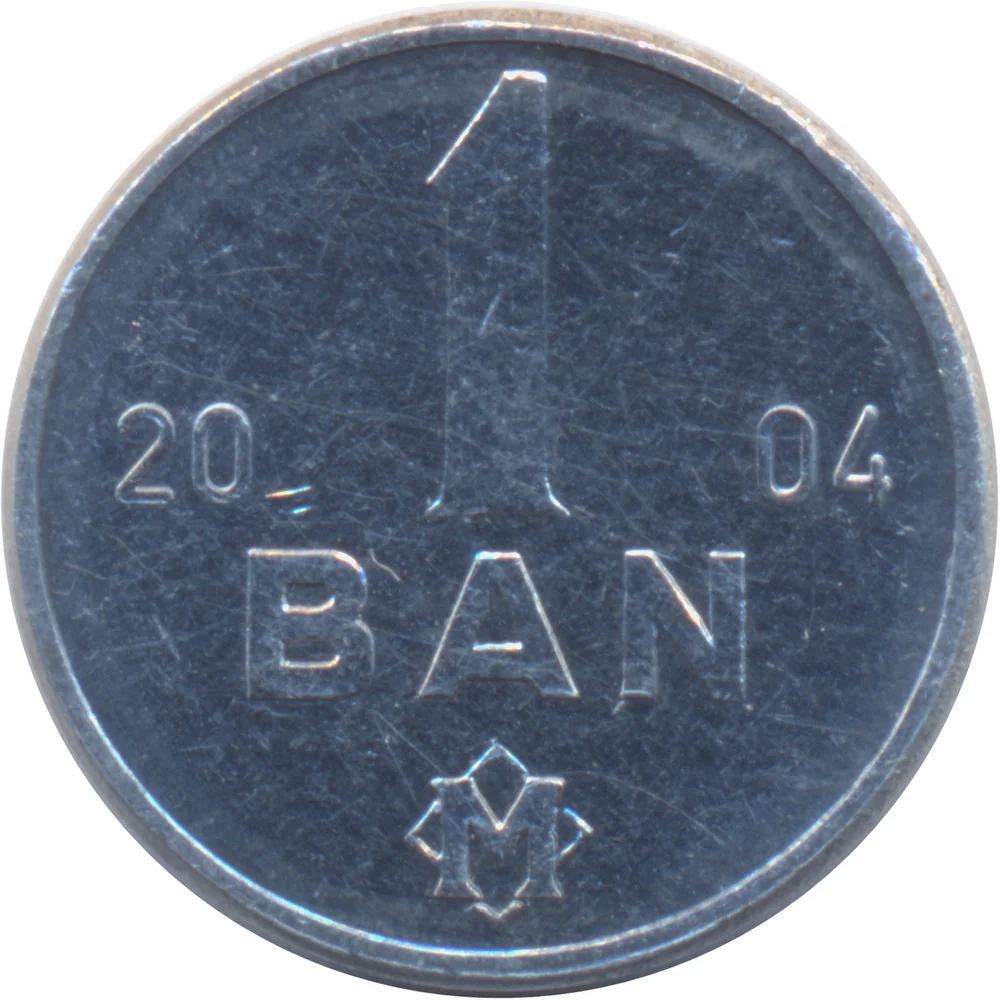
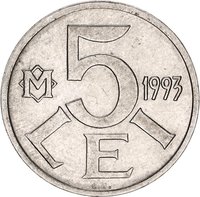
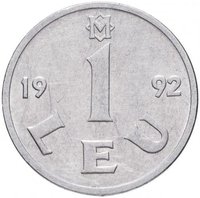
Reverse
Description:
Value above "M" monogram for Moldova.
Inscription:
19 1 96
BAN
C.D.
BAN
C.D.
Script: Latin
Engraver: Constantin Dumitrescu
Edge
Plain
Mintings
| Year | Mint Mark | Mintage | Quality | Collection |
|---|---|---|---|---|
| 1993 | — | — | ||
| 1995 | — | — | ||
| 1996 | — | — | ||
| 2000 | — | — | ||
| 2004 | — | — | ||
| 2006 | — | — | ||
| 2013 | — | 880,000 | ||
| 2017 | — | 1,200,000 |
Historical background
In 1993, the Republic of Moldova was navigating the profound economic turmoil following the dissolution of the Soviet Union. As a newly independent state, it inherited the Soviet ruble as its currency but lacked control over its monetary policy, which was still heavily influenced by Russia. This period was marked by hyperinflation, severe shortages of goods, and a collapsing economy, exacerbated by the disruption of traditional Soviet supply chains and the ongoing conflict in the Transnistria region. The shared currency zone with other post-Soviet states proved dysfunctional, as Russia began issuing new Russian ruble notes in 1993, effectively forcing Moldova and others to either accept Moscow's dominance or issue their own national currencies.
Confronted with this crisis, the Moldovan Parliament took decisive action. On June 23, 1993, it approved the introduction of the Moldovan leu (MDL) as the country's sole legal tender. The move was a fundamental assertion of national sovereignty and economic independence, aimed at gaining control over the money supply and halting the destructive inflow of unstable rubles from neighboring states. The new currency was initially introduced as a temporary coupon, the cupon leu, which circulated alongside the rapidly depreciating Soviet and Russian rubles at a fixed rate.
The full transition to the permanent Moldovan leu banknotes and coins was completed in late 1993. This monetary reform was a critical, albeit painful, step in stabilizing the economy. It allowed the National Bank of Moldova to implement independent monetary policy and begin combating hyperinflation, which had rendered savings worthless. Thus, 1993 stands as the pivotal year Moldova severed its direct monetary dependency on Moscow and established one of the key symbols of its statehood, laying the groundwork for its future market economy.
Confronted with this crisis, the Moldovan Parliament took decisive action. On June 23, 1993, it approved the introduction of the Moldovan leu (MDL) as the country's sole legal tender. The move was a fundamental assertion of national sovereignty and economic independence, aimed at gaining control over the money supply and halting the destructive inflow of unstable rubles from neighboring states. The new currency was initially introduced as a temporary coupon, the cupon leu, which circulated alongside the rapidly depreciating Soviet and Russian rubles at a fixed rate.
The full transition to the permanent Moldovan leu banknotes and coins was completed in late 1993. This monetary reform was a critical, albeit painful, step in stabilizing the economy. It allowed the National Bank of Moldova to implement independent monetary policy and begin combating hyperinflation, which had rendered savings worthless. Thus, 1993 stands as the pivotal year Moldova severed its direct monetary dependency on Moscow and established one of the key symbols of its statehood, laying the groundwork for its future market economy.
Series: 1993 Moldova circulation coins


🌱 Very Common