

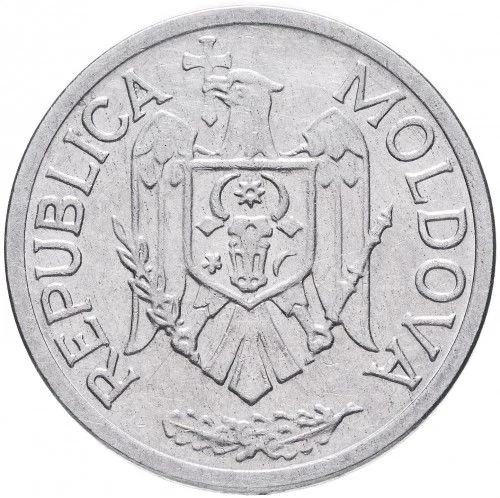
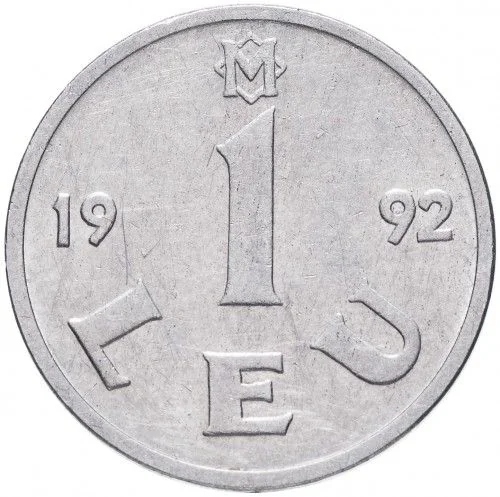
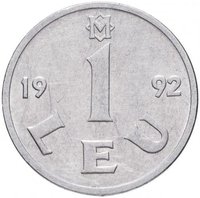
Obverse
Reverse
Edge
Plain
Mintings
| Year | Mint Mark | Mintage | Quality | Collection |
|---|---|---|---|---|
| 1992 | — | — |
Historical background
In 1992, Moldova’s currency situation was defined by profound instability and transition, a direct consequence of the political and economic rupture following the collapse of the Soviet Union in 1991. The newly independent republic initially remained within the "ruble zone," using the Soviet and later Russian ruble as its circulating medium. This dependence created immediate vulnerability, as the Russian Central Bank, facing its own hyperinflationary crisis, freely printed money, causing spiraling inflation that devastated Moldovan savings and economic stability. Furthermore, Moscow began to restrict ruble shipments to former Soviet states, creating acute cash shortages that paralyzed daily commerce and wage payments across Moldova.
The crisis necessitated a swift and unilateral move toward monetary sovereignty. On June 10, 1992, the National Bank of Moldova introduced the Moldovan coupon (or "cupon moldovenesc") as a temporary parallel currency to the rapidly depreciating ruble. Initially intended as a stopgap measure to alleviate the cash shortage, these coupons were not a full-fledged currency but rather promissory notes issued in large denominations. They circulated alongside rubles, but their value was highly unstable and public confidence was low, leading to a complex and inefficient dual-currency system that did little to curb inflation or restore trust.
This chaotic interim period laid the urgent groundwork for the introduction of Moldova's permanent national currency. Recognizing the coupon system's failure to provide stability, authorities accelerated plans for a definitive monetary reform. This culminated on November 29, 1993, with the launch of the Moldovan leu (MDL), which replaced both the coupons and the ruble at a fixed rate. Thus, the currency situation of 1992 was a pivotal year of acute crisis and ad-hoc response, setting the stage for the establishment of a key institution of national independence by the end of 1993.
The crisis necessitated a swift and unilateral move toward monetary sovereignty. On June 10, 1992, the National Bank of Moldova introduced the Moldovan coupon (or "cupon moldovenesc") as a temporary parallel currency to the rapidly depreciating ruble. Initially intended as a stopgap measure to alleviate the cash shortage, these coupons were not a full-fledged currency but rather promissory notes issued in large denominations. They circulated alongside rubles, but their value was highly unstable and public confidence was low, leading to a complex and inefficient dual-currency system that did little to curb inflation or restore trust.
This chaotic interim period laid the urgent groundwork for the introduction of Moldova's permanent national currency. Recognizing the coupon system's failure to provide stability, authorities accelerated plans for a definitive monetary reform. This culminated on November 29, 1993, with the launch of the Moldovan leu (MDL), which replaced both the coupons and the ruble at a fixed rate. Thus, the currency situation of 1992 was a pivotal year of acute crisis and ad-hoc response, setting the stage for the establishment of a key institution of national independence by the end of 1993.
🌱 Common