

250 escudos (Independence and Discovery of Cape Verde Islands) – Cape Verde
Add to wishlist
Circulating commemorative coins
Commemoration: 35th Anniversary of Independence - 550th Anniversary of Discovery of Cape Verde Islands
Cape Verde
Context
Material
Diameter: 30 mm
Weight: 14 g
Thickness: 2.5 mm
Shape: Round
Composition: Copper-nickel
Technique: Milled
Alignment: Medal alignment
flip
References
KM: #
Numista: #30833
Value
Exchange value: 250 CVE
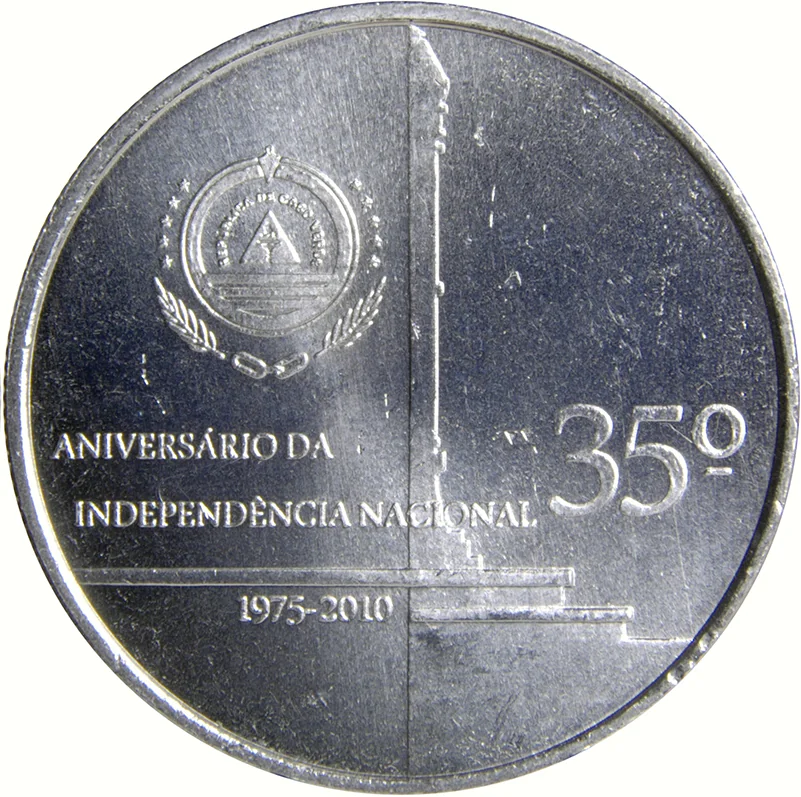
Obverse
Description:
Ciudad Velha pillory.
Inscription:
ANIVERSARIO DA INDEPENDANCIA NACIONAL
1975 - 2010
35
1975 - 2010
35
Translation:
Anniversary of National Independence
1975 - 2010
35
1975 - 2010
35
Script: Latin
Language: Portuguese
Reverse
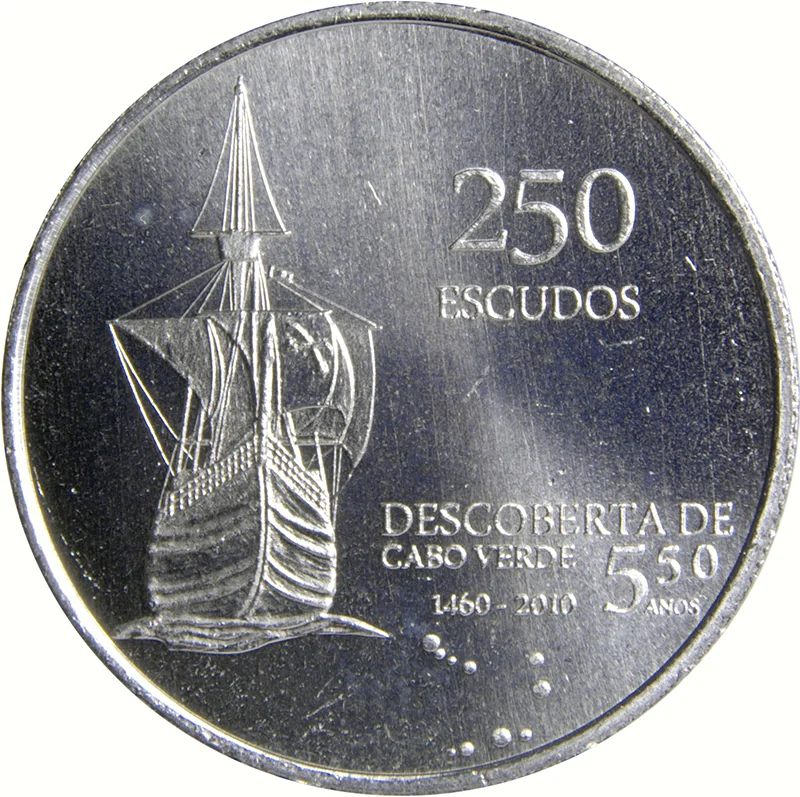
Description:
Stylized map of Cape Verde on a sailing ship.
Inscription:
250 ESCUDOS
DESCOBERTA DE CABO VERDE
1460 - 2010
550 ANOS
DESCOBERTA DE CABO VERDE
1460 - 2010
550 ANOS
Translation:
250 Escudos
Discovery of Cape Verde
1460 - 2010
550 Years
Discovery of Cape Verde
1460 - 2010
550 Years
Script: Latin
Language: Portuguese
Edge
Reeded
Categories
| Transportation> Watercraft |
Mintings
| Year | Mint Mark | Mintage | Quality | Collection |
|---|---|---|---|---|
| 2010 | — | — |
Historical background
In 2010, Cape Verde's currency situation was defined by its long-standing and stable peg to the euro. The country's official currency, the Cape Verdean escudo (CVE), had been pegged to the Portuguese escudo since 1998 and, following Portugal's adoption of the euro, was formally pegged to the euro at a fixed exchange rate of 110.265 CVE to 1 EUR. This arrangement was managed by the Bank of Cape Verde and was a cornerstone of the nation's monetary policy, providing critical stability for trade, investment, and inflation control. As a small, open island economy heavily reliant on tourism, remittances, and foreign aid, this peg mitigated exchange rate risk and anchored macroeconomic confidence.
The peg, however, presented its own challenges. While it curbed inflation and facilitated transactions with the Eurozone (its main economic partner), it also meant Cape Verde ceded control over its independent monetary policy. The central bank could not adjust interest rates or devalue the currency to respond to domestic economic shocks. Instead, economic adjustments had to occur through fiscal policy and internal prices and wages. In the wake of the 2008-09 global financial crisis, which dampened tourism and foreign investment inflows, maintaining the fixed parity required careful management of foreign reserves to ensure full convertibility.
Overall, the currency regime in 2010 was viewed as a successful and credible framework that had served the nation well. It was supported by prudent fiscal management and consistent economic reforms, which had led to Cape Verde's graduation from Least Developed Country status in 2007. The stability of the escudo-euro peg was a key factor in attracting foreign direct investment and was instrumental in the country's transition toward a service-based, middle-income economy. The primary focus for authorities was not on changing the peg, but on strengthening economic competitiveness and reserves to sustain it amidst external volatility.
The peg, however, presented its own challenges. While it curbed inflation and facilitated transactions with the Eurozone (its main economic partner), it also meant Cape Verde ceded control over its independent monetary policy. The central bank could not adjust interest rates or devalue the currency to respond to domestic economic shocks. Instead, economic adjustments had to occur through fiscal policy and internal prices and wages. In the wake of the 2008-09 global financial crisis, which dampened tourism and foreign investment inflows, maintaining the fixed parity required careful management of foreign reserves to ensure full convertibility.
Overall, the currency regime in 2010 was viewed as a successful and credible framework that had served the nation well. It was supported by prudent fiscal management and consistent economic reforms, which had led to Cape Verde's graduation from Least Developed Country status in 2007. The stability of the escudo-euro peg was a key factor in attracting foreign direct investment and was instrumental in the country's transition toward a service-based, middle-income economy. The primary focus for authorities was not on changing the peg, but on strengthening economic competitiveness and reserves to sustain it amidst external volatility.
🌟 Uncommon