

50 centesimos de franco – Dominican Republic
Add to wishlist
Dominican Republic
Context
Year: 1891
Issuer: Dominican Republic
Period:
(1863—1916)
Currency:
(since 1891)
Demonetized: Yes
Total mintage: 150,000
Material
References
KM: #
Numista: #30742
Value
Bullion value: $5.21
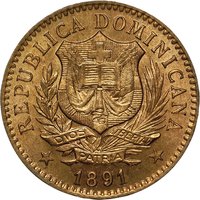
Obverse
Description:
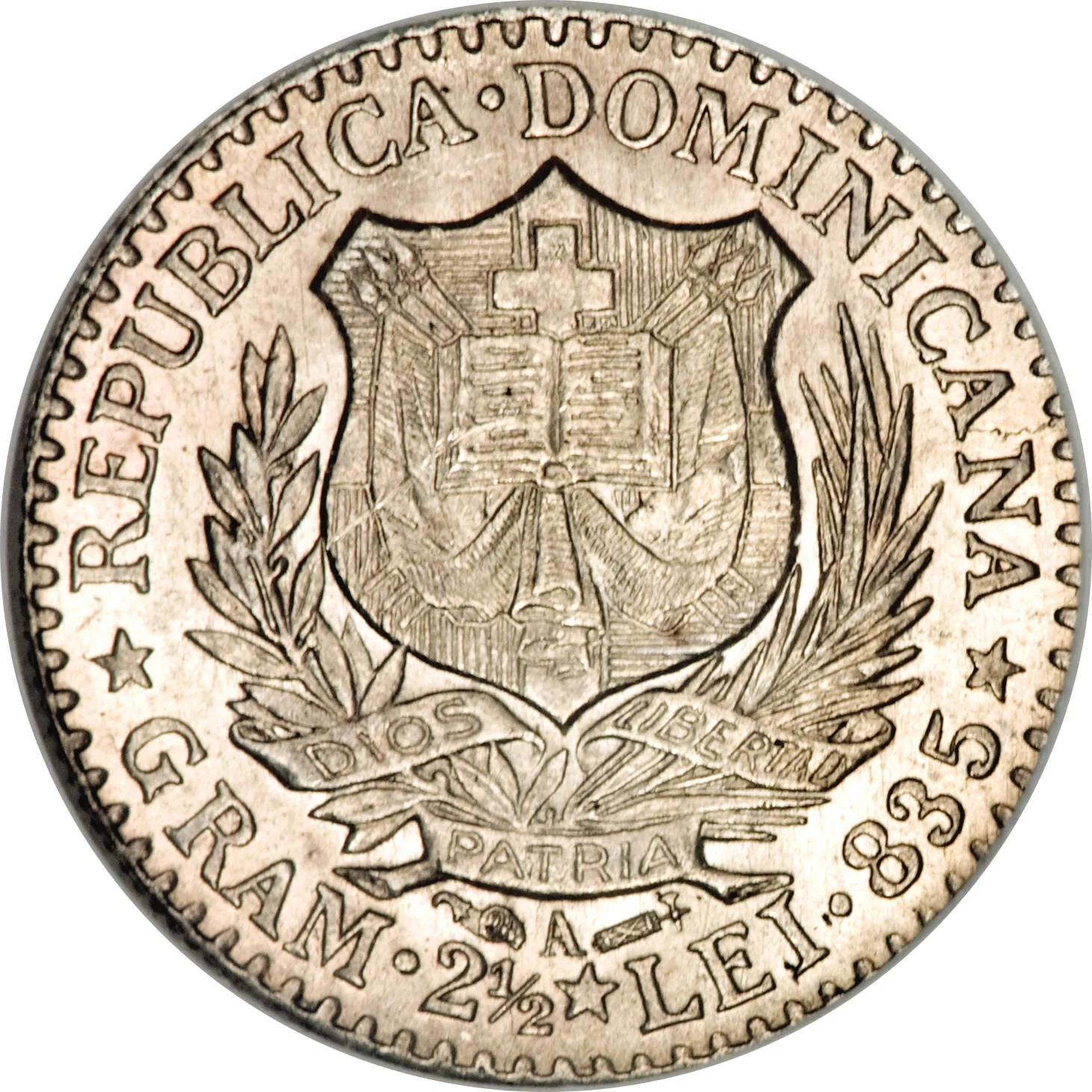
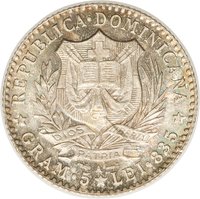
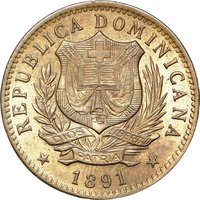
Arms encircled by a wreath.
Inscription:
REPUBLICA DOMINICANA
DIOS LIBERTAD PATRIA
GRAM· 2½ LEI·835
DIOS LIBERTAD PATRIA
GRAM· 2½ LEI·835
Translation:
REPUBLIC OF DOMINICANA
GOD LIBERTY HOMELAND
GRAMS 2½ LAW·835
GOD LIBERTY HOMELAND
GRAMS 2½ LAW·835
Script: Latin
Engraver: Jean Legrange
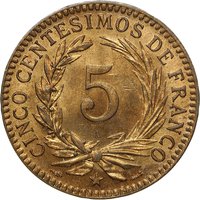
Reverse
Description:
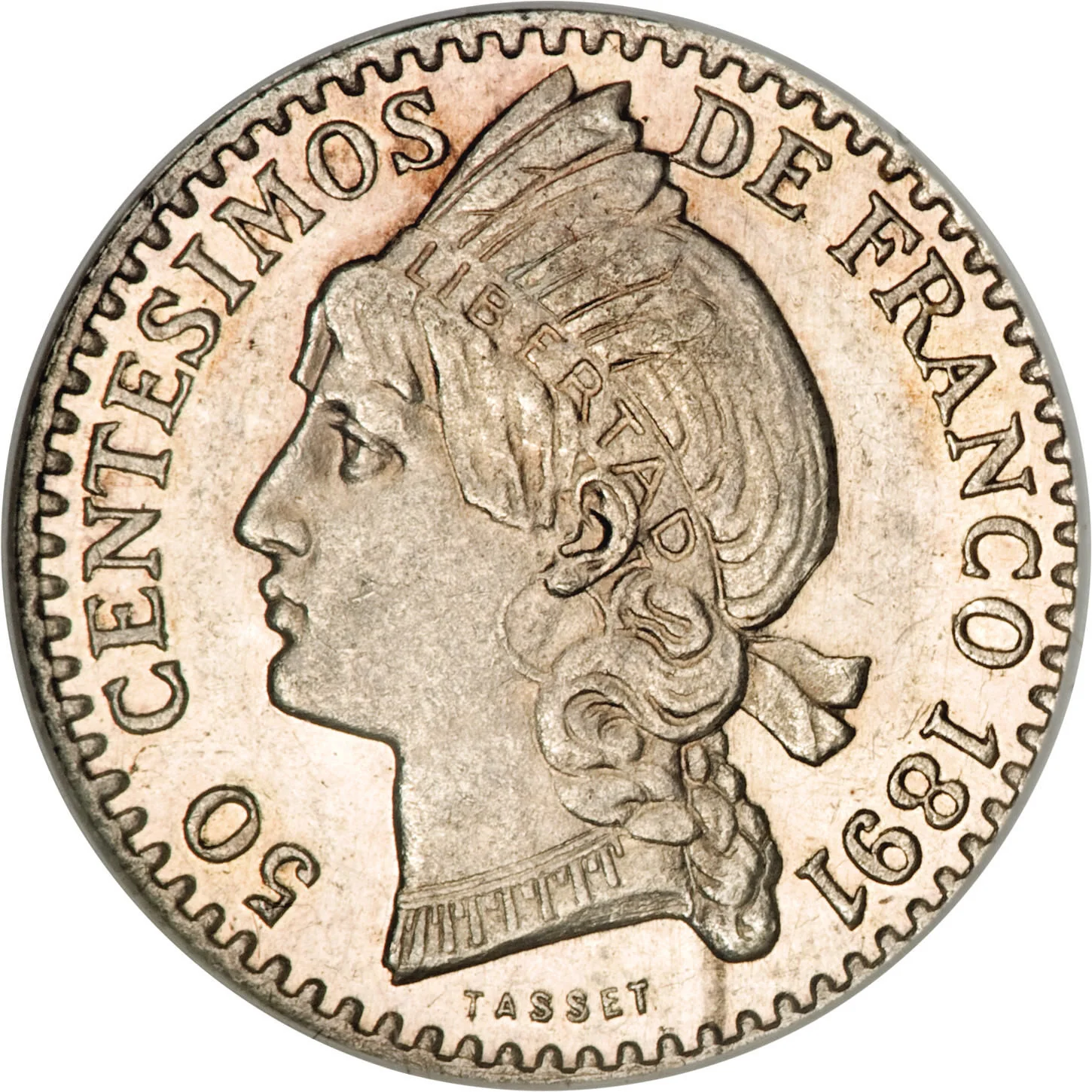
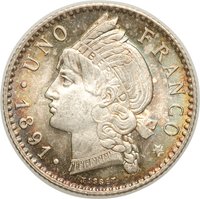
Turn left.
Inscription:
50 CENTESIMOS DE FRANCO 1891
TASSET
TASSET
Script: Latin
Engraver: Ernest Paulin Tasset
Edge
Milled
Categories
| Symbols> Coat of Arms |
Mints
| Name | Mark |
|---|---|
| Monnaie de Paris | (A) |
Mintings
| Year | Mint Mark | Mintage | Quality | Collection |
|---|---|---|---|---|
| 1891 | A | 150,000 | ||
| 1891 | A | — | Proof |
Historical background
In 1891, the Dominican Republic was grappling with a complex and unstable monetary system, a legacy of political turmoil and economic dependency. Following decades of political instability and heavy foreign debt, the nation's currency landscape was fragmented. The official currency was the Dominican peso, but it circulated alongside a multitude of foreign coins, most notably the United States dollar, the British pound sterling, and the French franc. This lack of a uniform, trusted national currency created significant challenges for domestic commerce and government finance.
The root of this monetary disorder lay in the country's crippling external debt and a history of inflationary paper money issues. Previous governments had printed unbacked paper pesos to cover deficits, leading to severe depreciation and a loss of public confidence. Consequently, hard metallic currency, especially gold and silver coins from abroad, was preferred for significant transactions. The government of President Ulises Heureaux, who held power in 1891, was primarily focused on maintaining a fragile political peace and servicing foreign debts, often prioritizing these concerns over implementing a coherent monetary reform.
Therefore, the currency situation in 1891 was characterized by de facto dollarization in major commercial centers, a devalued and mistrusted paper peso, and an overall lack of centralized monetary authority. This environment hindered economic development and made the state vulnerable to fluctuations in international specie flows. It was a symptom of the broader economic weakness and foreign influence that would eventually contribute to the country's bankruptcy and the 1905 U.S. customs receivership.
The root of this monetary disorder lay in the country's crippling external debt and a history of inflationary paper money issues. Previous governments had printed unbacked paper pesos to cover deficits, leading to severe depreciation and a loss of public confidence. Consequently, hard metallic currency, especially gold and silver coins from abroad, was preferred for significant transactions. The government of President Ulises Heureaux, who held power in 1891, was primarily focused on maintaining a fragile political peace and servicing foreign debts, often prioritizing these concerns over implementing a coherent monetary reform.
Therefore, the currency situation in 1891 was characterized by de facto dollarization in major commercial centers, a devalued and mistrusted paper peso, and an overall lack of centralized monetary authority. This environment hindered economic development and made the state vulnerable to fluctuations in international specie flows. It was a symptom of the broader economic weakness and foreign influence that would eventually contribute to the country's bankruptcy and the 1905 U.S. customs receivership.
⭐ Rare