

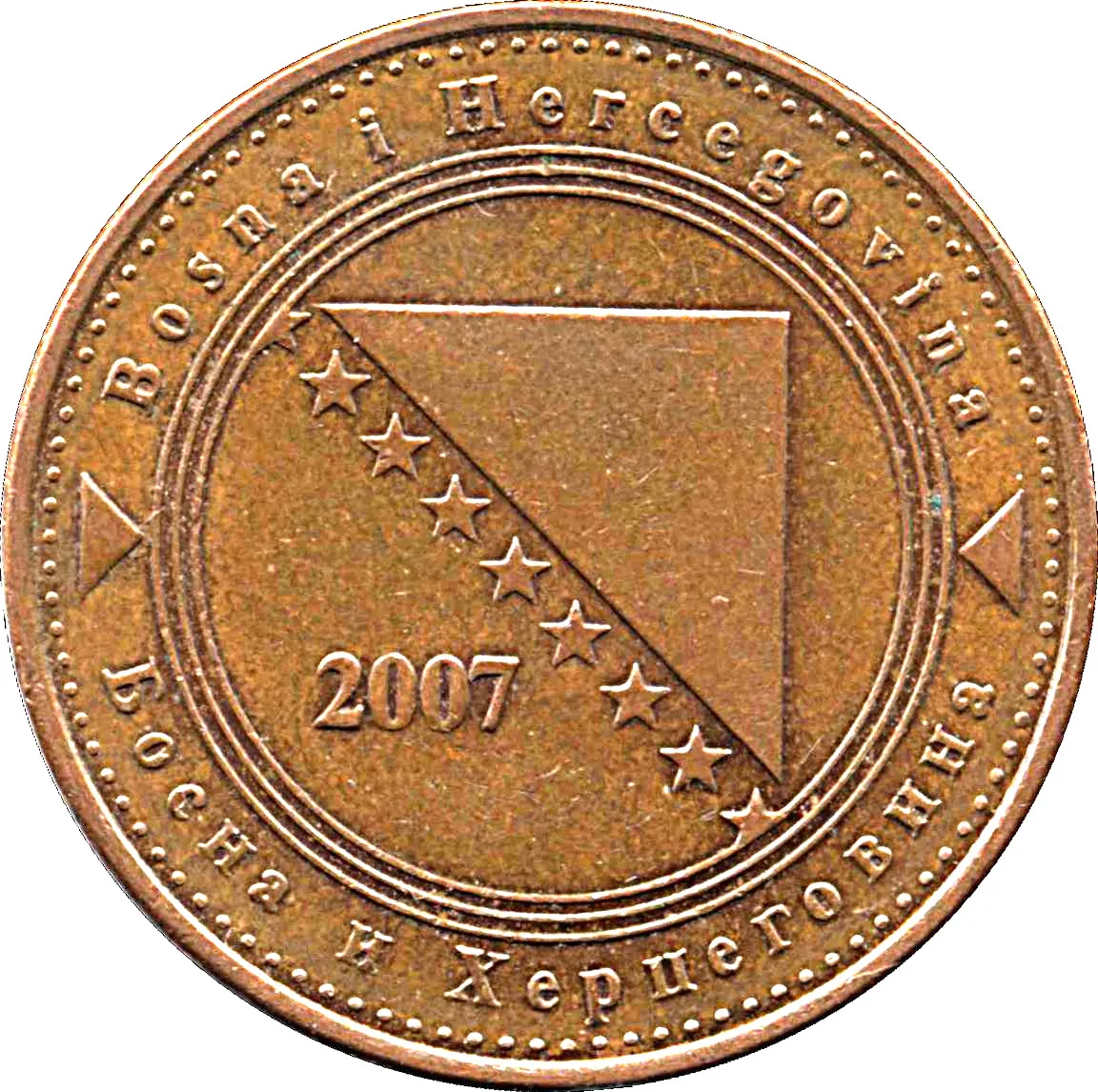
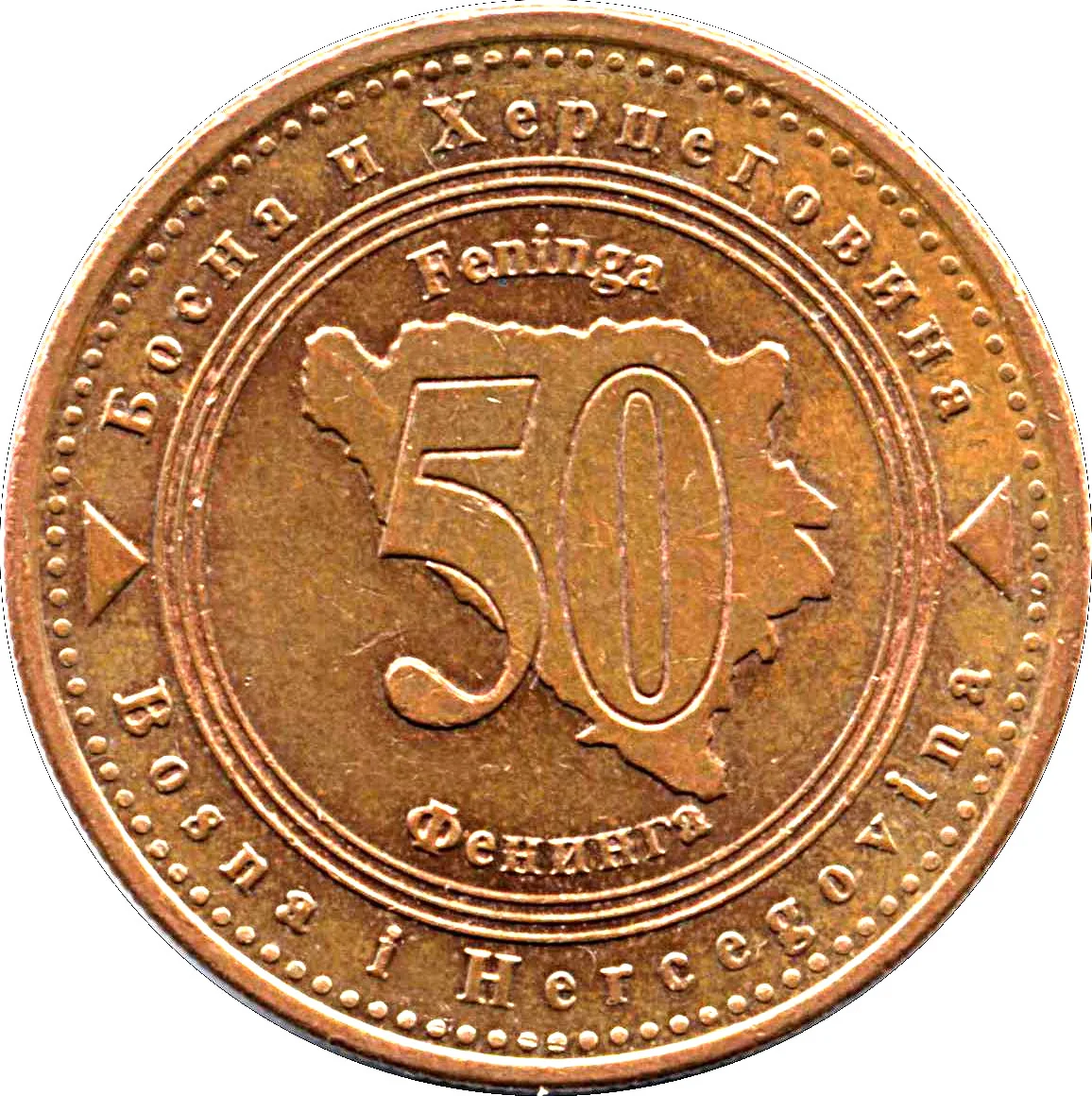
50 feninga – Bosnia and Herzegovina
Add to wishlist
Bosnia and Herzegovina
Context
Years: 1998–2025
Issuer: Bosnia and Herzegovina
Period:
(since 1992)
Currency:
(since 1998)
Total mintage: 43,310,000
Material
References
KM: #
Numista: #3072
Value
Exchange value: 0.50 BAM
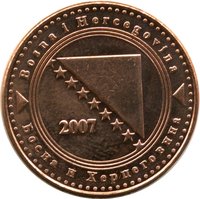
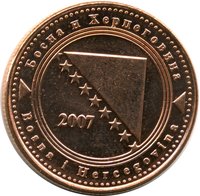
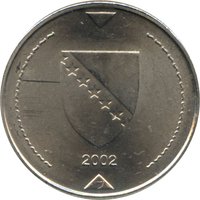
Obverse
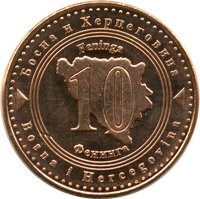
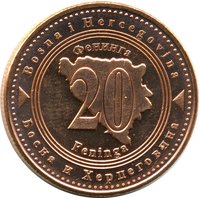
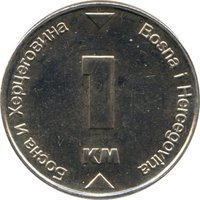
Reverse
Edge
Reeded
Mints
| Name | Mark |
|---|---|
| Royal Mint | — |
Mintings
| Year | Mint Mark | Mintage | Quality | Collection |
|---|---|---|---|---|
| 1998 | — | 20,000,000 | ||
| 2000 | — | 10,000 | In sets | |
| 2007 | — | 10,300,000 | ||
| 2013 | — | 3,000,000 | ||
| 2017 | — | 10,000,000 | ||
| 2021 | — | — | ||
| 2025 | — | — |
Historical background
In 1998, Bosnia and Herzegovina operated under a unique and complex monetary framework established by the Dayton Peace Agreement of 1995. The country did not have a single, unified central bank issuing a national currency. Instead, monetary authority was vested in the Central Bank of Bosnia and Herzegovina (CBBH), an institution designed to be strictly currency board-based and independent of any of the country's three main ethnic-political entities. Its primary mandate was to ensure monetary stability by pegging a new unified currency, the Convertible Mark (KM or BAM), at a fixed 1:1 parity to the Deutsche Mark.
This system was a direct response to the wartime monetary chaos, where the Yugoslav Dinar, the Croatian Kuna, and various makeshift "Bosnian Dinars" had circulated in divided territories. The introduction of the Convertible Mark in 1997-98 was a cornerstone of post-war economic reconstruction, symbolizing a fragile unity and providing a stable foundation for trade and aid. The currency board arrangement meant the CBBH could only issue domestic currency fully backed by foreign reserves (primarily Deutsche Marks), eliminating discretionary monetary policy and imposing strict fiscal discipline on the entity governments.
Consequently, by 1998, the currency situation was one of imposed stability but underlying political fragility. The Convertible Mark was successfully established as a trusted medium of exchange across the Federation of Bosnia and Herzegovina and the Republika Srpska, helping to curb inflation and facilitate international assistance. However, this stability was entirely imported, reliant on the strength of the Deutsche Mark. The system effectively outsourced monetary sovereignty, which was a necessary compromise to prevent economic competition between the entities but also highlighted the deep political divisions that a shared currency alone could not overcome.
This system was a direct response to the wartime monetary chaos, where the Yugoslav Dinar, the Croatian Kuna, and various makeshift "Bosnian Dinars" had circulated in divided territories. The introduction of the Convertible Mark in 1997-98 was a cornerstone of post-war economic reconstruction, symbolizing a fragile unity and providing a stable foundation for trade and aid. The currency board arrangement meant the CBBH could only issue domestic currency fully backed by foreign reserves (primarily Deutsche Marks), eliminating discretionary monetary policy and imposing strict fiscal discipline on the entity governments.
Consequently, by 1998, the currency situation was one of imposed stability but underlying political fragility. The Convertible Mark was successfully established as a trusted medium of exchange across the Federation of Bosnia and Herzegovina and the Republika Srpska, helping to curb inflation and facilitate international assistance. However, this stability was entirely imported, reliant on the strength of the Deutsche Mark. The system effectively outsourced monetary sovereignty, which was a necessary compromise to prevent economic competition between the entities but also highlighted the deep political divisions that a shared currency alone could not overcome.
🌱 Very Common